Dryslwyn Castle
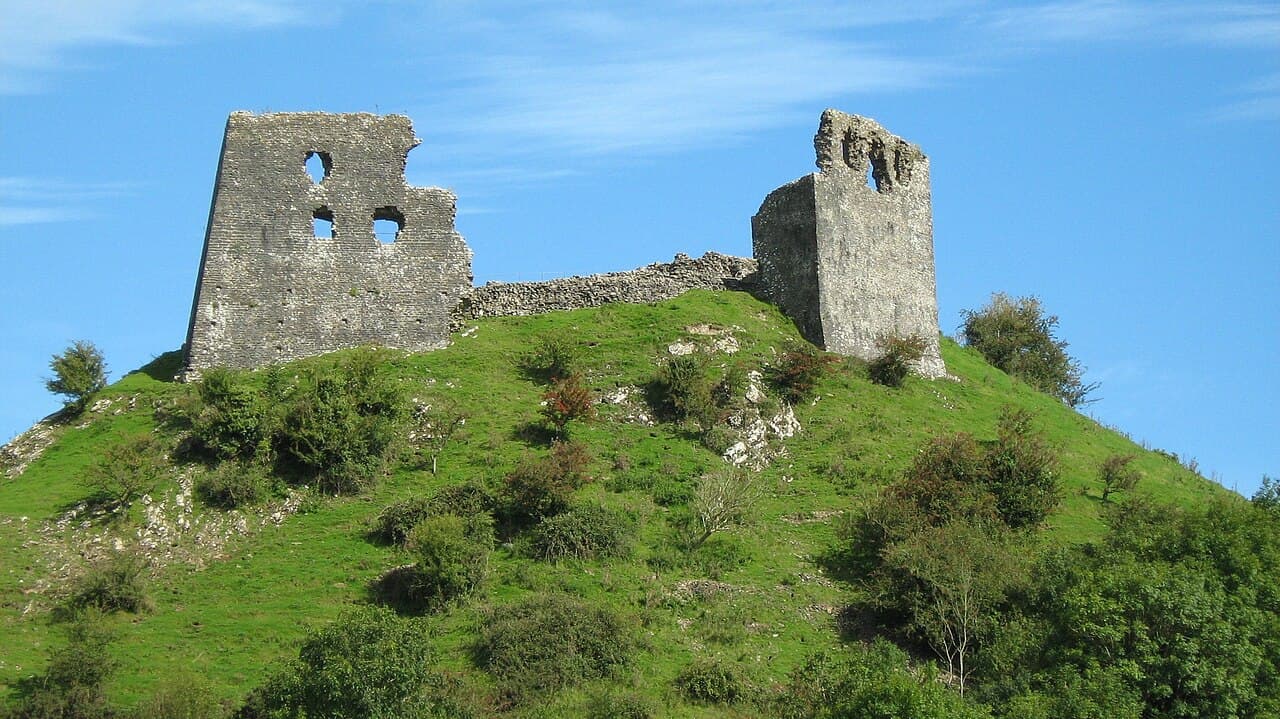
Dryslwyn Castle stands prominently on a rocky hilltop overlooking the Tywi Valley near Llandeilo in Wales, commanding extensive views of the surrounding landscape. Constructed in the early 13th century, around the 1220s, by Rhys Gryg, a prince of the kingdom of Deheubarth, it represents one of the most significant examples of a native Welsh fortress from the medieval period. Its strategic position atop steep slopes provided natural defenses, making it a formidable stronghold during centuries of conflict between Welsh princes and the expanding English crown.
The castle's history is deeply intertwined with the turbulent politics of medieval Wales. Initially built as a princely residence for Rhys Gryg's younger son, Maredudd, while his elder son inherited nearby Dinefwr Castle, Dryslwyn became a focal point in the power struggles of the region. Throughout the 13th century, it was repeatedly contested, notably resisting an English siege in 1245. Later, Rhys ap Maredudd, son of Maredudd, enhanced its defenses significantly. However, after initially cooperating with the English crown following Edward I's conquest of Wales in 1277, Rhys ap Maredudd rebelled in 1287, leading to a major siege involving around 11,000 English troops employing trebuchets and mining tactics. The castle fell after three weeks, marking a decisive moment in Welsh-English conflicts.
Architectural layout and features
Dryslwyn Castle is classified as a hill castle, built to utilize the natural topography for defense. The fortress is arranged in three distinct wards aligned roughly east to west: the outer ward at the entrance, the middle ward housing economic and service buildings, and the polygonal inner ward perched on the highest ground, which contained the principal defensive and residential structures.
The inner ward and keep
The heart of the castle is the polygonal inner ward, enclosed by a curtain wall originally built in the early 13th century and heightened after 1280 to improve defenses. The curtain wall, constructed primarily of local limestone, survives today only to about one meter in height in places, but its foundations reveal the original scale and complexity. Within this ward stood a round keep on the eastern side, serving as the main stronghold and last line of defense. Although only the foundations remain, this keep was a central feature typical of Welsh castle design, emphasizing both defense and residence.
Adjacent to the keep was a gatehouse dating from the 13th century, which was remodeled but now survives only at foundation level. The gatehouse controlled access to the inner ward and was a critical defensive element. On the south side of the gatehouse was the original round tower keep, highlighting the layered fortifications.
Residential and service buildings
The castle contained a great hall and a residential block, both expanded during the mid-13th century and again after 1280. These buildings served as living quarters and administrative centers for the ruling family. A chapel tower was also added on the southeast side, indicating the importance of religious observance within the castle complex. Two-story walls from the hall and chapel tower still define part of the southern profile of the ruins.
Additional features included a garderobe (medieval toilet) on the east side, which is a notable example of medieval sanitary arrangements. Archaeological excavations have revealed evidence of deliberate undermining of the curtain wall during the 1287 siege, which caused partial collapses and contributed to the castle's fall.
Historical significance and military history
Dryslwyn Castle played a central role in the 13th and early 14th centuries as a symbol of Welsh resistance and later English administration. After its capture in 1287, it was used by the English crown as a regional administrative center and was granted to Hugh le Despenser in 1317, reflecting its continued strategic importance.
The castle was involved in several conflicts, including the Despenser War in the early 14th century and the Owain Glyndŵr rebellion in 1403. During Glyndŵr's uprising, the castle was seized by Welsh forces but was retaken by the English, who deliberately decommissioned it to prevent further military use. This involved blocking access routes, walling up the gatehouse, removing stair treads and gate hinges, and burning the major buildings within the walls. These actions left the castle in a ruined state, a fate common to many Welsh castles after periods of conflict.
The fortified borough and surrounding settlement
Adjacent to the castle, Rhys ap Maredudd founded a borough, a fortified settlement with its own defensive walls, ditches, and gates. This borough contained 34 house plots and was inhabited by English settlers after the 1287 conquest. It functioned as a small administrative and economic center supporting the castle. Although it persisted for several centuries, the borough was eventually abandoned in the 17th century, leaving behind earthworks and limited masonry remains.
Archaeological investigations and preservation
Between 1980 and 1995, extensive archaeological excavations at Dryslwyn Castle uncovered significant information about its construction phases, siege events, and patterns of occupation. These studies revealed the complex layering of fortifications, domestic buildings, and the borough's layout, providing valuable insights into medieval Welsh castle architecture and society.
Today, the castle is a protected historic monument managed to preserve its ruined condition. Visitors can explore the extensive earthworks, foundations, and remaining walls that illustrate the castle's former grandeur and strategic importance. Its commanding position and rich history make Dryslwyn an essential site for understanding Welsh medieval heritage and the turbulent history of the region.
Frequently asked questions (FAQ)
- What is the historical significance of Dryslwyn Castle?
- Dryslwyn Castle, built in the 13th century, is a prime example of Welsh medieval fortifications. It played a crucial role in the struggle for Welsh independence and was associated with the notable figure, Lord Rhys, who was instrumental in its construction and defense.
- When was Dryslwyn Castle built?
- Construction of Dryslwyn Castle began in 1220 and continued over several decades. The castle was strategically positioned to oversee the surrounding landscape and protect the region from English incursions.
- Can I visit Dryslwyn Castle year-round?
- Yes, Dryslwyn Castle is open to visitors throughout the year, though the opening hours may vary seasonally. It’s advisable to check the official website or local resources for the most accurate visiting times.
- What are the ticket prices for Dryslwyn Castle?
- Admission to Dryslwyn Castle is typically free, allowing visitors to explore its historical ruins at no cost. However, guided tours and special events may have associated fees, so it’s best to review current offerings before your visit.
- Is Dryslwyn Castle accessible for visitors with mobility issues?
- The site has some steep paths and uneven terrain, which can present challenges for visitors with mobility issues. It's recommended to contact the site in advance for information on accessibility options and assistance.
- When is the best time to visit Dryslwyn Castle?
- The best time to visit Dryslwyn Castle is during the spring and summer months when the weather is milder and the surrounding countryside is in full bloom. These seasons also offer a variety of events and activities that enhance the visitor experience.
- What nearby attractions can I explore after visiting Dryslwyn Castle?
- After visiting Dryslwyn Castle, you can explore the charming town of Llandeilo, known for its historic buildings and local shops. Additionally, the scenic Brecon Beacons National Park is just a short drive away, offering stunning landscapes and outdoor activities.
- What architectural features can I expect to see at Dryslwyn Castle?
- Dryslwyn Castle showcases classic medieval architecture, including impressive stone walls, towers, and a unique layout that reflects its defensive purpose. Visitors can also appreciate the remnants of the inner courtyard and the panoramic views from the castle's elevated position.
Photo gallery

Information
Website
Visit websiteSources & official resources
Verify the information above using these authoritative references.
Loading map...
Visitor reviews
No reviews yet. Been here? Write the first review and help other travelers!
Write the first reviewVisited this castle? Share your experience
Your review helps other travelers and adds first-hand knowledge to our encyclopedia.