Drumlanrig Castle
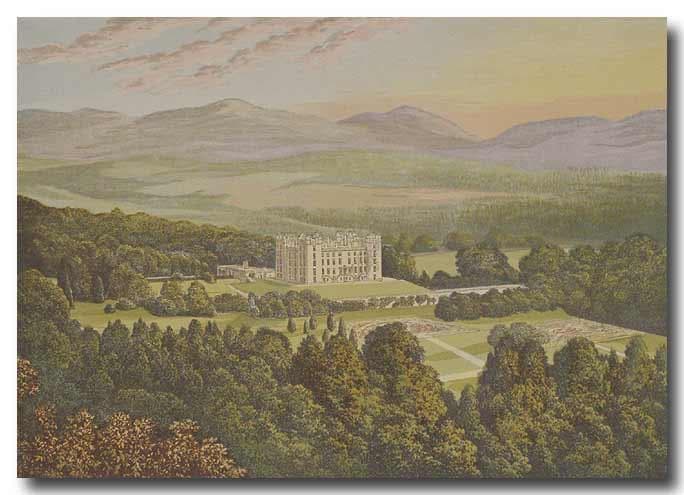
Drumlanrig Castle stands prominently on the Queensberry Estate in Dumfries and Galloway, Scotland, renowned for its striking pink sandstone façade that has earned it the affectionate nickname, the "Pink Palace". Constructed between 1679 and 1689, this castle exemplifies the grandeur of late 17th-century Renaissance architecture in Scotland. It serves as the historic seat and current residence of the Duke and Duchess of Buccleuch and Queensberry, maintaining a continuous aristocratic presence on this site for centuries.
The castle is open to the public during scheduled times, inviting visitors to explore its extensive interiors and grounds. It is a category A listed building, reflecting its national significance and preservation status. Beyond its architectural prominence, Drumlanrig Castle is celebrated for its rich cultural heritage, housing an internationally important art collection and offering diverse attractions on its estate.
Historical background and significance
The site of Drumlanrig Castle has a long history dating back to at least the late 14th century, originally known as "Drumlangryg," a name likely derived from Cumbric or Gaelic origins meaning a ridge or small woodland clearing. Its elevated position overlooking the Nith Valley underscores its strategic importance through the ages.
The present castle was commissioned by William Douglas, the first Duke of Queensberry, following his elevation to the dukedom in 1684. He chose to replace an earlier Douglas family stronghold with a grand residence that would assert his status and loyalty to King Charles II. The construction spanned a decade, culminating in a formidable structure of 120 rooms, 17 turrets, and four towers.
Drumlanrig Castle also played a role in the turbulent history of Scotland, notably during the Jacobite uprisings of the mid-18th century. On December 22, 1745, Charles Edward Stuart, known as Bonnie Prince Charlie, stayed at the castle during his retreat, highlighting its military and political relevance at the time.
Architectural features and estate layout
The castle's design follows a rectangular plan centered around a large courtyard, a layout that reflects the footprint of the medieval fortress it replaced. The use of distinctive pink sandstone gives the castle its unique color and character, making it a landmark in the region.
The castle’s 17 turrets and four towers are characteristic of the Renaissance style favored by the Scottish nobility in the late 1600s. These architectural elements not only provided defensive capabilities but also conveyed the grandeur and prestige of the owners. The interiors feature numerous chambers and halls decorated with period details, befitting the status of the Dukes of Buccleuch and Queensberry.
Formal gardens and landscape enhancements
Surrounding the castle, the formal gardens were developed between 1675 and 1697, influenced by the work of the renowned architect Sir William Bruce. These gardens were enclosed by stone walls and featured six stone pavilions with distinctive ogee-shaped lead roofs, mirroring the castle’s roofing style.
Further enhancements between 1728 and 1732 by Sir John Clerk of Penicuik introduced water cascades and a unique "clanging clock," adding sensory experiences of sound and movement to the estate. Recreational features such as a summer house and an early form of a bowling green were also established by the early 18th century, reflecting the leisure pursuits of the aristocracy. However, by 1810, the formal gardens had been removed following a period of decline, marking a shift in the estate’s landscape management.
A mile-long avenue of trees was later planted to welcome Queen Victoria on a planned visit, illustrating the ongoing evolution of the estate’s grounds into the 19th century.
Art collections and cultural heritage
Drumlanrig Castle is home to the Buccleuch Collection, one of the most important private art collections in the United Kingdom. This collection spans over five centuries and includes masterpieces by artists such as Rembrandt, whose painting An Old Woman Reading is a highlight. The collection also features portraits by Thomas Gainsborough, Alan Ramsay, and Sir Joshua Reynolds, alongside landscapes by Paul Sandby and works by Dutch masters and caricaturist Thomas Rowlandson.
This extensive collection reflects the cultural patronage of the Montagu, Douglas, and Scott families, the ancestors of the current Dukes. The artworks are displayed throughout the castle, providing visitors with a rich experience of aristocratic art and history.
Archaeological significance and surrounding sites
Approximately 320 meters southeast of the castle lie the remains of a Roman fort, discovered through aerial photography in 1984 and partially excavated in 2004 by the archaeological television program Time Team. This fort is a significant relic of the Roman presence in Scotland, adding an ancient dimension to the estate’s long history of military occupation.
The fort’s earthworks and foundations survive as visible features in the landscape, offering insight into the strategic importance of the Nith Valley across millennia.
Modern adaptations and visitor facilities
The castle grounds include a repurposed former stable yard, now known as the Stableyard Studios, which houses a variety of local businesses, a tearoom, and an adventure playground. These facilities provide amenities for both tourists and local residents, blending contemporary use with the historic fabric of the estate.
Drumlanrig Castle remains a vibrant cultural and historical site, combining its architectural grandeur, rich art collection, and scenic setting to attract visitors interested in Scottish history, art, and aristocratic heritage.
Frequently asked questions (FAQ)
- When was Drumlanrig Castle built and by whom?
- Drumlanrig Castle was built between 1679 and 1689 by William Douglas, the first Duke of Queensberry.
- What architectural style is Drumlanrig Castle known for?
- Drumlanrig Castle is an example of late 17th-century Renaissance architecture, characterized by its pink sandstone construction and turrets.
- Can visitors explore the art collection at Drumlanrig Castle?
- Yes, visitors can view the Buccleuch Collection, which includes works by Rembrandt, Gainsborough, and other renowned artists.
- Is Drumlanrig Castle open to the public?
- Yes, Drumlanrig Castle is open to the public at set times, offering tours of the castle and access to the estate's gardens and facilities.
- What are some notable features of the castle grounds?
- The castle grounds feature formal gardens originally designed by Sir William Bruce, a mile-long avenue planted for Queen Victoria, and the Stableyard Studios with local businesses and a tearoom.
- Are there any ancient archaeological sites near Drumlanrig Castle?
- Yes, the remains of a Roman fort dating from the Roman occupation of Scotland lie about 320 meters southeast of the castle.
Photo gallery

Photo by Unknown authorUnknown author•Public domain
Information
Sources & official resources
Verify the information above using these authoritative references.
Loading map...
Visitor reviews
No reviews yet. Been here? Write the first review and help other travelers!
Write the first reviewVisited this castle? Share your experience
Your review helps other travelers and adds first-hand knowledge to our encyclopedia.