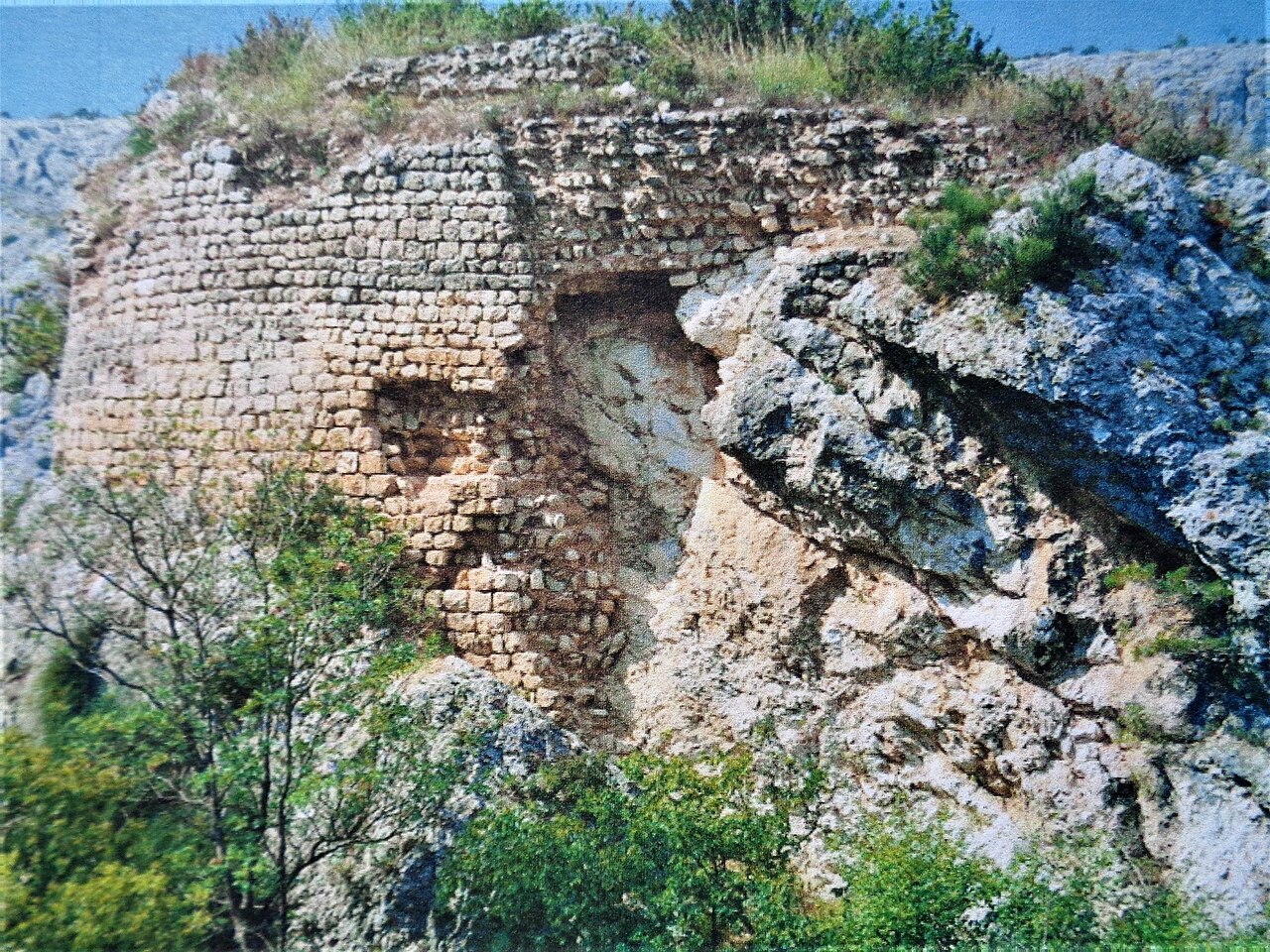
Drniš Castle, locally known as Utvrda Gradina, is a historic fortress located in the town of Drniš in the Šibenik-Knin County of Croatia. The term 'Gradina' is a common Croatian name for fortified sites, encompassing hill forts, small settlements, or castles, reflecting the site's long-standing military significance.
Archaeological investigations have revealed that the site of Drniš Castle has been of strategic importance since Late Roman times. Evidence suggests the presence of a castrum or military fortification designed to control vital trade routes through the region. Positioned next to the canyon of the Čikola River, where it opens onto the Petrova Plain, the location offered commanding views and defensive advantages, making it a natural choice for fortification.
Origins and medieval construction
The exact date of the castle's initial construction remains uncertain, but it is generally attributed to the 14th century, built by the Nelipić family, a prominent Croatian noble lineage that controlled the region from 1322 onward. The Nelipićs established a network of fortifications along the Krka and Čikola rivers, including castles such as Ključica, Kamičak, Bogočin, and Nečven. This chain of castles served to secure their territorial holdings and control movement through the area.
Alongside the castle, the settlement of Drniš began to develop, with the first written mention of the village appearing in 1494. The castle functioned as a defensive stronghold and administrative center for the Nelipić domain.
Ottoman conquest and modifications
In 1522, the Ottoman Empire expanded into this part of Croatia, capturing Drniš Castle as part of their broader regional conquests. The Ottomans undertook significant modifications to the fortress, adapting it to their military needs. The most notable surviving feature from this period is the ruined round tower, which dates from the Ottoman occupation. This tower exemplifies the Ottoman approach to fortification, incorporating robust masonry and defensive elements suited to the warfare of the time.
Venetian siege and transformation
During the Fifth Ottoman-Venetian War in 1649, Venetian forces under commander Leonardo Foscolo captured the castle. To prevent the Ottomans from reoccupying it, Foscolo ordered the demolition of the fortress. The Ottomans were eventually expelled from the region in 1684, after which Drniš came under Venetian rule.
Recognizing the strategic importance of Drniš, the Venetians restored the ruined medieval castle and incorporated it into a new, larger bastion fort. This transformation reflected contemporary military architectural trends, emphasizing angular bastions and artillery defenses designed to withstand cannon fire.
Decline and current state
By 1715, the threat of Ottoman attacks had diminished considerably, and the castle lost its military significance. It was gradually abandoned in the early 19th century. Subsequently, the fortress became a convenient source of building material for the local population, accelerating its ruin.
Today, only fragments of the original structures remain. The most visible remnants include the ruined Ottoman round tower and portions of the medieval walls. The extensive Venetian bastion fortifications have largely disappeared.
The site is freely accessible to the public and forms part of a small public park in Drniš. It offers visitors a glimpse into the layered military history of the region, from its medieval origins through Ottoman and Venetian periods.
Architectural features and strategic importance
The castle's location next to the Čikola River canyon was critical for controlling access between the river valley and the Petrova Plain. The natural terrain provided defensive advantages, with steep slopes limiting approaches. The castle's original medieval design likely included curtain walls, towers, and a keep, typical of Late Medieval Croatian fortifications.
The Ottoman modifications introduced a distinctive round tower, a common feature in Ottoman military architecture designed to provide wide fields of fire and resist artillery. The later Venetian bastion fort reflected the evolution of military technology, with angled walls and bastions designed to deflect cannonballs and improve defensive coverage.
Historical context and regional importance
Drniš Castle's history reflects the turbulent frontier between Christian European powers and the expanding Ottoman Empire during the Late Medieval and Early Modern periods. The castle's capture and recapture illustrate the shifting control of this borderland region. The Nelipić family's network of fortresses was part of the Croatian noble defense system against external threats.
The Venetian restoration of the castle as a bastion fort was part of broader efforts to secure Dalmatia against Ottoman incursions. The eventual abandonment of the fortress corresponds with the stabilization of borders and the decline of Ottoman power in the area.
Visiting Drniš Castle today
Visitors to Drniš can explore the castle ruins freely, enjoying views of the surrounding landscape and the Čikola River canyon. The site serves as a tangible connection to the region's layered history, from Roman times through medieval nobility, Ottoman occupation, and Venetian military engineering.
The castle's integration into a public park makes it accessible and a pleasant destination for those interested in Croatian history and fortifications. While the remains are modest, they offer valuable insights into the architectural and historical evolution of fortifications in this part of Croatia.
Frequently asked questions (FAQ)
- What is Drniš Castle known for?
- Drniš Castle, located in Croatia, is renowned for its impressive medieval architecture and its strategic location overlooking the Krka River. It played a significant role in protecting the region during the Ottoman invasions and serves as a testament to Croatia's rich historical heritage.
- When was Drniš Castle built?
- Drniš Castle was originally constructed in the 15th century, with significant renovations made in the following centuries. Its construction was aimed at fortifying the area against potential invasions, showcasing the military architecture of the period.
- Can I visit Drniš Castle?
- Yes, Drniš Castle is open to visitors who wish to explore its historical grounds and enjoy panoramic views of the surrounding landscape. Guided tours are often available, providing insights into the castle's history and architecture.
- What are the opening hours for Drniš Castle?
- Drniš Castle is typically open to visitors from 9 AM to 5 PM, though hours may vary seasonally. It’s advisable to check the official website or local tourist information for the most current visiting hours before planning your trip.
- Is it possible to access Drniš Castle by public transport?
- While there is limited public transport directly to Drniš Castle, visitors can take a bus to Drniš and then walk to the castle. The hike offers an opportunity to enjoy the scenic surroundings, making it a pleasant part of your visit.
- What is the best time to visit Drniš Castle?
- The best time to visit Drniš Castle is during the spring and early autumn months when the weather is mild and ideal for outdoor exploration. These seasons also provide beautiful views of the landscape, enhancing your experience at the castle.
- Are there any nearby attractions to Drniš Castle?
- Yes, nearby attractions include the stunning Krka National Park, known for its waterfalls and natural beauty, as well as the historic town of Šibenik, which features UNESCO-listed sites. Exploring these locations can make for a well-rounded visit to the region.
- What are the ticket prices for visiting Drniš Castle?
- Ticket prices for Drniš Castle are generally quite affordable, making it accessible for visitors of all ages. Discounts may be available for students, seniors, and groups, so it's worth checking for special offers when planning your visit.
Information
Loading map...
Visitor reviews
No reviews yet. Been here? Write the first review and help other travelers!
Write the first reviewVisited this castle? Share your experience
Your review helps other travelers and adds first-hand knowledge to our encyclopedia.