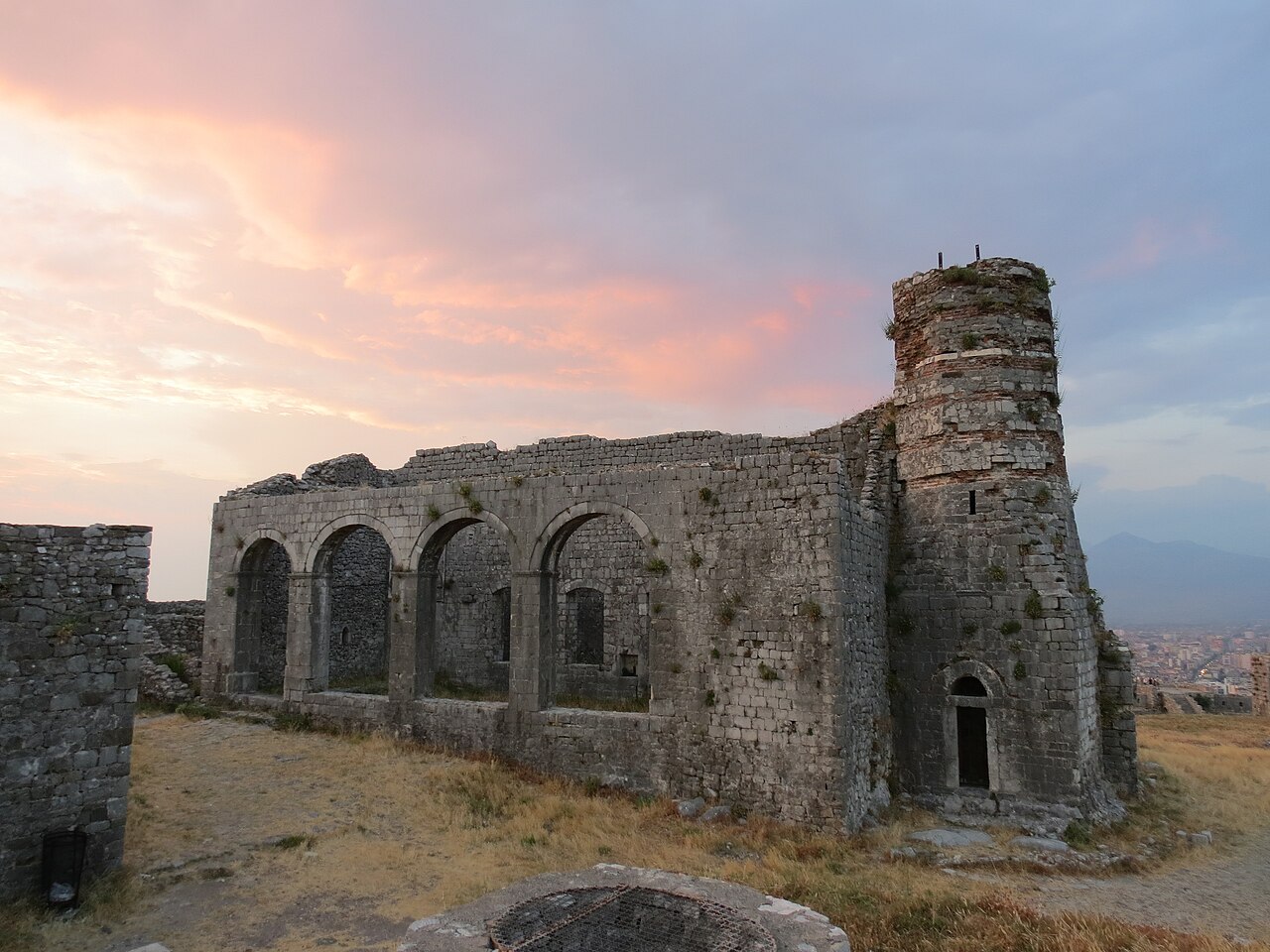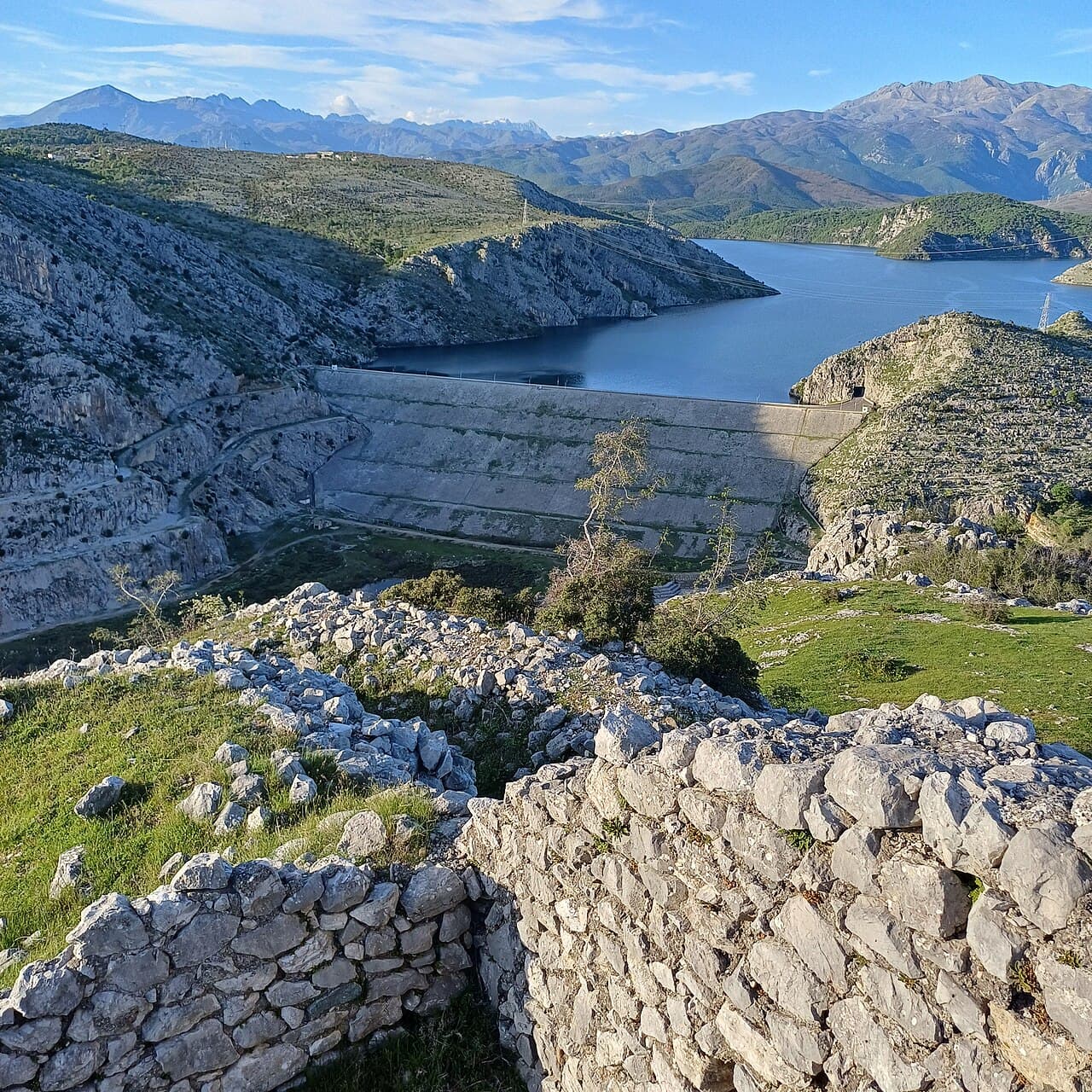
Dagnum fortress, known in Albanian as Danjë or Dejë, in Serbian as Danj, and in Italian as Dagno, is a historically significant medieval stronghold situated near the modern town of Vau i Dejës in northern Albania. This fortress played a crucial role throughout the medieval period due to its strategic location and was a center of military, religious, and administrative importance. It was repeatedly contested and controlled by various powers, including the Albanian principalities, the Serbian Empire, the Republic of Venice, and the Ottoman Empire. Today, Dagnum remains a notable site for its architectural and historical legacy, as well as its status as a Latin Catholic titular see.
Historical significance and political control
Dagnum's history is marked by its position as a fortified town and bishopric in the medieval Balkans. The fortress was first established during the Middle Ages and quickly became a contested site due to its strategic location near important trade and military routes. It served as a defensive bastion against invasions and a center of local governance.
During its history, Dagnum was under the control of several regional powers. It was part of the Albanian principalities in the early medieval period and later came under the influence of the Serbian Empire during its expansion in the 14th century. The Republic of Venice took control of Dagnum in the late medieval period as part of its efforts to secure its holdings along the Adriatic coast. Eventually, the fortress fell to the Ottoman Empire, which maintained control over the region for several centuries.
Architectural features and fortifications
The fortress of Dagnum is classified as a bastioned fortress, reflecting its design adapted to the evolving military technologies of the late medieval and early modern periods. Its defensive structures include thick stone walls reinforced with bastions designed to withstand artillery attacks. The layout of the fortress incorporates multiple defensive layers, including curtain walls, towers, and gates that controlled access to the interior.
The fortress's bastions allowed defenders to cover adjacent walls with crossfire, a significant advancement in fortification design compared to earlier medieval castles. The walls were constructed using local stone materials, providing durability and resistance to siege warfare. Inside the fortress, remains of administrative buildings, residential quarters, and religious structures, including a bishopric seat, have been identified.
Religious and cultural importance
Dagnum was not only a military stronghold but also a religious center. It was the seat of a Latin Catholic bishopric, reflecting the influence of Western Christianity in the region during the medieval period. The bishopric played a role in local governance and the cultural life of the fortress's inhabitants.
The religious significance of Dagnum persisted even after the fortress lost its strategic military importance. It remains a titular see in the Roman Catholic Church, preserving its ecclesiastical heritage. This status underscores the long-standing cultural and religious history embedded in the site.
Dagnum in the context of Albanian medieval fortifications
Within the broader network of medieval fortifications in Albania, Dagnum fortress stands out for its architectural adaptation to gunpowder warfare and its role as a contested stronghold among regional powers. Its bastioned design represents a transitional phase in fortress construction, bridging medieval and early modern military architecture.
The fortress's location near Vau i Dejës connected it to important trade routes and river crossings, enhancing its strategic value. Its history reflects the complex political and military dynamics of the Balkans during the Middle Ages and the Renaissance.
Current condition and preservation
Today, the remains of Dagnum fortress are partially preserved. The site shows evidence of its bastioned fortifications, though some sections have deteriorated over time due to natural decay and historical conflicts. Archaeological studies have helped document the fortress's layout and historical phases.
Efforts to preserve and study Dagnum contribute to understanding Albania's medieval heritage and the evolution of fortress architecture in the region. Visitors to the site can observe the remnants of its walls and defensive structures, gaining insight into the military and cultural history of northern Albania.
Photo gallery

Information
Loading map...
Visitor reviews
No reviews yet. Been here? Write the first review and help other travelers!
Write the first reviewVisited this castle? Share your experience
Your review helps other travelers and adds first-hand knowledge to our encyclopedia.