Doyden Castle

Doyden Castle: the secluded 19th-century party fortress in Cornwall
Wadebridge, England, United Kingdom
Post-Renaissance (17th–18th c.)
Restored

Doyden Castle stands solitary atop a rugged, wind-swept hill overlooking the sea near Wadebridge in Cornwall, England. This unique structure is a rare example of a small-scale castle built not for defense or nobility, but as a private retreat for indulgence and revelry during the early 19th century. Constructed around the 1830s, the castle reflects the eccentric vision of its original owner, Samuel Symons, a wealthy businessman and notorious hedonist who sought a secluded venue to host extravagant parties away from societal scrutiny.

The castle’s remote location on Doyden Point, a rocky bluff constantly battered by coastal winds, provided the perfect backdrop for Symons’ escapades. The structure itself, designed in the style of a medieval fortress but on a much smaller scale, features just two above-ground floors and a basement. The upper floors served as the main social spaces for Symons and his guests, while the basement was primarily used for storing vast quantities of alcohol, essential for the legendary festivities that took place within its stone walls.

Architectural features and design

Doyden Castle’s architecture is a charming interpretation of medieval castle elements, adapted to the needs and tastes of its 19th-century owner. Built from sturdy local stone, the castle’s compact footprint emphasizes solidity and seclusion rather than grandeur or military strength. Its two floors above ground are modest in scale but designed to accommodate social gatherings, with rooms likely arranged to facilitate conviviality and entertainment.

The castle’s basement, serving as a cellar, was crucial for storing the copious amounts of wine, spirits, and other provisions required for Symons’ notorious parties. Despite its small size, the building’s stone construction has ensured its survival through nearly two centuries of exposure to harsh coastal weather.

Location and setting

Perched on Doyden Point, the castle overlooks the Atlantic Ocean, offering panoramic views of the rugged Cornish coastline. The site’s isolation and natural defenses—steep cliffs and relentless winds—made it an ideal hideaway for Symons’ private gatherings. The castle’s position also reflects a romantic 19th-century fascination with medieval architecture and picturesque ruins, which influenced its design and purpose.

Historical context and ownership

Samuel Symons, the castle’s creator, was a man known for his love of gambling, drinking, and social excess. His decision to build a mini-castle as a personal party venue was unusual for the period, blending elements of Gothic revival taste with a more hedonistic lifestyle. The castle functioned as a private club where Symons and his friends could escape societal norms and indulge their vices in relative privacy.

Though the parties eventually ceased as Symons and his contemporaries passed on, the castle itself endured. Unlike many grander castles that fell into ruin, Doyden Castle’s compact and robust construction helped preserve it as a distinctive historic structure.

Modern use and preservation

Today, Doyden Castle is under the stewardship of the National Trust, which has maintained the building and adapted it for contemporary use. The interiors have been sympathetically updated with modern amenities, including new windows that respect the castle’s architectural character while providing comfort for visitors.

The castle is now available as a holiday rental, allowing guests to experience a unique blend of historical ambiance and modern convenience. Visitors can enjoy the dramatic coastal setting and imagine the lively gatherings that once defined this unusual fortress. While it no longer hosts the wild parties of its past, Doyden Castle remains a fascinating example of 19th-century architectural whimsy and social history.

Visiting and accessibility

As a National Trust property, Doyden Castle is accessible to the public primarily through holiday bookings. Its remote location means visitors should prepare for a journey across rugged terrain, but the reward is a rare opportunity to stay in a historic castle with stunning sea views. The castle’s preservation and adaptive reuse demonstrate the value of maintaining even the more eccentric corners of England’s architectural heritage.

Frequently asked questions (FAQ)

How do I get to Doyden Castle?
Doyden Castle is located near Wadebridge in Cornwall, United Kingdom. You can reach the castle by car, with parking available nearby, or by public transport, with bus services operating in the area. The scenic coastal paths also provide access for those who prefer walking.
What is the historical significance of Doyden Castle?
Doyden Castle, built in the 19th century, was designed as a holiday retreat for the wealthy and showcases the Gothic Revival architectural style. It is a unique example of a private residence that reflects the romantic ideals of the era. The castle is also known for its picturesque setting overlooking the sea, making it a fascinating historical landmark.

Information

Hill Castle

Current owner

National Trust

Sources & official resources

Verify the information above using these authoritative references.

Loading map...

Visitor reviews

No reviews yet. Been here? Write the first review and help other travelers!

Write the first review

Visited this castle? Share your experience

Your review helps other travelers and adds first-hand knowledge to our encyclopedia.
Write a review

(5/5)

0/2000 characters

Your review will be visible after admin approval

Nearby castles

11.9 km
Tintagel Castle — United Kingdom castle

Tintagel Castle

Tintagel, United Kingdom

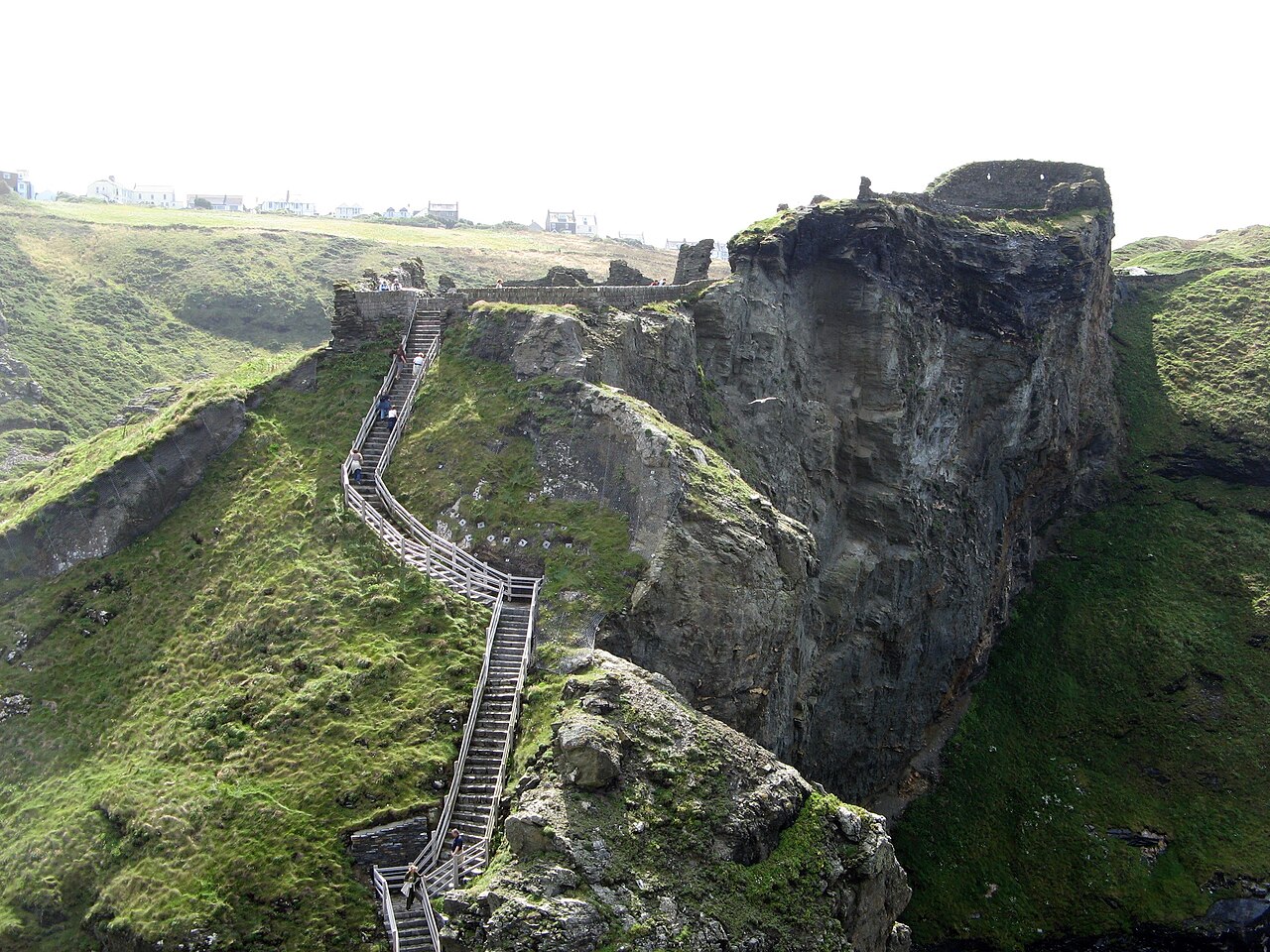
Tintagel Castle is a remarkable medieval fortification located on the rugged peninsula of Tintagel Island, adjacent to the village of Tintagel in North Cornwall, England. This iconic hill castle is renowned not only for its dramatic ruins perched on a rocky promontory but also for its deep-rooted connections to Arthurian legend and its significant archaeological heritage spanning from the Romano-British era through the High Medieval period. The site of Tintagel Castle has a rich history of occupation beginning in the Romano-British period, with numerous artefacts uncovered that attest to activity during the 3rd and 4th centuries AD. Although no Roman-built structures have been definitively identified, finds such as Roman coins and imported pottery suggest that the peninsula was a place of some importance, possibly linked to the tin-streaming industry that attracted Roman interest in the region. This early occupation set the stage for Tintagel's later prominence. Early medieval settlement and royal connections Following the collapse of Roman authority in Britain in the early 5th century, Tintagel became an elite settlement during the early medieval period, likely serving as a seasonal residence for the kings of Dumnonia, a kingdom in southwestern Britain. Excavations have revealed the foundations of a substantial palace complex dating to the 5th or early 6th century, featuring refined stone constructions with slate flooring and steps, indicative of high-status occupation. This early medieval site is notable for its extensive trade links with the Mediterranean world, evidenced by the discovery of imported luxury items such as Phocaean red slip pottery from modern-day Turkey, amphorae from southern Turkey or Cyprus, and fine glassware from Spain and North Africa. These finds highlight Tintagel's role as a trading hub and a center of cultural exchange during a period often characterized as the Dark Ages. Defensive measures from this period include a large ditch that restricted access to the peninsula, enhancing its defensibility. The presence of inscribed slates bearing a mixture of Latin, Greek, and Celtic symbols further emphasizes the site's cultural complexity and literacy among its elite inhabitants. The medieval castle of richard, earl of cornwall In 1233, Richard, 1st Earl of Cornwall, brother of King Henry III, commissioned the construction of the castle that now dominates the site. Built deliberately in a style that evoked antiquity, the castle was intended to reinforce the area's legendary associations with King Arthur and to assert the historical status of Cornwall as a royal territory. The castle's layout includes key medieval architectural features such as a great hall, multiple courtyards, gatehouses on both the mainland and island sections, and a fortified Iron Gate protecting access from the sea. Residential quarters, service buildings, a chapel, and a walled garden were also part of Richard's complex, reflecting the castle's dual role as a defensive stronghold and a noble residence. Over the centuries, Tintagel Castle fell into disrepair. The roof of the great hall was removed in the 14th century, and by the 16th century, the castle was largely ruinous. Parts of the castle were repurposed as a prison, and the surrounding land was used for grazing sheep. Coastal erosion has further contributed to the loss of some structures. Arthurian legends and cultural significance Tintagel Castle is famously linked to the legends of King Arthur, first popularized by Geoffrey of Monmouth in the 12th century. Geoffrey's Historia Regum Britanniae describes Tintagel as the place where Arthur was conceived, through the magical disguise of Uther Pendragon by Merlin. This narrative has cemented Tintagel's place in British cultural history as a symbol of Arthurian myth. While the medieval castle itself postdates the legendary Arthurian period, the site's earlier occupation and royal connections provide a plausible historical backdrop for the myths. The castle and its surroundings have inspired numerous literary and artistic works, including poems by Alfred, Lord Tennyson and plays by Thomas Hardy, as well as modern sculptures and installations that celebrate its mythical heritage. Archaeological excavations and discoveries Archaeological interest in Tintagel Castle began in the 19th century, with major excavations in the 1930s led by Courtenay Arthur Ralegh Radford. Initial interpretations suggested a monastic site, but later research has established the presence of an elite royal settlement. Recent excavations in 2016 and 2017 uncovered substantial remains of early medieval buildings, luxury imported goods, and inscribed slates, providing insight into the site's significance during the Dark Ages. The discovery of the "Artognou stone," inscribed with Latin text, has fueled debate about Tintagel's historical connections to Arthurian figures, though definitive proof remains elusive. Modern conservation efforts include the installation of a cantilevered steel footbridge designed to evoke Arthur's sword, improving access between the mainland and the island. Artistic additions such as the "Gallos" statue and a carved face of Merlin near Merlin's Cave enhance the visitor experience and celebrate the site's legendary past. Visitor experience and heritage management Today, Tintagel Castle is managed by English Heritage and is one of their top attractions, drawing around 200,000 visitors annually. The castle's dramatic coastal setting, combined with its rich archaeological and legendary significance, makes it a compelling destination for history enthusiasts and tourists alike. Visitors can explore the extensive ruins, including the medieval gatehouses, great hall, and early medieval palace remains. The site also offers scenic views of the Atlantic Ocean and access to Merlin's Cave, a natural sea cave linked to Arthurian legend. Educational signage and guided tours provide context for the site's complex history. Access was improved in 2019 with the opening of the new footbridge, enhancing safety and connectivity. The castle's location on a rugged peninsula means visitors should be prepared for uneven terrain and variable weather conditions.

High Medieval (11th–13th c.)
Details
12 km

Tintagel Dark Age Settlement

Tintagel, United Kingdom

Tintagel Dark Age settlement, located on the rugged coast of Cornwall in England, offers a fascinating glimpse into early medieval Britain. While the nearby Tintagel Castle ruins largely date from the 13th century, the site itself was a significant center of activity during the Dark Ages, specifically from the 5th to 7th centuries AD. This period saw Tintagel as a fortified settlement and a vibrant community, playing a crucial role in the region historically known as Dumnonia. The settlement’s strategic position on a rocky promontory, connected to the mainland by a narrow footbridge, provided natural defenses that made it a formidable stronghold. Archaeological excavations have revealed evidence of extensive occupation, including the remains of buildings, fortifications, and artifacts that point to a complex social and economic structure. Far from being a mere military outpost, Tintagel was a bustling hub with significant trade connections, particularly with the Mediterranean world. Early medieval context and historical significance The period following the Roman withdrawal from Britain around the early 5th century was marked by political fragmentation and the rise of local kingdoms. Tintagel emerged as a key site within the kingdom of Dumnonia, which covered much of modern-day Cornwall and Devon. The settlement’s prominence during this time is underscored by the scale and quality of archaeological finds, including imported Mediterranean pottery and glassware. The presence of such luxury items indicates that Tintagel was not isolated but actively engaged in long-distance trade. It is believed that the community exported tin, a valuable resource abundant in Cornwall, to Mediterranean markets. This trade would have brought wealth and status to Tintagel, supporting a thriving local industry and a socially complex settlement. Archaeological discoveries and site layout Excavations at Tintagel have uncovered a range of structural remains that provide insight into the settlement’s layout and daily life. These include stone foundations of buildings, defensive walls, and evidence of industrial activity such as metalworking. The architecture reflects a blend of local building traditions and influences from wider Britain and beyond. The site’s defensive features, including the natural isolation of the promontory and man-made fortifications, highlight its importance as a stronghold. The narrow footbridge connecting Tintagel to the mainland would have been a critical point of access, easily defensible against attackers. Trade and cultural connections One of the most remarkable aspects of Tintagel is the extensive evidence of trade with the Mediterranean. Archaeologists have found fragments of fine Mediterranean pottery and glassware, the largest concentration of such imports in Western Britain. These artifacts suggest that Tintagel’s inhabitants had access to luxury goods and were part of a wider network of exchange across Europe and the Mediterranean basin. This trade network would have been supported by the export of tin, an essential metal for making bronze and later for other uses. Cornwall’s tin mines were among the most important in Europe during the early medieval period, and Tintagel’s role as a trading port helped link this resource to distant markets. Legendary associations and cultural heritage Tintagel is famously linked to the legendary figure of King Arthur. Medieval stories and later romantic literature have identified the site as Arthur’s birthplace, adding a layer of myth and cultural significance to its historical importance. While there is no definitive archaeological evidence to confirm this legend, the association has contributed to Tintagel’s enduring fascination and its status as a symbol of British heritage. The blending of historical fact and legend has made Tintagel a popular destination for visitors interested in both archaeology and Arthurian lore. The site’s dramatic coastal setting and evocative ruins continue to inspire imagination and scholarly inquiry alike. Preservation and public access Today, Tintagel Dark Age settlement is managed as an important archaeological site. The remains are partially preserved, with ongoing efforts to protect and interpret the site for visitors. Access to the settlement involves crossing the iconic narrow footbridge, which adds to the experience of visiting this evocative location. The site is open to the public, with informational displays and guided tours available to enhance understanding of its historical and cultural context. Tintagel remains a key destination for those interested in early medieval history, archaeology, and the enduring legends of Britain.

Early Medieval (5th–10th c.)
Details
16.7 km

Bottreaux Castle

United Kingdom, United Kingdom

Bottreaux Castle stands as a significant example of a Norman motte and bailey castle located in Boscastle, Cornwall, England. Constructed in the 12th century during the reign of King Henry II, it reflects the early Norman strategy of establishing secure strongholds to consolidate control over newly conquered territories. The castle's origins are closely tied to the de Bottreaux family, Norman settlers who built the fortification to assert their dominance in the region following the Norman Conquest of England. The castle was likely erected between 1154 and 1189, a period marked by the construction of many similar earthwork and stone castles across England. Sir William des Bottreaux is credited with founding the castle, which served as a local administrative center and defensive site. The de Bottreaux family maintained ownership for several centuries, with their status rising to the peerage as Barons Botreaux in the 14th century. Despite its early establishment, Bottreaux Castle does not feature prominently in official records until the 13th century, indicating its initial function was primarily for local governance and defense rather than major military engagements. Historical development and decline Following the death of the last Bottreaux heir in 1462, the castle's role diminished significantly. By the late 15th century, chroniclers such as William Worcester described the site more as a manor house than a fortified castle. This transformation reflects the broader decline of many medieval castles as military fortifications during the post-medieval period. By 1538, historian John Leyland noted that the ruins were no longer worthy of the castle title, with locals referring to the site simply as "the Courte." Around 1600, records from Richard Carew reveal that the site had been repurposed as a prison, accommodating both male and female inmates, which underscores its continued administrative importance despite its physical decline. By the 18th century, Bottreaux Castle had fallen into extensive ruin. An 1852 survey documented only partial remains of the defensive earthworks and fragments of stone walls. The castle's historical significance was formally recognized in the 20th century when it was designated a Scheduled Monument in 1974, ensuring its protection and conservation as an important cultural heritage site. Architectural features and site layout Bottreaux Castle was originally constructed as a motte and bailey castle, a typical Norman design featuring an elevated earth mound (the motte) topped by a fortified structure, alongside an enclosed courtyard (the bailey) used for domestic and defensive purposes. The motte is situated on a steep spur overlooking the River Jordan, providing a commanding vantage point over the surrounding landscape and controlling access routes through the valley. The surviving remains primarily consist of earthworks, including the motte itself and surrounding defensive banks. By the mid-19th century, roughly half of the motte's earthwork was still visible, along with fragments of stone walls that once crowned the summit. These wall remnants indicate the presence of a stone keep or defensive tower, although detailed records of the castle's architectural embellishments or internal layout are lacking. The bailey would have contained ancillary buildings such as barracks, stables, and storage facilities, enclosed by wooden palisades or stone walls, but no above-ground remains survive today. The site’s later use as a prison is noted in historical documents, but no physical evidence of prison-related structures remains visible. Preservation and current status Today, Bottreaux Castle exists mainly as a ruined earthwork site within a public park in Boscastle. The motte remains a prominent feature in the landscape, offering visitors views over the valley and river below. Conservation efforts have focused on protecting the earthworks and the limited stone remains from further erosion and damage. The castle's designation as a Scheduled Monument reflects its importance as a cultural and historical asset, preserving the outline of this early Norman fortification for future generations. While no decorative elements, gates, or inscriptions survive, the site's historical records provide valuable insight into its changing functions from a noble residence to a prison and ultimately a heritage ruin. Historical context and significance Bottreaux Castle exemplifies the Norman approach to castle-building in the British Isles during the High Medieval period. Its strategic location and design are characteristic of the motte and bailey castles that facilitated Norman control over newly acquired lands. The castle's evolution from a defensive stronghold to a manor house and later a prison reflects broader social and political changes in England from the medieval to the early modern period. The castle also illustrates the rise and fall of noble families such as the de Bottreaux lineage, whose fortunes were closely tied to their holdings. The transition of the site’s role over centuries underscores the adaptive reuse of medieval fortifications as military needs and administrative structures evolved. Visitor experience and accessibility Visitors to Bottreaux Castle can explore the earthworks and enjoy panoramic views of Boscastle and the surrounding countryside. While no standing buildings remain, interpretive signage explains the site's history and significance. The location within a public park makes it accessible for casual visits, hiking, and educational tours focused on medieval architecture and local history.

Details

