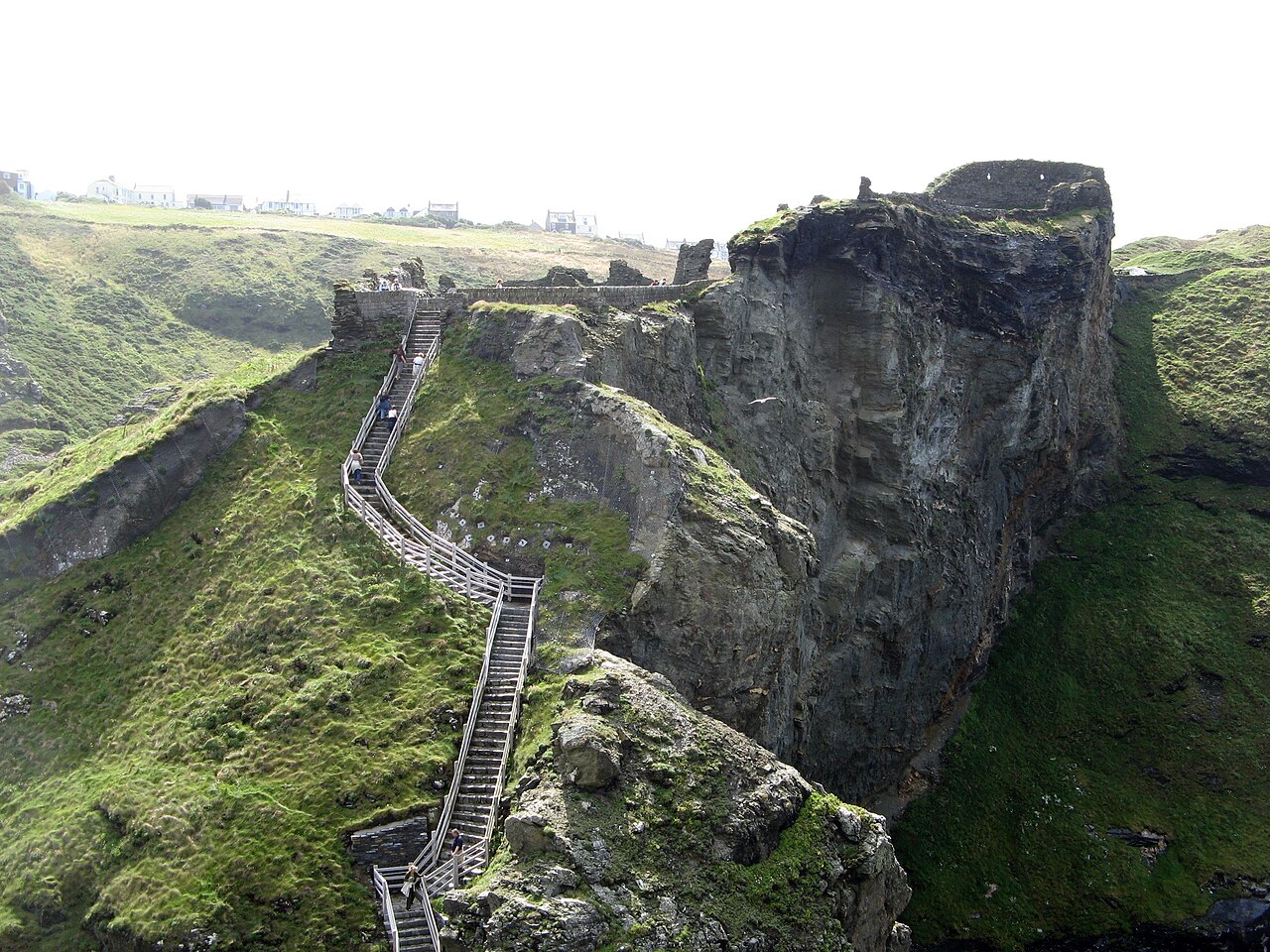
Bottreaux Castle
Bottreaux Castle stands as a significant example of a Norman motte and bailey castle located in Boscastle, Cornwall, England. Constructed in the 12th century during the reign of King Henry II, it reflects the early Norman strategy of establishing secure strongholds to consolidate control over newly conquered territories. The castle's origins are closely tied to the de Bottreaux family, Norman settlers who built the fortification to assert their dominance in the region following the Norman Conquest of England.
The castle was likely erected between 1154 and 1189, a period marked by the construction of many similar earthwork and stone castles across England. Sir William des Bottreaux is credited with founding the castle, which served as a local administrative center and defensive site. The de Bottreaux family maintained ownership for several centuries, with their status rising to the peerage as Barons Botreaux in the 14th century. Despite its early establishment, Bottreaux Castle does not feature prominently in official records until the 13th century, indicating its initial function was primarily for local governance and defense rather than major military engagements.
Historical development and decline
Following the death of the last Bottreaux heir in 1462, the castle's role diminished significantly. By the late 15th century, chroniclers such as William Worcester described the site more as a manor house than a fortified castle. This transformation reflects the broader decline of many medieval castles as military fortifications during the post-medieval period. By 1538, historian John Leyland noted that the ruins were no longer worthy of the castle title, with locals referring to the site simply as "the Courte." Around 1600, records from Richard Carew reveal that the site had been repurposed as a prison, accommodating both male and female inmates, which underscores its continued administrative importance despite its physical decline.
By the 18th century, Bottreaux Castle had fallen into extensive ruin. An 1852 survey documented only partial remains of the defensive earthworks and fragments of stone walls. The castle's historical significance was formally recognized in the 20th century when it was designated a Scheduled Monument in 1974, ensuring its protection and conservation as an important cultural heritage site.
Architectural features and site layout
Bottreaux Castle was originally constructed as a motte and bailey castle, a typical Norman design featuring an elevated earth mound (the motte) topped by a fortified structure, alongside an enclosed courtyard (the bailey) used for domestic and defensive purposes. The motte is situated on a steep spur overlooking the River Jordan, providing a commanding vantage point over the surrounding landscape and controlling access routes through the valley.
The surviving remains primarily consist of earthworks, including the motte itself and surrounding defensive banks. By the mid-19th century, roughly half of the motte's earthwork was still visible, along with fragments of stone walls that once crowned the summit. These wall remnants indicate the presence of a stone keep or defensive tower, although detailed records of the castle's architectural embellishments or internal layout are lacking.
The bailey would have contained ancillary buildings such as barracks, stables, and storage facilities, enclosed by wooden palisades or stone walls, but no above-ground remains survive today. The site’s later use as a prison is noted in historical documents, but no physical evidence of prison-related structures remains visible.
Preservation and current status
Today, Bottreaux Castle exists mainly as a ruined earthwork site within a public park in Boscastle. The motte remains a prominent feature in the landscape, offering visitors views over the valley and river below. Conservation efforts have focused on protecting the earthworks and the limited stone remains from further erosion and damage.
The castle's designation as a Scheduled Monument reflects its importance as a cultural and historical asset, preserving the outline of this early Norman fortification for future generations. While no decorative elements, gates, or inscriptions survive, the site's historical records provide valuable insight into its changing functions from a noble residence to a prison and ultimately a heritage ruin.
Historical context and significance
Bottreaux Castle exemplifies the Norman approach to castle-building in the British Isles during the High Medieval period. Its strategic location and design are characteristic of the motte and bailey castles that facilitated Norman control over newly acquired lands. The castle's evolution from a defensive stronghold to a manor house and later a prison reflects broader social and political changes in England from the medieval to the early modern period.
The castle also illustrates the rise and fall of noble families such as the de Bottreaux lineage, whose fortunes were closely tied to their holdings. The transition of the site’s role over centuries underscores the adaptive reuse of medieval fortifications as military needs and administrative structures evolved.
Visitor experience and accessibility
Visitors to Bottreaux Castle can explore the earthworks and enjoy panoramic views of Boscastle and the surrounding countryside. While no standing buildings remain, interpretive signage explains the site's history and significance. The location within a public park makes it accessible for casual visits, hiking, and educational tours focused on medieval architecture and local history.
Frequently asked questions (FAQ)
- How do I get to Bottreaux Castle?
- Bottreaux Castle is located in the picturesque countryside of the United Kingdom. You can reach the castle by car, with ample parking available on-site, or by public transport with nearby bus services connecting to major towns.
- What is the historical significance of Bottreaux Castle?
- Bottreaux Castle dates back to the 12th century and is a prime example of medieval military architecture. It played a crucial role during various historical conflicts and reflects the rich history of the region.
- When was Bottreaux Castle built?
- Bottreaux Castle was constructed in the early 1100s, making it one of the oldest castles in the area. Its enduring structure showcases the architectural styles of the time and has been preserved through centuries of history.
- Can I visit Bottreaux Castle during the winter months?
- Yes, Bottreaux Castle is open to visitors year-round, although some areas may be restricted during the winter for maintenance. It’s advisable to check the official website for any seasonal opening hours and special events before planning your visit.
- Why is Bottreaux Castle a popular tourist attraction?
- Bottreaux Castle attracts visitors due to its captivating history, stunning architecture, and beautiful surrounding landscapes. The castle provides a unique glimpse into medieval life and offers guided tours that enrich the visitor experience.
- Is it possible to have a guided tour of Bottreaux Castle?
- Yes, guided tours are available at Bottreaux Castle, providing insight into its history and architectural features. These tours are led by knowledgeable guides who can answer questions and enhance your understanding of the castle's significance.
- What are the opening hours for Bottreaux Castle?
- Bottreaux Castle typically opens its doors from 10 AM to 5 PM, but hours may vary seasonally. It's best to check the official website for the most current opening hours and any special holiday schedules.
- What are the ticket prices for visiting Bottreaux Castle?
- Ticket prices for Bottreaux Castle are generally affordable, with discounts available for children, students, and seniors. Visitors can also find family packages and special rates for group tours on the castle's website.
- What are some nearby attractions to Bottreaux Castle?
- In addition to Bottreaux Castle, visitors can explore other historical sites and natural attractions in the area, including scenic walking trails and charming villages. Local museums and art galleries also provide additional cultural experiences for tourists.
Information
Loading map...
Visitor reviews
No reviews yet. Been here? Write the first review and help other travelers!
Write the first reviewVisited this castle? Share your experience
Your review helps other travelers and adds first-hand knowledge to our encyclopedia.