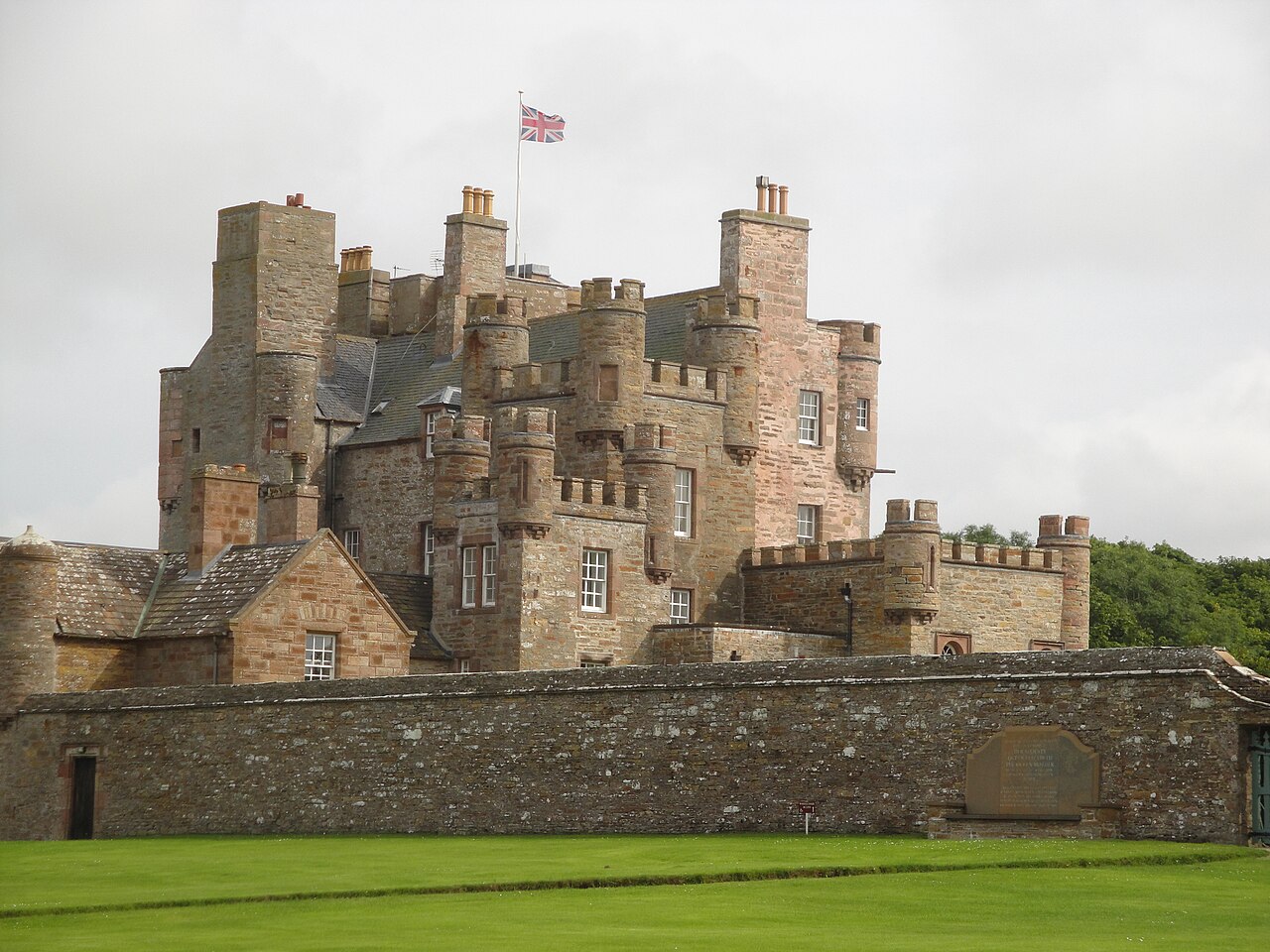
Dounreay Castle Ruins
Dounreay Castle stands as a notable example of a late 16th-century Scottish laird's castle, reflecting the architectural and historical context of the Renaissance period in Scotland. Built in the 1560s by William Sinclair of Dunbeath, a descendant of the Sinclair family closely linked to the Earls of Caithness, the castle exemplifies the fortified residences of minor nobility during this era. Though now in ruins, the remnants of the castle provide insight into Scottish castle construction and the turbulent history of the Highlands during the 16th and 17th centuries.
Historical background and construction
The construction of Dounreay Castle in the 1560s coincided with a period of political and social change in Scotland. The castle was built by William Sinclair of Dunbeath, a member of the Sinclair family, which held significant influence in the northern Highlands. The Sinclairs were a prominent Scottish clan, and the castle served as a fortified residence for the laird, providing both status and defense.
The castle's location in the Highland region placed it within a landscape marked by clan rivalries and occasional conflict, necessitating robust defensive features typical of Scottish laird's castles of the period. These castles were generally smaller and less grand than royal fortresses but were designed to withstand local skirmishes and raids.
Architectural features and layout
Dounreay Castle was constructed as a typical Scottish laird's castle of the Renaissance era, featuring a compact, fortified tower house structure. The castle likely included a rectangular keep with thick stone walls, narrow windows for defense, and a vaulted basement used for storage and protection during attacks.
The castle would have had multiple floors, including a great hall used for social and administrative functions, private chambers for the laird and his family, and possibly a parapet or battlement walk for defenders. The design balanced residential comfort with defensive needs, characteristic of Scottish Renaissance architecture.
While much of the castle is now in ruins, archaeological evidence and historical records suggest that the castle's construction utilized local stone and traditional masonry techniques. The layout would have included a courtyard and possibly ancillary buildings such as stables or workshops, though these have not survived.
Damage and decline
Dounreay Castle suffered significant damage in 1651 during the military campaigns of Oliver Cromwell’s New Model Army in Scotland. The English forces targeted Scottish strongholds to suppress resistance, and many castles were slighted or partially destroyed to prevent their future military use.
Despite the damage, the castle remained inhabited for some time. Records indicate that it was still occupied in 1863, suggesting that parts of the structure were maintained or adapted for continued use. However, by 1889, the castle had become roofless and derelict, marking its transition from a functional residence to a historic ruin.
Current condition and heritage significance
Today, Dounreay Castle exists as a roofless ruin, classified as partially preserved in terms of its structural remnants. The castle's remains offer valuable insight into the architectural style and defensive features of Scottish Renaissance laird's castles.
As one of the few surviving examples of this type of castle in the Highlands, Dounreay Castle holds cultural and historical importance. It reflects the regional history of clan power, the impact of 17th-century conflicts, and the evolution of Scottish domestic fortifications.
Visitors to the site can observe the stone walls and foundational layout, which evoke the castle's past prominence and strategic role. The ruins contribute to the broader understanding of Scotland's architectural heritage and the social history of the Highlands during a transformative period.
Visiting information and accessibility
The castle ruins are located in the Highland region of Scotland, accessible to those interested in Scottish history and architecture. While the site is largely in ruins and lacks modern visitor facilities, it offers an evocative glimpse into the past for enthusiasts and scholars alike.
Visitors should be prepared for uneven terrain and limited amenities. The castle's remote location enhances its historical atmosphere but requires appropriate planning for travel and safety.
Frequently asked questions (FAQ)
- When was Dounreay Castle built and by whom?
- Dounreay Castle was built in the 1560s by William Sinclair of Dunbeath, a member of the Sinclair family linked to the Earls of Caithness.
- What architectural style characterizes Dounreay Castle?
- Dounreay Castle is an example of a Scottish laird's castle from the Renaissance period, featuring a fortified tower house typical of 16th-century Scottish architecture.
- What happened to Dounreay Castle during the 17th century?
- The castle was damaged in 1651 by Oliver Cromwell's New Model Army during their campaign in Scotland, leading to its decline and eventual ruin.
- Is Dounreay Castle accessible to visitors today?
- Yes, the ruins of Dounreay Castle are accessible to visitors, though the site is largely roofless and lacks modern facilities. Visitors should be prepared for uneven ground and limited amenities.
- Why is Dounreay Castle historically significant?
- Dounreay Castle is significant as one of the few remaining examples of a 16th-century Scottish laird's castle, illustrating the defensive and residential architecture of the Renaissance period in the Highlands.
Information
Loading map...
Visitor reviews
No reviews yet. Been here? Write the first review and help other travelers!
Write the first reviewVisited this castle? Share your experience
Your review helps other travelers and adds first-hand knowledge to our encyclopedia.