Castle of Mey
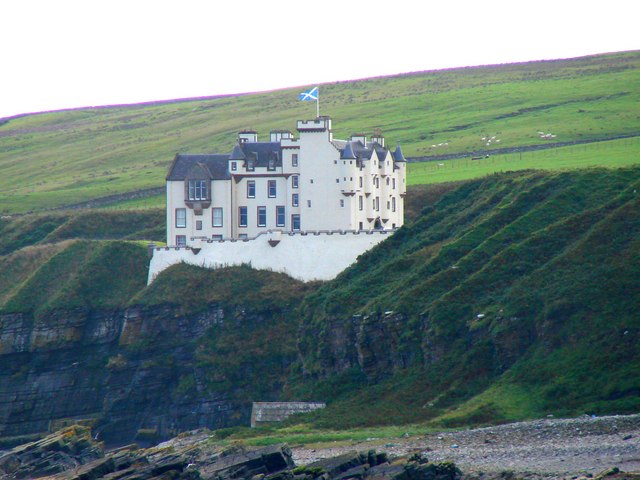
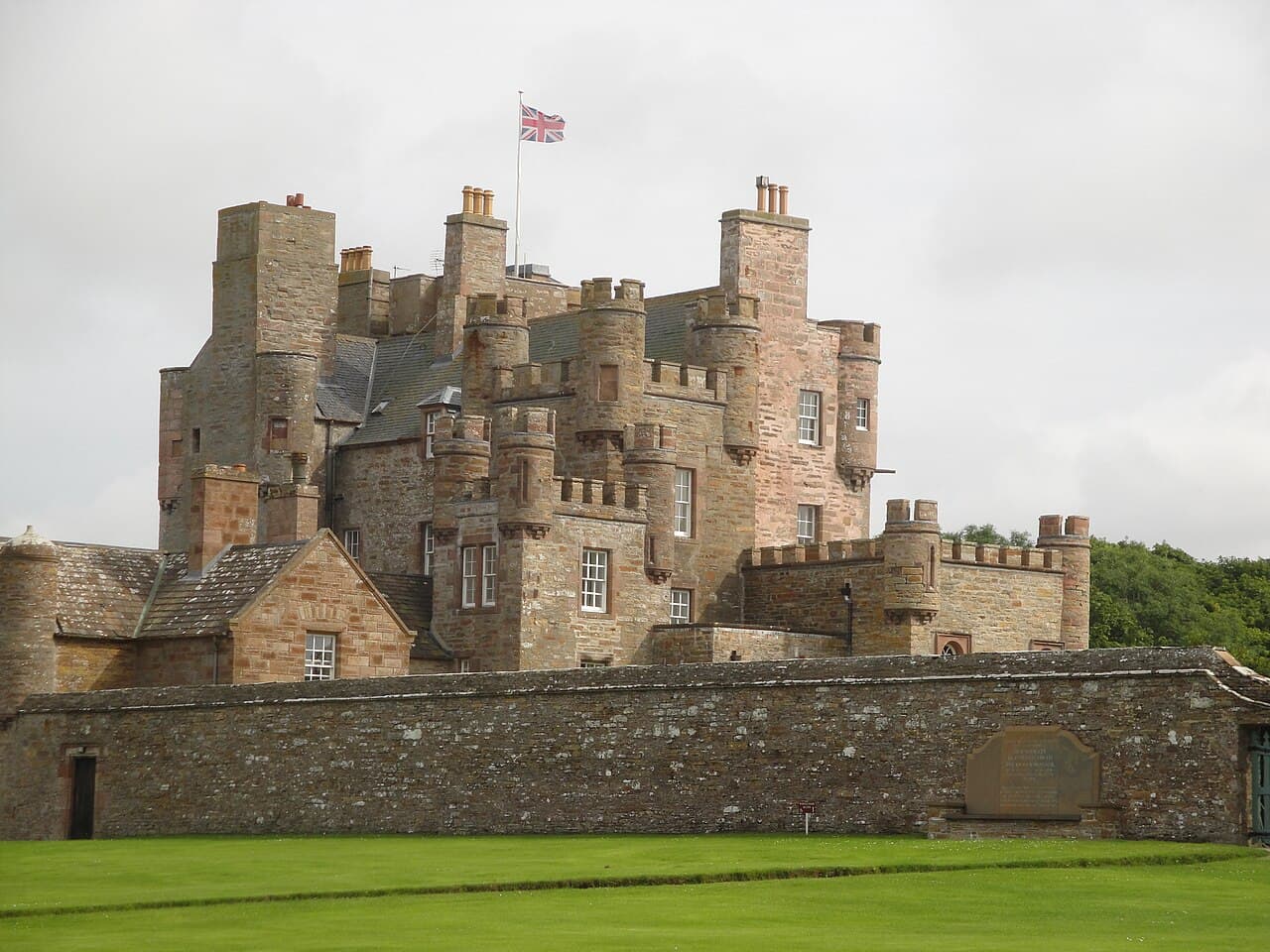
Castle of Mey, formerly known as Barrogill Castle, stands prominently on the rugged north coast of Caithness, Scotland, approximately six miles west of the village of John o' Groats. This historic castle offers commanding views across the Pentland Firth to the Orkney Islands on clear days, underscoring its strategic coastal location. Built in the 16th century during the Renaissance period, Castle of Mey exemplifies the architectural and defensive needs of Scottish nobility during a turbulent era.
The castle was constructed between 1566 and 1572 by George Sinclair, 4th Earl of Caithness, on what is believed to be a site of earlier fortifications, possibly dating back to medieval times. Its original design follows the Z-plan tower house layout, a popular style in Scotland characterized by a central rectangular block with two projecting towers at opposing corners, providing both residential space and defensive strength. The castle originally rose three storeys high, featuring a projecting wing on the south-east side and a square tower on the north-west corner, creating a complex footprint that balanced form and function.
Architectural design and features
Z-plan tower house layout
The Z-plan configuration of Castle of Mey is emblematic of Scottish Renaissance military architecture, combining aesthetic appeal with practical defense. The main rectangular block is flanked by two towers set diagonally opposite each other, which allowed defenders to cover all approaches with crossfire. This layout also created a three-sided courtyard opening to the north, towards the sea, enhancing both security and access to maritime routes.
Construction materials and exterior
The castle's robust walls are constructed from locally quarried stone, typical of 16th-century Scottish castles, providing formidable resistance to attack and the harsh coastal weather. The exterior was traditionally finished with lime harling, a protective plaster that shields the masonry from moisture and wind erosion. Recent conservation efforts in 2018 included reapplying lime harling and repairing the roof to preserve the castle's structural integrity and historical appearance.
Interior elements and heraldry
Inside, the castle retains several original features, including ancient carvings and heraldic emblems associated with the Sinclair family, notably the arms of George Sinclair, 4th Earl of Caithness. The interior underwent significant restoration in the mid-20th century to modernize living conditions, including the installation of electricity and running water for the first time. These updates respected the castle's historic fabric while adapting it for contemporary use.
Historical evolution and ownership
Early history and sinclair family
The land on which Castle of Mey stands was originally owned by the Bishops of Caithness, reflecting the medieval church's significant landholdings in northern Scotland. The castle's construction by George Sinclair marked the establishment of a fortified noble residence that later became the seat of the Earls of Caithness. The property passed to William Sinclair, a younger son of the 4th Earl and founder of the Sinclairs of Mey branch, cementing the family's regional influence.
17th to 19th-century expansions and alterations
Throughout the 17th and 18th centuries, Castle of Mey was expanded multiple times to accommodate changing residential needs and stylistic preferences. A significant transformation occurred in 1821 under the direction of the prominent architect William Burn, who introduced Tudor Gothic elements to the castle's design. These alterations included decorative features that softened the fortress-like appearance and aligned the castle with contemporary tastes in country house architecture.
20th-century decline and restoration by the queen mother
After leaving Sinclair family ownership in 1889, the castle changed hands several times, including acquisition by Captain Frederic Bouhier Imbert-Terry in 1929. During World War II, the castle served as a rest home for military officers, a utilitarian role that contributed to its gradual decline. By 1950, the castle was largely semi-derelict, with only the tower habitable, and the estate farms were sold off.
In 1952, Queen Elizabeth The Queen Mother purchased Castle of Mey and undertook extensive restoration to transform it into a comfortable holiday home. She removed many 19th-century additions, reinstated the castle's original name, and introduced modern amenities such as electricity and running water. Restoration work continued through the 1950s, culminating in the full restoration of the west wing by 1960. The Queen Mother maintained a close personal connection to the castle, visiting regularly from 1955 until shortly before her death in 2002.
Castle grounds and modern use
The estate and granary lodge
The castle is surrounded by extensive grounds that include farmland and gardens, historically part of the castle's policies. In 2019, the estate expanded its hospitality offerings with the opening of the Granary Lodge, a bed and breakfast created by converting former stables and granary buildings. This facility features environmentally friendly heating systems and showcases local craftsmanship and materials, reflecting a commitment to sustainable tourism and heritage preservation.
Public access and preservation efforts
Following the Queen Mother's death, the castle and gardens were opened to the public under the management of the Queen Elizabeth Castle of Mey Trust. The property is accessible seasonally, with occasional closures when King Charles III and Queen Camilla reside there. In 2019, stewardship was transferred to The Prince’s Foundation, with King Charles III as sole trustee, ensuring continued preservation and community engagement.
Recent initiatives include the establishment of a tearoom in 2023, operating as a public warming centre under the King’s Foundation initiative, further integrating the castle into the local community. Ongoing maintenance and conservation efforts ensure that Castle of Mey remains a vibrant example of Scottish heritage and Renaissance architecture.
Frequently asked questions (FAQ)
- How do I visit Castle of Mey?
- Castle of Mey is open to the public seasonally, typically during the summer months. Visitors can explore the castle, gardens, and estate with guided tours available. Check the official website for exact opening dates and ticket prices.
- What is the historical significance of Castle of Mey?
- Castle of Mey is a prime example of a 16th-century Scottish Renaissance Z-plan tower house. It was built by George Sinclair, 4th Earl of Caithness, and later restored by Queen Elizabeth The Queen Mother, making it a site of architectural and royal heritage.
- Can I see the original architectural features inside the castle?
- Yes, the castle retains many original features such as heraldic carvings and stonework. Restoration efforts have preserved its historic interior while adding modern amenities for visitor comfort.
- Is Castle of Mey accessible for visitors with mobility issues?
- The castle has some accessibility limitations due to its historic structure and uneven terrain. However, efforts have been made to accommodate visitors where possible. It is advisable to contact the castle in advance to discuss specific needs.
- When is the best time to visit Castle of Mey?
- The best time to visit is during the summer months when the castle and gardens are fully open, and the weather is more favorable for exploring the grounds and enjoying views of the Orkney Islands.
Photo gallery

Information
Opening hours
Open seasonally, generally summer months
Ticket prices
£10 adult, £5 child
Architect
William Burn
Current owner
Queen Elizabeth Castle of Mey Trust
Website
Visit websiteSources & official resources
Verify the information above using these authoritative references.
Loading map...
Visitor reviews
No reviews yet. Been here? Write the first review and help other travelers!
Write the first reviewVisited this castle? Share your experience
Your review helps other travelers and adds first-hand knowledge to our encyclopedia.