Domus Aurea
The Domus Aurea, Latin for "Golden House," was an extraordinary palace complex commissioned by Emperor Nero following the devastating Great Fire of Rome in 64 AD. Situated largely on the Oppian Hill, this sprawling architectural marvel was designed to showcase imperial grandeur and innovation in the heart of ancient Rome. The palace replaced and greatly expanded upon Nero's earlier residence, the Domus Transitoria, which had been his initial attempt at a grand palace complex on the site.
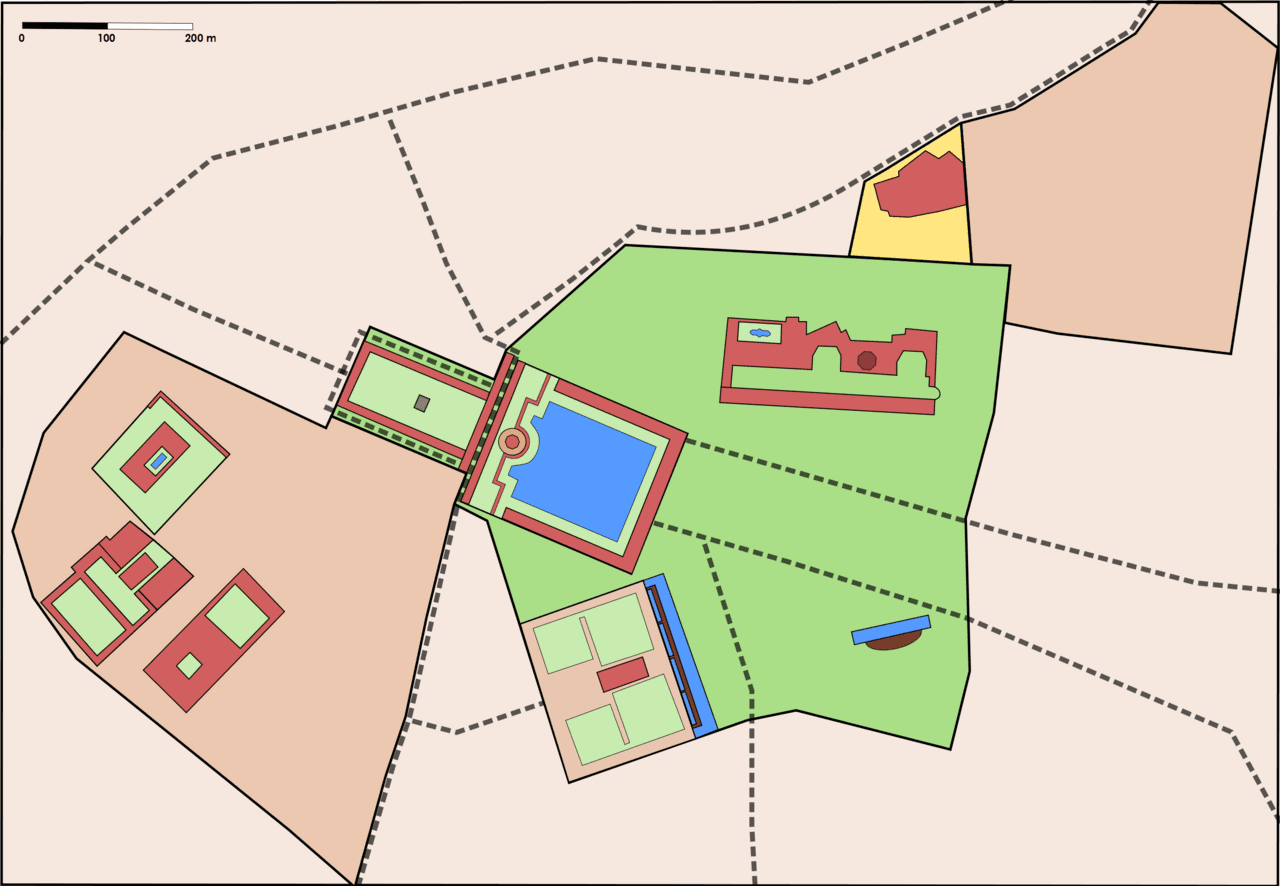
Constructed in the 1st century AD during the Early Imperial period, the Domus Aurea was notable for its vast scale, luxurious decoration, and advanced engineering. It featured extensive use of concrete vaulting, opus sectile marble floors, and elaborate frescoes that covered walls and ceilings, many of which employed innovative techniques to create illusionistic effects. The palace was designed as a vast landscaped complex including artificial lakes, gardens, and pavilions, creating a unique blend of architecture and nature.
Architectural innovation and design
The Domus Aurea was groundbreaking in its use of Roman concrete and vaulted ceilings, allowing for expansive interior spaces previously unseen in Roman architecture. The palace included octagonal rooms crowned with domes, such as the famous octagonal dining room with a rotating ceiling, which was an engineering marvel of its time. The complex's layout was designed to impress visitors with its grandeur and the seamless integration of indoor and outdoor spaces.
Its walls and ceilings were adorned with frescoes depicting mythological scenes, intricate patterns, and landscapes. These paintings were part of the development of the Roman fresco style that influenced later Renaissance art. The use of gold leaf and precious stones in decoration gave the palace its name, the "Golden House."
Historical context and significance
Built under Nero's direct supervision, the Domus Aurea symbolized the emperor's absolute power and his desire to create a personal retreat that reflected his tastes and ambitions. The palace's construction was controversial, as it was built on land cleared by the fire that destroyed much of Rome, and it reportedly displaced many residents.
After Nero's death in 68 AD, subsequent emperors sought to distance themselves from his legacy. Much of the Domus Aurea was buried and repurposed, with the Colosseum later constructed on parts of the site. This intentional burial helped preserve many of the frescoes and architectural elements, which were rediscovered during Renaissance excavations.
Rediscovery and archaeological importance
The Domus Aurea remained largely hidden for centuries until its 15th-century rediscovery during the Renaissance. Artists such as Raphael and Michelangelo explored its underground chambers, drawing inspiration from the frescoes and architectural forms. The site provided invaluable insight into Roman art and architecture, influencing Renaissance and later European art movements.
Today, the Domus Aurea is classified as archaeological ruins, with ongoing preservation efforts to protect its delicate frescoes and structures. Visitors can explore parts of the complex, gaining a glimpse into the opulence of Nero's reign and the architectural innovations of ancient Rome.
Legacy and cultural impact
The Domus Aurea remains a symbol of imperial extravagance and Roman architectural ingenuity. Its influence extends beyond its time, impacting art, architecture, and cultural history. The palace's frescoes and structural techniques have been studied extensively, highlighting the advanced capabilities of Roman builders and artists.
Its story reflects the complexities of Nero's rule and the tension between imperial ambition and public perception. The Domus Aurea stands as a testament to the grandeur and contradictions of ancient Rome, continuing to captivate historians, architects, and visitors worldwide.
Frequently asked questions (FAQ)
- When was the Domus Aurea built?
- The Domus Aurea was constructed in the 1st century AD, following the Great Fire of Rome in 64 AD, under Emperor Nero's direction.
- What architectural innovations are featured in the Domus Aurea?
- The Domus Aurea showcased advanced Roman concrete vaulting, octagonal rooms with domed ceilings, and elaborate frescoes, including a rotating dining room ceiling.
- Can visitors explore the Domus Aurea today?
- Yes, parts of the Domus Aurea are open to the public as archaeological ruins, with ongoing preservation efforts to protect its frescoes and structures.
- Why was the Domus Aurea buried after Nero's death?
- After Nero's death, subsequent emperors buried much of the Domus Aurea to distance themselves from his controversial legacy and repurpose the land.
- How did the Domus Aurea influence Renaissance art?
- The rediscovery of the Domus Aurea in the 15th century inspired Renaissance artists like Raphael and Michelangelo, who studied its frescoes and architectural forms.
Photo gallery

Information
Loading map...
Visitor reviews
No reviews yet. Been here? Write the first review and help other travelers!
Write the first reviewVisited this castle? Share your experience
Your review helps other travelers and adds first-hand knowledge to our encyclopedia.