Dobczyce
Dobczyce Castle stands prominently on a rocky promontory overlooking the valley of the Raba River and the artificial Dobczyce Lake in southern Poland. This site has been a strategic defensive position since prehistoric times, with archaeological evidence revealing traces of Neolithic and Bronze Age settlements. The location’s natural fortifications were first harnessed during the reign of the early Piast dynasty, when a wooden fortification with palisades was constructed to guard the area.
The castle’s upper fortress likely dates back to the early 13th century, with the first written mention appearing in 1225. Built on a triangular plan at the edge of a cliff, its buildings clustered tightly around a small inner courtyard. The key defensive feature was a square tower positioned at the southeast corner, which protected the original southern entrance. During the reign of Bolesław V the Chaste, the castle guarded an important trade route to Hungary and withstood two separate Tatar invasions, underscoring its military significance.
Medieval origins and royal significance
Dobczyce Castle played a notable role in medieval Polish history. In 1311, during the uprising led by the Kraków mayor Albert, the castle served as a refuge for the court of Władysław I Łokietek. King Casimir III the Great rewarded the town of Dobczyce with privileges for assisting his father, and in 1362 he granted Dobczyce Magdeburg rights, elevating its status and marking the castle as the seat of a non-fortified starostwo (administrative district) until 1768.
Under Casimir the Great, the castle’s defenses were significantly enhanced, with walls ranging from five to nine meters thick, making it one of the most formidable fortresses in Poland. The castle became a royal residence, hosting King Władysław II Jagiełło and Queen Jadwiga in 1398. It also served as a place of education for the sons of King Casimir IV Jagiellon, where the historian and diplomat Jan Długosz tutored future monarchs.
Renaissance transformation under the lubomirski family
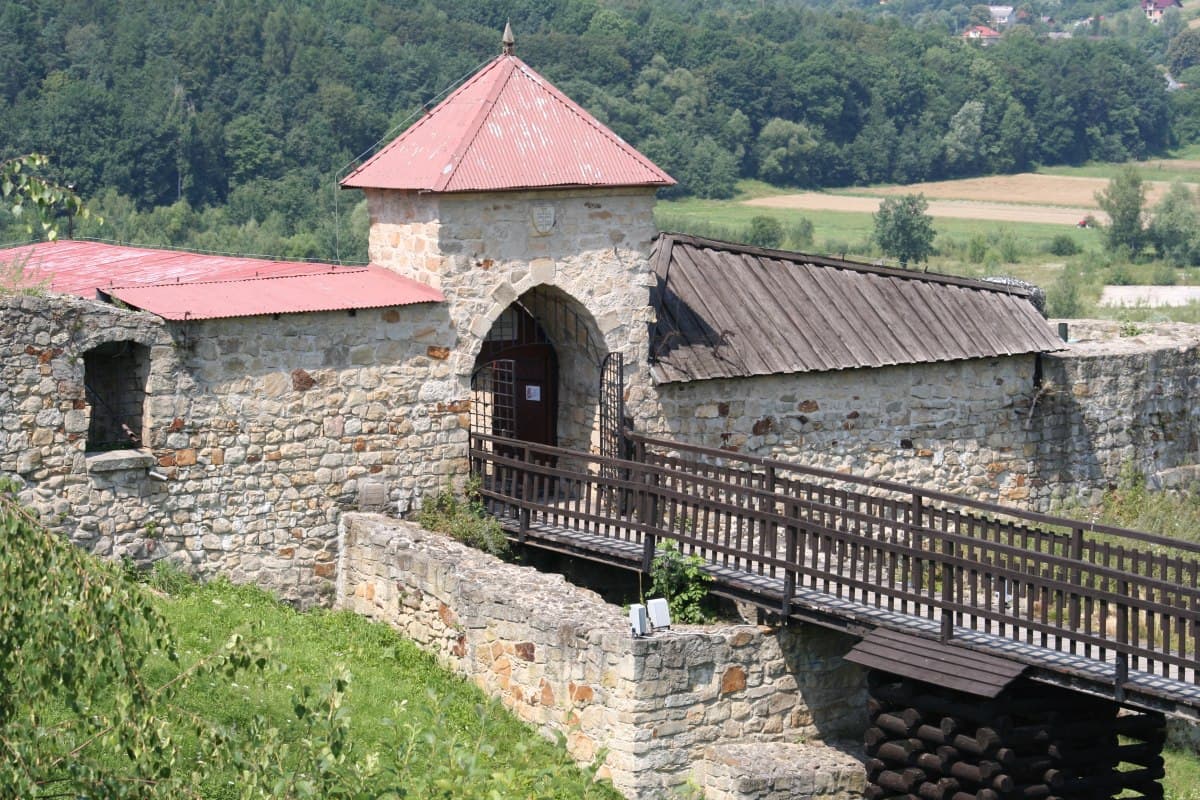
The castle’s most significant architectural transformation occurred between 1585 and 1649 under the stewardship of the noble Lubomirski family. They remodeled the medieval fortress into a splendid Renaissance residence. The original southern gate was sealed and converted into a chapel, and a new eastern entrance was created featuring a drawbridge, a fortified gatehouse with a bastion, and a clock tower. The lower castle was developed on the site of the former bailey, expanding the complex considerably.
By 1620, the castle boasted around 70 rooms and three defensive towers, including the clock tower added by the Lubomirskis. The addition of a decorative fountain and the chapel reflected the shift from a purely military stronghold to a noble residence with representational functions.
Destruction and decline in the 17th and 18th centuries
In 1649, the starostwo passed to Michał Jordan, who undertook repairs on the castle walls. However, the mid-17th century brought devastation during the Swedish Deluge (1655), when both the town and castle were ravaged by Swedish forces. Further destruction followed in 1657 at the hands of Transylvanian troops under Rakoczy, and again in 1702 during another Swedish invasion led by King Charles XII.
These successive assaults led to the castle’s rapid decline. Despite continued occupation by starosts, the fortress fell into ruin. The discovery of a hidden cache of coins and jewels in the late 18th century sparked treasure hunts that accelerated the dismantling of the structure. Stones from the castle were repurposed for local buildings, including a church, leaving the castle as a mound overgrown with grass and used as pasture for over a century.
20th-century restoration and archaeological work
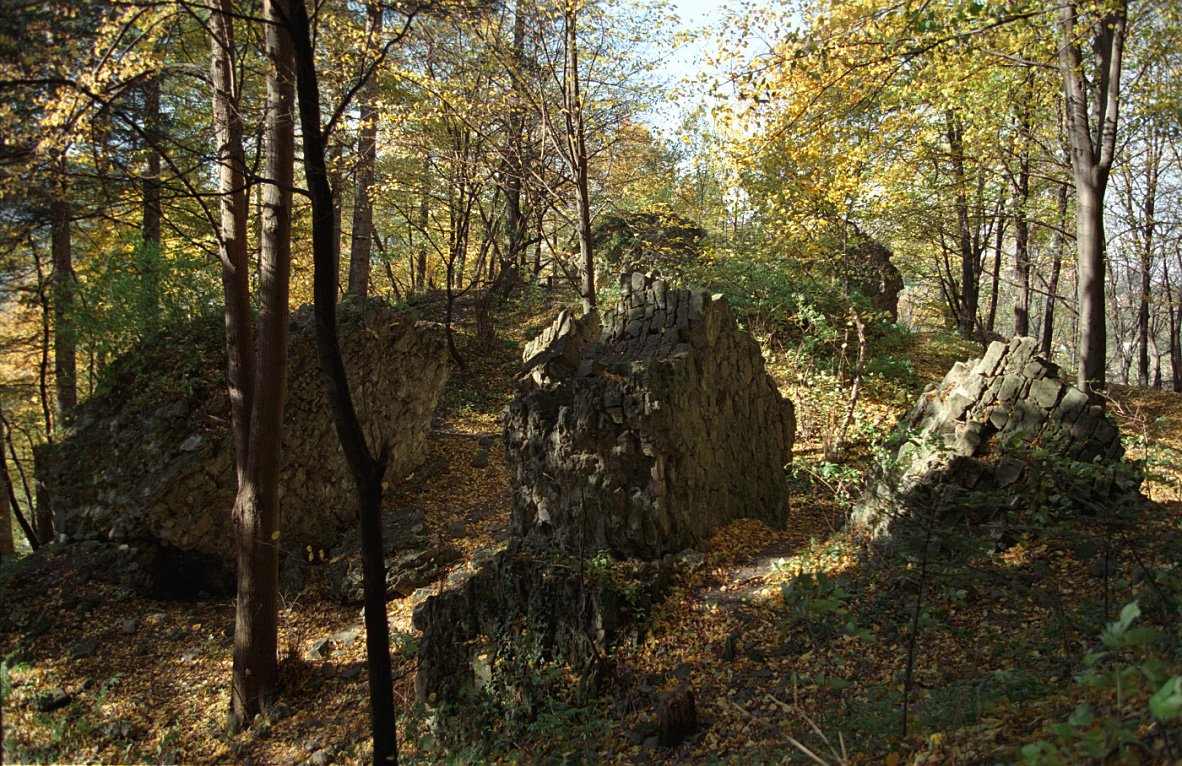
Restoration efforts began in earnest in 1960 as part of the "Milenium" campaign led by local enthusiasts from the Polish Tourist and Sightseeing Society (PTTK). Excavations uncovered the remains of both the upper and lower castles, though the western part of the hill had collapsed in the 19th century due to quarrying activities. The site was stabilized and partially reconstructed, with the ruins opened to visitors.
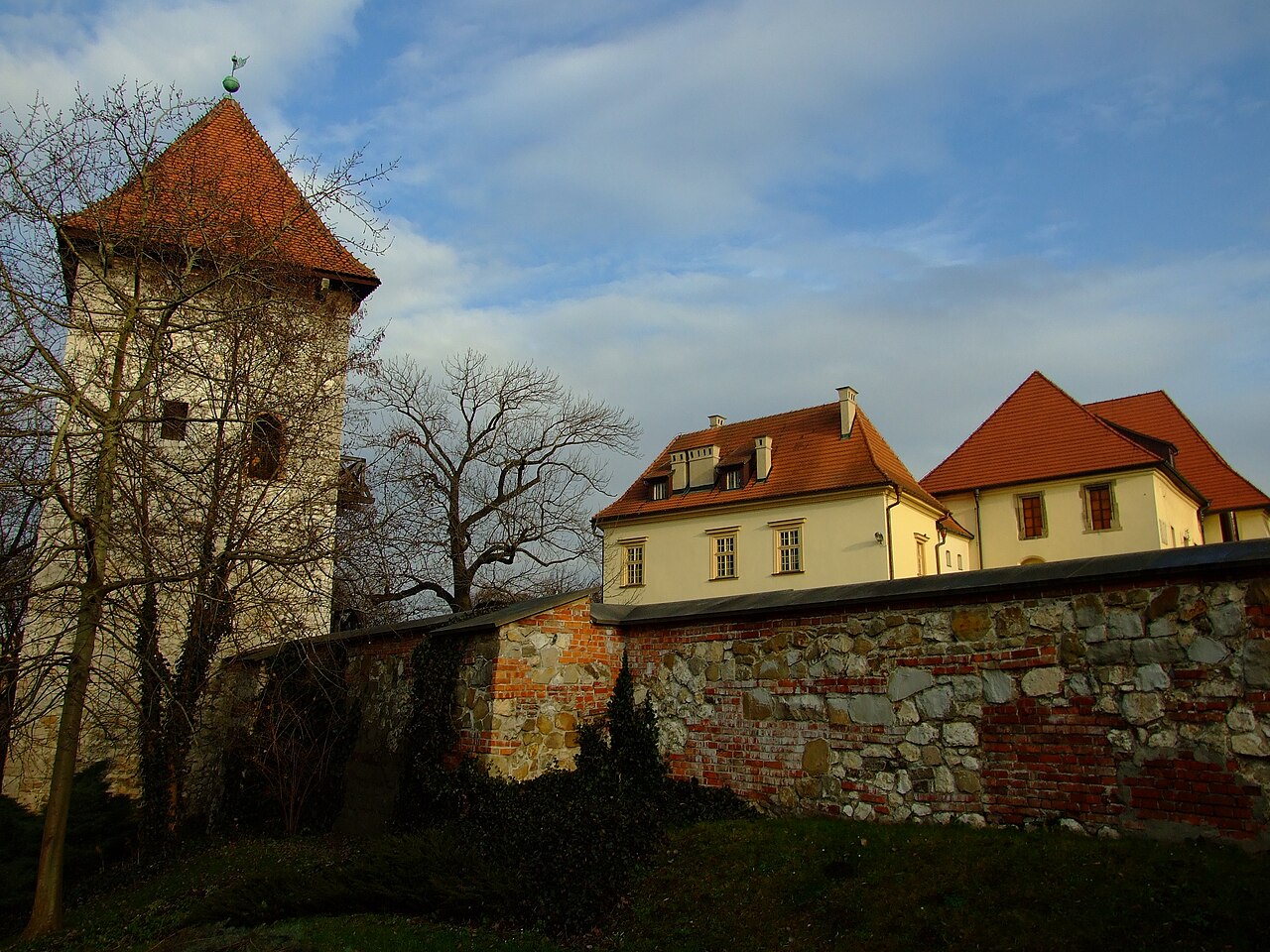
Today, Dobczyce Castle is a protected historical monument featuring well-preserved sections of its massive defensive walls, the remains of the upper castle with its square and cylindrical towers, and parts of the lower castle. The restored towers serve as viewing platforms offering panoramic views of the surrounding Pogórze and Beskid mountain ranges and the adjacent Dobczyce Lake.
Architectural features and layout
The castle’s original medieval layout was defined by its triangular plan on a cliff edge, with buildings tightly grouped around a central courtyard. The impressive square tower at the southeast corner was the main defensive bastion, guarding the southern entrance. The castle’s walls, especially those from King Casimir III’s time, were extraordinary for their thickness, reaching up to nine meters, providing formidable protection against invaders.
The Renaissance modifications introduced by the Lubomirski family added a new layer of fortifications typical of the period’s military architecture, including a bastioned gatehouse and a drawbridge. The addition of a clock tower and chapel reflected the castle’s evolution into a noble residence, balancing defense with comfort and prestige.
Defensive structures
- Thick stone curtain walls up to nine meters thick, built in the 14th century.
- Square and cylindrical towers providing vantage points and flanking fire.
- Bastioned gatehouse with a drawbridge added in the Renaissance period.
- Deep moat separating the castle from the fortified town below.
Residential and ceremonial spaces
- Chapel created by converting the original gatehouse in the late 16th century.
- Clock tower serving both practical and decorative functions.
- Fountain symbolizing the Renaissance emphasis on aesthetics and comfort.
- Approximately 70 rooms by the early 17th century, including chambers for royal and noble residents.
Cultural and historical significance
Dobczyce Castle is an important monument reflecting the evolution of Polish castle architecture from medieval fortifications to Renaissance residences. Its history is intertwined with key figures such as Władysław I Łokietek, Casimir III the Great, Władysław II Jagiełło, and the Lubomirski family. The castle’s resilience during invasions and its role as a royal residence and administrative center underscore its strategic and political importance.
Today, the castle ruins serve as a cultural landmark and tourist attraction, offering insights into Polish history, architecture, and the region’s heritage. The site’s museum and viewing platforms provide visitors with educational and scenic experiences, preserving the legacy of this remarkable bastioned fortress.
Visitor information and accessibility
Dobczyce Castle is accessible to the public, with parts of the ruins stabilized and safe for exploration. The castle grounds include walking paths, informational signage, and panoramic viewpoints. The on-site Regional Museum operated by the PTTK offers exhibitions on the castle’s history and archaeological findings.
Visitors can enjoy spectacular views of the Dobczyce Lake and surrounding mountain landscapes. The castle’s location near Kraków makes it a convenient day trip for those interested in medieval and Renaissance architecture, Polish history, and natural beauty.
Frequently asked questions (FAQ)
- What is the historical significance of Dobczyce Castle?
- Dobczyce Castle, dating back to the 14th century, played a crucial role in the defense of the region against various invasions. It served as a royal residence and a strategic military stronghold, reflecting the turbulent history of Poland during the medieval period.
- When was Dobczyce Castle built?
- Dobczyce Castle was constructed in the early 14th century, specifically around 1352, under the rule of King Casimir III the Great. The castle has undergone several renovations over the centuries, preserving its architectural integrity while adapting to the needs of its time.
- Can I visit Dobczyce Castle?
- Yes, Dobczyce Castle is open to visitors, allowing you to explore its rich history and stunning architecture. Guided tours are available, providing insights into the castle's past and its significance in Polish heritage.
- What are the opening hours for Dobczyce Castle?
- Dobczyce Castle is typically open to visitors from 10 AM to 6 PM during the tourist season, which runs from April to October. It is advisable to check the official website or local tourism information for any seasonal changes or special events.
- Is it possible to access Dobczyce Castle with disabilities?
- While efforts have been made to improve accessibility at Dobczyce Castle, some areas may pose challenges for visitors with mobility issues due to the castle's historical structure. It is recommended to contact the castle's administration in advance to inquire about specific accessibility options.
- What is the best time to visit Dobczyce Castle?
- The best time to visit Dobczyce Castle is during the spring and summer months, from April to September, when the weather is pleasant and the castle grounds are lush. Additionally, visiting during this period allows you to enjoy various cultural events and festivals held at the castle.
- Are there any nearby attractions to Dobczyce Castle?
- Yes, visitors can explore other nearby attractions such as the picturesque town of Dobczyce itself, the scenic Dobczyce Lake, and the historic wooden church of St. Andrew. These sites offer a rich cultural experience and beautiful natural scenery complementing your visit to the castle.
- What are the ticket prices for Dobczyce Castle?
- Ticket prices for Dobczyce Castle are generally affordable, with discounted rates available for students and seniors. It's best to check the official website for the most current pricing information and any special promotions that may be offered.
Photo gallery

Information
Website
Visit websiteSources & official resources
Verify the information above using these authoritative references.
Loading map...
Visitor reviews
No reviews yet. Been here? Write the first review and help other travelers!
Write the first reviewVisited this castle? Share your experience
Your review helps other travelers and adds first-hand knowledge to our encyclopedia.