Dirleton Castle
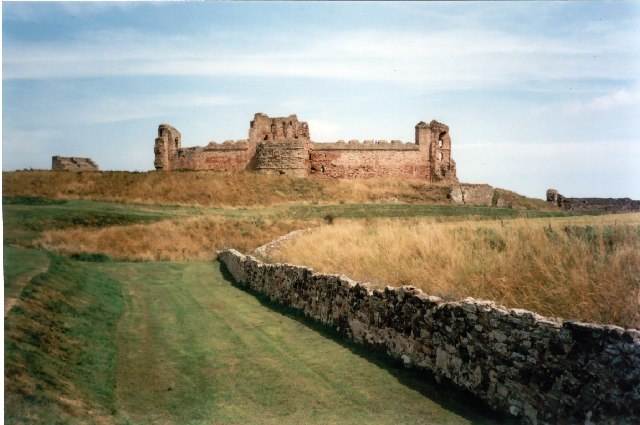
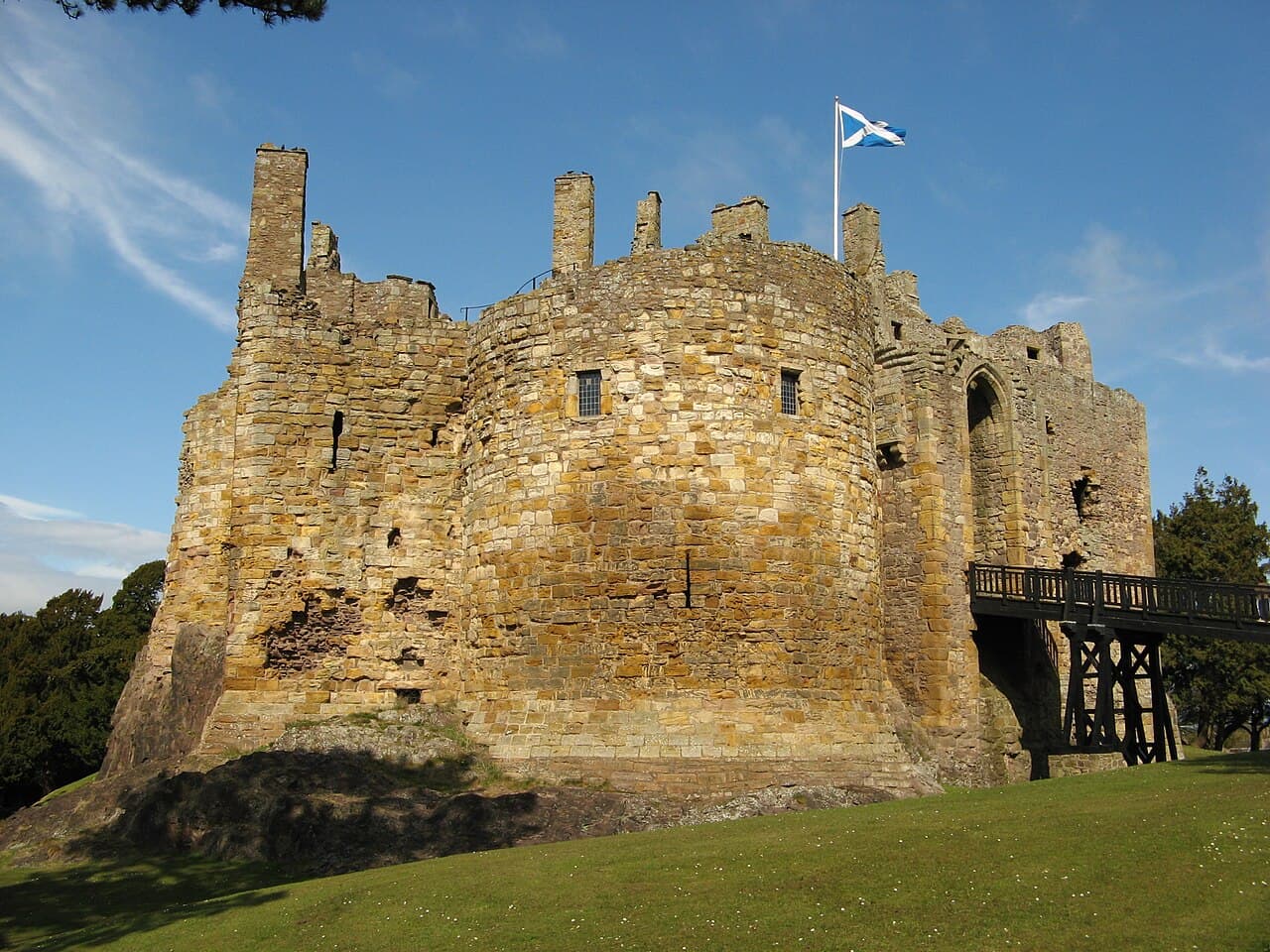
Dirleton Castle is a remarkable medieval fortress located in the village of Dirleton, East Lothian, Scotland. Established in the early 13th century, this hill castle stands on a rocky outcrop overlooking fertile agricultural lands and commands the coastal route from England to Edinburgh via North Berwick. Its strategic position made it a vital defensive stronghold throughout Scotland's turbulent medieval history.
Early history and strategic importance
The castle's origins trace back to around 1240, when John de Vaux, a Norman knight granted the barony of Dirleton by King David I in the 12th century, began construction. The de Vaux family, of Norman descent, established Dirleton Castle as a formidable stone fortress characterized by thick-walled round towers typical of the high medieval period. The castle's architectural design reflects the military innovations of the era, including a cluster keep combining round and square towers for defense and residential purposes.
Dirleton's location was of great strategic significance, guarding the coastal approach to Edinburgh and serving as a barrier against English incursions. During the wars of Scottish independence in the late 13th and early 14th centuries, the castle was fiercely contested. It was captured twice by English forces under King Edward I, first in 1298 and again shortly before 1306. To prevent further English occupation, Scottish forces deliberately damaged the fortress before the Battle of Bannockburn in 1314.
Ownership and architectural evolution
The haliburton family era
In the mid-14th century, ownership passed through marriage to the Haliburton family. The Haliburtons undertook extensive repairs and expansions, reflecting the evolving needs of castle fortification and domestic comfort. They added a large hall, a tower house, and a heavily fortified gatehouse during the 14th and 15th centuries. Although much of the Haliburton range survives only at basement level today, these additions once included a vaulted chapel, prisons, and storerooms, illustrating the castle's multifunctional role.
The ruthven family and renaissance additions
In 1505, the castle passed to the Ruthven family through marriage. The Ruthvens were prominent figures in Scottish history, involved in significant political events such as the assassination of David Riccio and the Raid of Ruthven. They constructed the Ruthven Lodging, a three-storey Renaissance house within the castle courtyard, featuring large windows with iron grills, small gun loops, and richly decorated interiors including patterned floor tiles and possibly painted wooden ceilings. This lodging provided more modern and comfortable living quarters, separate from the older medieval structures.
Sieges, decline, and later history
Dirleton Castle experienced its final siege in 1650 during the Third English Civil War, when Oliver Cromwell's forces besieged it to expel Royalist supporters and local marauders known as "mosstroopers." The siege inflicted significant damage, after which the castle fell into disuse and decay. Subsequently, the estate was acquired by John Nisbet, Lord Dirleton, who built a new country house nearby at Archerfield, signaling the end of Dirleton Castle as a noble residence.
The Nisbet family maintained the castle's extensive gardens, which have origins possibly dating back to the 16th century. These gardens evolved over centuries and now include a variety of styles, such as an 18th-century flower garden, a 1920s Arts and Crafts herbaceous border notable for its length, and mature specimen trees including redwood and beech. The grounds also feature a well-preserved 16th-century doocot (pigeon house) shaped like a beehive, which historically provided an important food source.
Architectural features and layout
The castle's layout is centered around a kite-shaped courtyard approximately 40 by 27 meters, enclosed by buildings on the south and east sides and remnants of curtain walls to the north and west. The primary construction material is finely squared ashlar stone, indicative of the high craftsmanship of the period.
The most intact structure is the 13th-century cluster keep, which includes a large round tower, a smaller round tower, and a connecting square tower. The large tower contains a vaulted six-sided kitchen chamber with large windows, a carved fireplace, and a postern door leading to a well. Above it is a seven-sided vaulted hall or living chamber with a hatch for food service. The square tower likely served as the lord's bedroom, featuring smoke vents, while the western round tower housed additional chambers and storage.
The gatehouse, dating from the 14th century, is heavily fortified with a high pointed arch flanked by bartizans, a drawbridge over a deep ditch, a portcullis, and multiple doors. Defensive features include guard rooms and a murder hole to attack intruders.
The castle's main kitchen is notable for its height and large fireplaces with vaulted ceilings and smoke vents, connected directly to the great hall to facilitate food service. The Ruthven Lodging stands as a Renaissance addition with multiple floors and defensive features such as iron window grills and gun loops.
Current status and visitor information
Today, Dirleton Castle is a well-preserved ruin managed by Historic Environment Scotland. It is open to the public with a small entrance fee and includes visitor amenities such as a shop. The castle is recognized as a Scheduled Ancient Monument, highlighting its cultural and historical significance.
The extensive gardens surrounding the castle offer a tranquil setting with historic features and diverse plantings. Visitors can explore the ruins, stairways, doorways, and architectural details that reflect centuries of Scottish history and castle evolution.
Frequently asked questions (FAQ)
- How do I get to Dirleton Castle?
- Dirleton Castle is located in the village of Dirleton, East Lothian, Scotland. It is accessible by car via Dirleton Road and is also reachable by local bus services from nearby towns. Parking is available near the castle grounds.
- What are the opening hours of Dirleton Castle?
- Dirleton Castle is generally open daily from 10:00 to 17:00, with extended hours during the summer months. It is advisable to check the official Historic Environment Scotland website for seasonal variations and special closures.
- Is there an entrance fee to visit Dirleton Castle?
- Yes, there is a small entrance fee to visit Dirleton Castle. Ticket prices are modest and help support the maintenance and preservation of the site. Discounts are often available for children, seniors, and members of Historic Environment Scotland.
- What architectural styles are visible at Dirleton Castle?
- Dirleton Castle showcases primarily <strong>high medieval</strong> military architecture with its <strong>13th-century cluster keep</strong> and fortified gatehouse. The later addition of the <strong>16th-century Renaissance Ruthven Lodging</strong> introduces elements of domestic comfort and Renaissance style within the castle courtyard.
- Can I explore the gardens at Dirleton Castle?
- Yes, visitors can explore the extensive gardens surrounding Dirleton Castle, which include historic layouts dating back to the 16th century, an 18th-century flower garden, and a notable 1920s Arts and Crafts herbaceous border. The gardens also feature a 16th-century beehive-shaped doocot.
- What is the historical significance of Dirleton Castle?
- Dirleton Castle played a key role in the Wars of Scottish Independence and was involved in significant political events through its owners, such as the Ruthven family's involvement in plots against Mary, Queen of Scots and King James VI. Its strategic coastal position made it a focal point in Scotland's medieval defense.
Photo gallery

Information
Sources & official resources
Verify the information above using these authoritative references.
Loading map...
Visitor reviews
No reviews yet. Been here? Write the first review and help other travelers!
Write the first reviewVisited this castle? Share your experience
Your review helps other travelers and adds first-hand knowledge to our encyclopedia.