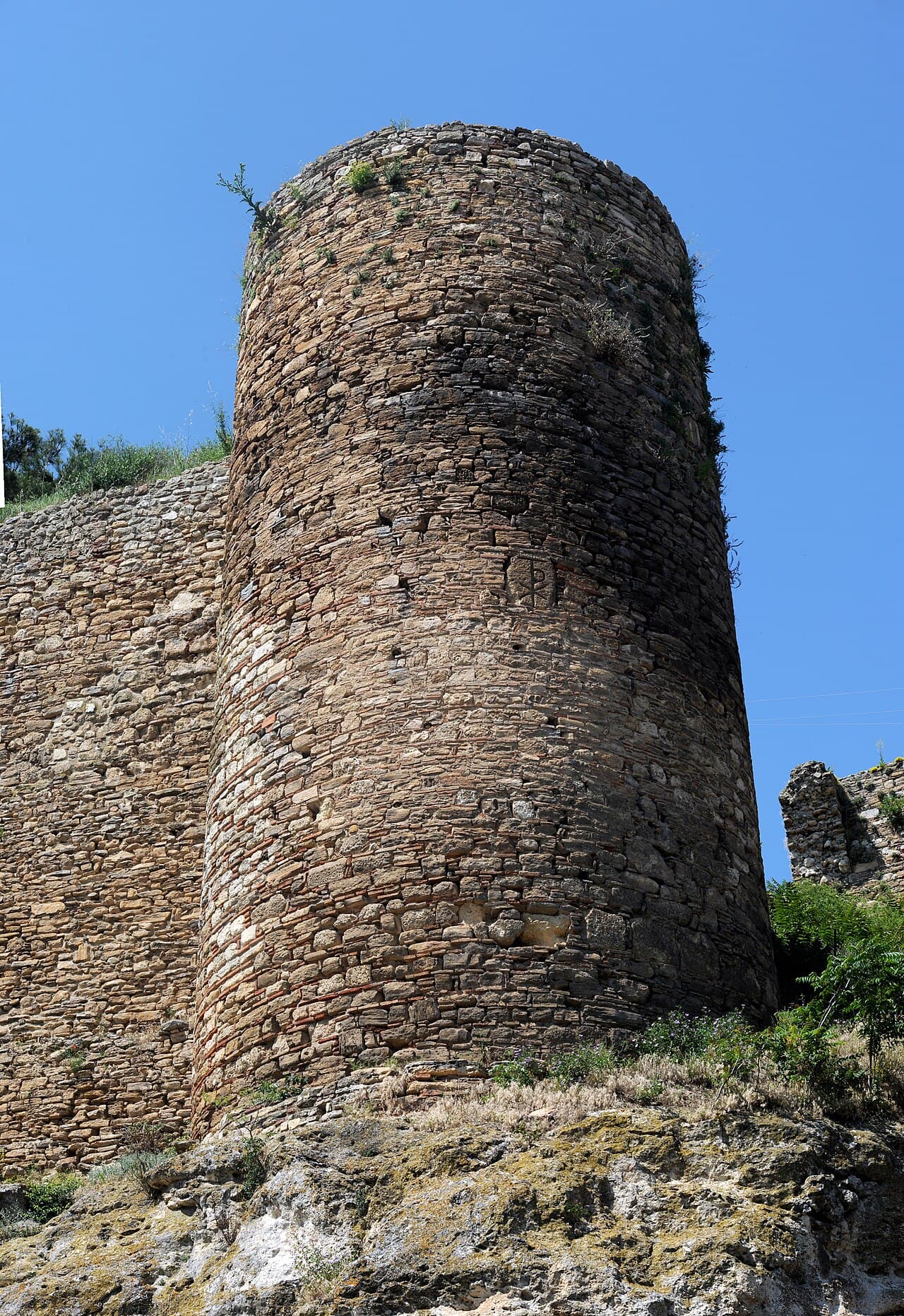
Didymoteicho Fortress
Didymoteicho Fortress stands as a monumental example of Byzantine military architecture in the region of Thrace, Greece. Perched strategically on a hill overlooking the Erythropotamos River and the vital road to Constantinople, it commanded significant control over the surrounding landscape. This hill castle has origins dating back to the 6th century AD, with its earliest fortifications attributed to the reign of Emperor Justinian I. Its imposing walls and towers have witnessed centuries of historical events, from Byzantine civil wars to Ottoman conquests, making it one of the most important medieval fortresses in the Balkans.
Historical significance and evolution
The fortress's history is deeply intertwined with the turbulent dynamics of the Byzantine Empire and its neighbors. According to the historian Procopius, the original fortifications were extensively rebuilt under Justinian I as part of his efforts to secure the empire's northern frontiers against incursions by Slavic tribes, Bulgarians, and Avars. These early walls formed the foundation of the fortress that would be enhanced and contested for centuries.
During the 8th century, the walls were further reinforced under the reign of Constantine V in response to ongoing military threats, notably from the Bulgarians. The fortress, then known as Demotika, played a key role in regional defense and control.
In the early 13th century, the fortress changed hands amid the decline of Byzantine power. It was besieged by Bulgarian Tsar Kaloyan in 1206 and later occupied by the Latin Empire following the Fourth Crusade. Byzantine forces reclaimed it around 1303, with master builder Constantine Tarchaneiotes overseeing significant fortification upgrades, as evidenced by the distinct building materials and techniques from this period.
The 14th century saw the fortress become a center of political and military strife during Byzantine civil wars. It served as the residence of Emperor Andronic III Palaiologos (1321–1328) and later as the stronghold where John VI Kantakouzenos declared himself emperor in 1341. The nearby Battle of 1352 was a decisive moment, marking the first major Ottoman victory on European soil, which ultimately led to the fortress's capture by the Ottoman Empire in 1361.
Under Ottoman rule, the fortress gradually lost its military importance and suffered neglect. It endured damage during the Russo-Turkish wars of the 19th century and was reportedly the place of house arrest for Charles XII of Sweden after his defeat at the Battle of Poltava in 1709.
Architectural features and layout
Fortifications and walls
The fortress encompasses a roughly one-kilometer-long circuit of walls reaching up to 12 meters in height. These walls are punctuated by 24 towers, many of which bear Byzantine monograms and intricate decorative motifs that reflect the cultural and military heritage of the site. The fortifications exhibit a blend of construction phases, with the earliest elements dating to the Justinian period and later additions from the Byzantine and Ottoman eras.
Gates and towers
The most prominent entrances are the Kale Gates, flanked by five-sided towers originating from the 6th-century Justinian restoration. The west gate, facing the Erythropotamos River, remains largely intact and is a prime example of Byzantine military engineering. Adjacent to this gate is a smaller entrance and tower featuring pointed arches, a characteristic addition from the early Ottoman period, illustrating the fortress's adaptation to new defensive needs.
Interior structures and caves
Within the walls, visitors can find numerous carved caves hewn from the bedrock. These caves historically served as residential quarters and storage spaces, vital for sustaining inhabitants during sieges. The fortress also contains several post-Byzantine buildings, including the church of Aghia Aikaterini, notable for its burial tombs, the cathedral of Aghios Athanasios (built in 1834), and the church of Christ (constructed in 1846). These religious structures underscore the site's continued importance as a spiritual center well into the 19th century.
Cultural legacy and preservation
Didymoteicho Fortress is not only a military relic but also a symbol of the region's layered history, reflecting Byzantine resilience, Ottoman influence, and modern Greek heritage. Its preservation of Byzantine monograms and architectural details offers invaluable insights into medieval fortification techniques and artistic expression.
Despite suffering damage from warfare and neglect over centuries, the fortress remains well-preserved in many sections, with all 24 towers and key buildings still standing. Recent conservation efforts aim to protect this cultural landmark, ensuring that its historical and architectural significance endures for future generations.
The fortress is accessible to visitors who can explore its extensive walls, towers, and internal structures, gaining a vivid understanding of Byzantine military architecture and the complex history of Thrace.
Notable historical anecdotes
One of the fortress's enduring legends is the tale of the Forty Arches, a myth associated with the castle's impressive fortifications. Additionally, the imprisonment of Charles XII of Sweden within a cave near the 19th-century Cathedral of Saint Athanasios adds a fascinating chapter to its multifaceted past.
The fortress's role in the Battle of 1352 also marks it as a site of major historical consequence, where the Ottoman Empire first asserted its military presence in Europe, signaling a shift in regional power dynamics.
Frequently asked questions (FAQ)
- How do I get to Didymoteicho Fortress?
- Didymoteicho Fortress is located in the town of Didymoteicho in northeastern Greece. It is accessible by car or local transport from major cities like Alexandroupoli and Komotini. The fortress is situated on a hill within the town, making it easy to reach on foot once in Didymoteicho.
- What is the historical significance of Didymoteicho Fortress?
- Didymoteicho Fortress is a key Byzantine stronghold with origins in the 6th century, playing a pivotal role in regional defense against Slavic, Bulgarian, and Ottoman forces. It was the site of important battles and political events, including the first major Ottoman victory in Europe in 1352.
- When was Didymoteicho Fortress built?
- The fortress was originally constructed and significantly rebuilt during the 6th century AD under Emperor Justinian I. Subsequent enhancements were made in the 8th and 14th centuries to strengthen its defenses.
- Can I visit the interior of the fortress?
- Yes, visitors can explore the fortress walls, towers, and internal caves. Several post-Byzantine churches within the walls are also accessible, offering insight into the site's historical and religious significance.
- What architectural styles are represented in Didymoteicho Fortress?
- The fortress primarily showcases Byzantine military architecture from the Early Medieval period, with later Ottoman additions such as pointed arches. Post-Byzantine religious buildings reflect architectural styles from the 19th century.
- Is Didymoteicho Fortress suitable for families and children?
- Yes, the fortress is a family-friendly site. Its open spaces and intriguing caves provide an engaging experience for children, though some areas may require careful supervision due to uneven terrain.
Photo gallery

Information
Website
Visit websiteSources & official resources
Verify the information above using these authoritative references.
Loading map...
Visitor reviews
No reviews yet. Been here? Write the first review and help other travelers!
Write the first reviewVisited this castle? Share your experience
Your review helps other travelers and adds first-hand knowledge to our encyclopedia.


