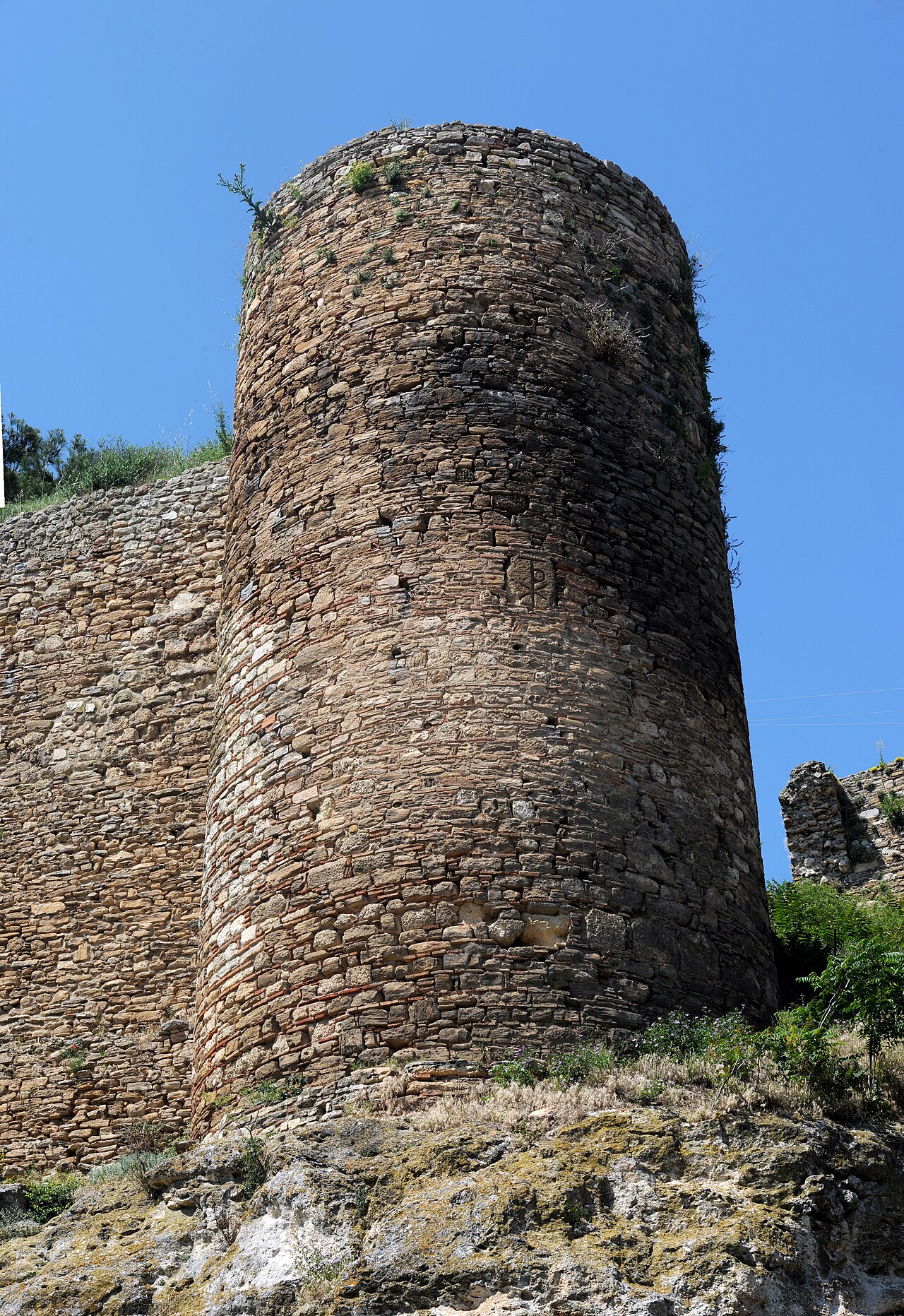
Macedonian Tower
Macedonian Tower, locally known as Makedonya Kulesi, is a prominent historic structure located in the center of Edirne, a city in the Edirne province of Turkey. The tower is a significant remnant of the city's complex history, reflecting its Roman, Byzantine, and Ottoman pasts.
Historical background and origins
The city of Edirne was originally founded as Hadrianopolis by the Roman Emperor Hadrian in the 2nd century AD. It was established as a strategic settlement featuring a rectangular Roman castrum, a fortified military camp. The Macedonian Tower is believed to have been part of this early fortification system, serving as a defensive structure integrated into the city walls.
Following the decline of the Roman Empire, Edirne became part of the Byzantine Empire, during which time it was known as Adrianopolis. The Byzantines maintained and reinforced the city's fortifications, likely adding round towers at the four corners of the castrum walls to improve defense. The Macedonian Tower's design and construction bear the influence of these Byzantine modifications.
The tower's role through changing empires
Edirne's strategic location made it a contested city throughout history, and it was captured multiple times by various forces including the Goths, Crusading Franks, and Bulgarians. In 1369, the city was conquered by the Ottoman Empire. The Ottomans later made Edirne their capital before the conquest of Constantinople, renaming the city Edirne.
Under Ottoman rule, the Macedonian Tower was repurposed as a prison, reflecting its continuing importance within the city's defensive and administrative infrastructure. This adaptation demonstrates the tower's functional evolution over centuries.
Architectural changes and the clock tower addition
In 1884, a significant architectural addition was made to the Macedonian Tower: a wooden four-story clock tower was constructed atop the original structure. This addition served both a practical and symbolic role, providing a public timekeeping function.
After a fire damaged the wooden clock tower, it was replaced by a stone clock tower featuring four stepped and square stories. This stone structure stood as a distinctive element of the tower's silhouette until it was severely damaged during the 1953 Yenice-Gönen earthquake.
The earthquake damage led to the decision not to repair the stone clock tower, as it was considered visually discordant with the city's skyline dominated by minarets. Subsequently, the damaged clock tower was demolished using dynamite in the same year, leaving only the first story of the clock tower intact.
Archaeological discoveries and current condition
Recent archaeological excavations adjacent to the Macedonian Tower have uncovered the foundations of the original Roman castrum walls and other ancient structures. These findings highlight the tower's role as part of the larger fortification complex known today as Edirne Kalesi (Edirne Castle).
Today, the Macedonian Tower and the excavated foundations form a small archaeological park that is freely accessible to the public. Despite its dilapidated state, the tower remains an imposing structure. Visitors should exercise caution due to a group of dogs that have made the area their home.
There are plans to convert the Macedonian Tower into a museum, which would help preserve its historical significance and provide educational opportunities about Edirne's rich past.
Architectural features and significance
The Macedonian Tower exemplifies early medieval military architecture with layers of modifications reflecting Roman, Byzantine, and Ottoman influences. Its robust stone construction, combined with the later addition of the clock tower, illustrates the evolution of the structure's function and design over nearly two millennia.
The tower's location in the heart of Edirne underscores its strategic importance in controlling and defending the city. Its survival, alongside the excavated castrum walls, offers valuable insights into the urban and military history of this historically contested region.
Visiting the Macedonian Tower
Visitors to Edirne can freely access the Macedonian Tower and the adjacent archaeological park, making it a valuable site for those interested in the city's layered history. While the tower is currently in a state of partial preservation, ongoing plans for restoration and museum development aim to enhance the visitor experience and protect the site for future generations.
Frequently asked questions (FAQ)
- What is the historical significance of the Macedonian Tower in Edirne?
- The Macedonian Tower is a key historical structure in Edirne, reflecting Roman, Byzantine, and Ottoman periods. It served as part of the city's fortifications and later as an Ottoman prison.
- Can visitors access the Macedonian Tower and the archaeological park?
- Yes, the Macedonian Tower and the adjacent archaeological park are freely accessible to the public, offering insight into the city's ancient fortifications.
- When was the clock tower added to the Macedonian Tower and what happened to it?
- A wooden clock tower was added in 1884, later replaced by a stone structure after a fire. It was damaged in the 1953 earthquake and subsequently demolished, leaving only the first story intact.
- Are there plans to restore or repurpose the Macedonian Tower?
- There are plans to convert the Macedonian Tower into a small museum to preserve its history and enhance visitor experience.
- What architectural styles are represented in the Macedonian Tower?
- The tower showcases early medieval military architecture with Roman and Byzantine influences, alongside later Ottoman modifications.
Information
Address
Mumcular Sk., Edirne, Turkey
Loading map...
Visitor reviews
No reviews yet. Been here? Write the first review and help other travelers!
Write the first reviewVisited this castle? Share your experience
Your review helps other travelers and adds first-hand knowledge to our encyclopedia.