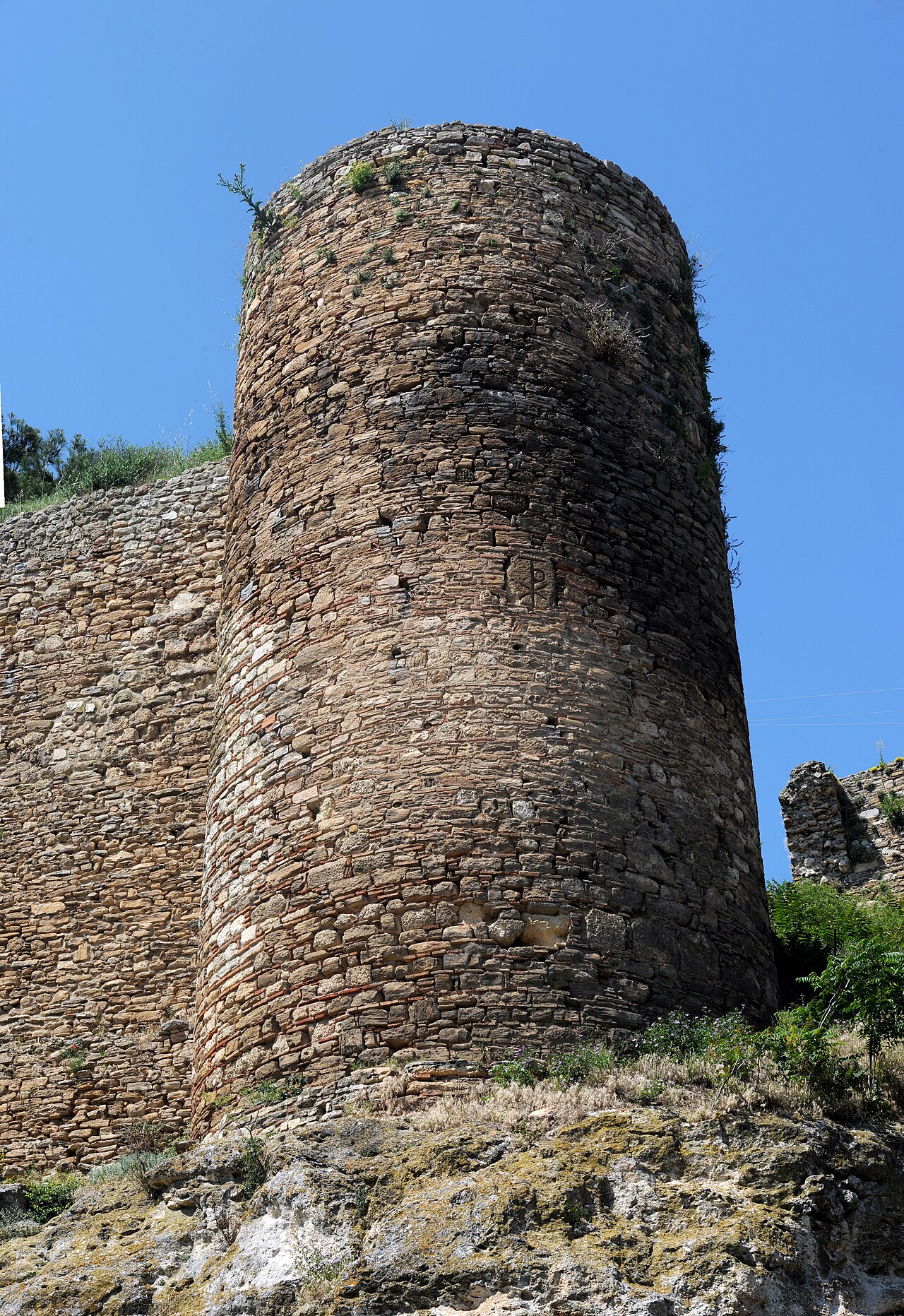
Pythion Castle
Pythion Castle stands as one of the most significant and well-preserved examples of late medieval military architecture in Greece. Located on a low mound at the northeastern edge of the village of Pythio, near the Evros river and close to the Turkish border, its strategic position highlights its historical importance as a defensive stronghold in the region.
The castle was constructed between 1330 and 1340 under the direction of John Kantakouzenos, who later became Byzantine Emperor. It was initially built as a residence and fortress during the civil war against Emperor John III Palaiologus, serving both military and administrative functions. This dual purpose is evident in the castle's design, which combines defensive features with monumental architectural elements befitting an imperial residence.
Historical context and significance
The foundation of Pythion Castle coincided with a turbulent period in Byzantine history marked by internal conflict and external threats. John Kantakouzenos, a prominent noble and general, established the fortress as a base of operations during the civil war of the 1340s. Despite its robust construction, the castle's use by the Byzantines was relatively brief. It was among the first fortifications to fall to the advancing Ottoman Turks during their early incursions into Europe.
Following the Ottoman conquest, the castle lost its military prominence but remained a focal point for the local community. A village gradually developed around the fortress, integrating the castle ruins into its fabric. The site gained renewed historical attention during the Greek War of Independence in the early 19th century. Notably, Patriarch Kyrilos VI, executed by the Ottomans in Adrianople in 1821, was interred near the castle, linking the site to the broader narrative of Greek national struggle.
Architectural features and layout
The central tower
The most prominent surviving feature of Pythion Castle is its central tower, constructed around 1331. This tower forms the heart of the fortress and exemplifies the military architectural style of the period. It is a robust, rectangular structure designed to serve both as a lookout and a last line of defense.
The central tower's design closely resembles similar towers found in other Byzantine fortifications such as Paleapolis on Samothrace island and Adrianoupolis, as well as fortresses around Constantinople. This architectural consistency reflects the standardized military engineering practices of the Byzantine Empire during the 14th century.
Secondary tower and entrance gateway
Adjacent to the central tower is a smaller, later-built tower of similar shape. This secondary tower was constructed primarily for defensive purposes and features three floors accessible via stairways from the courtyard of the main tower. The two towers are connected by a wall that includes an arched gateway, which served as the main entrance to the castle's interior courtyard.
The entrance area was equipped with makeshift facilities for guards and sentries, emphasizing the castle's role as a fortified military installation. The combination of towers and gateway formed a layered defense system designed to control access and protect the inhabitants.
Possible third tower and fortifications
Evidence suggests that a third tower may have existed on the northern boundary of the castle's natural elevation. However, this part of the site has been disrupted by modern infrastructure, including a railway line and road, which have altered the original landscape and partially obscured the castle's full extent.
Remnants of the castle's exterior fortifications are still visible within the modern settlement of Pythio. These surviving walls provide insight into the scale and complexity of the fortress's defensive works, which combined natural terrain advantages with constructed barriers.
Legacy and preservation
Today, Pythion Castle remains a valuable cultural and historical landmark. Its well-preserved central tower and surviving walls offer a tangible connection to the Byzantine period and the military struggles of the 14th century. The castle's architecture reflects the strategic and aesthetic considerations of its builders, blending functionality with imperial grandeur.
The site continues to attract interest from historians, archaeologists, and visitors interested in Byzantine military architecture and Greek history. The castle's proximity to the Evros river and the Turkish border adds to its historical significance as a frontier fortress during a period of shifting political boundaries.
While the castle no longer functions as a defensive structure, its remains are integrated into the local community's identity. The village of Pythio, which grew around the fortress, preserves the memory of the site’s historical role and its connection to notable figures such as John Kantakouzenos and Patriarch Kyrilos VI.
Information
Loading map...
Visitor reviews
No reviews yet. Been here? Write the first review and help other travelers!
Write the first reviewVisited this castle? Share your experience
Your review helps other travelers and adds first-hand knowledge to our encyclopedia.