Harala Castle

Harala Castle in Edirne, Turkey
Altınyazı Köyü İç Yolu, Turkey
High Medieval (11th–13th c.)
Ruins

Harala Castle, locally known as Harala Kalesi, is a medieval fortress perched atop a solitary, oblong-shaped hill near the village of Altınyazı in the province of Edirne, Turkey. Its elevated position provides commanding views over the expansive Thracian plains, highlighting its strategic importance during the medieval period.

Historical context and strategic importance

Constructed in the 13th century, Harala Castle is believed to have been built by the Byzantine Empire during the high medieval era. The castle's location on a high hill was typical of Byzantine military architecture, designed to oversee and control the surrounding territory. This vantage point allowed for early detection of enemy movements and provided a defensive stronghold in the region.

In 1362, the castle was captured by the Ottoman Empire, marking a significant shift in control over the area. The Ottomans often repurposed Byzantine fortifications to consolidate their expanding empire. However, they frequently relocated nearby villages away from the original castle sites, as appears to be the case with the village of Altınyazı, which was moved to the foot of the hill below the castle.

Architectural features and current remains

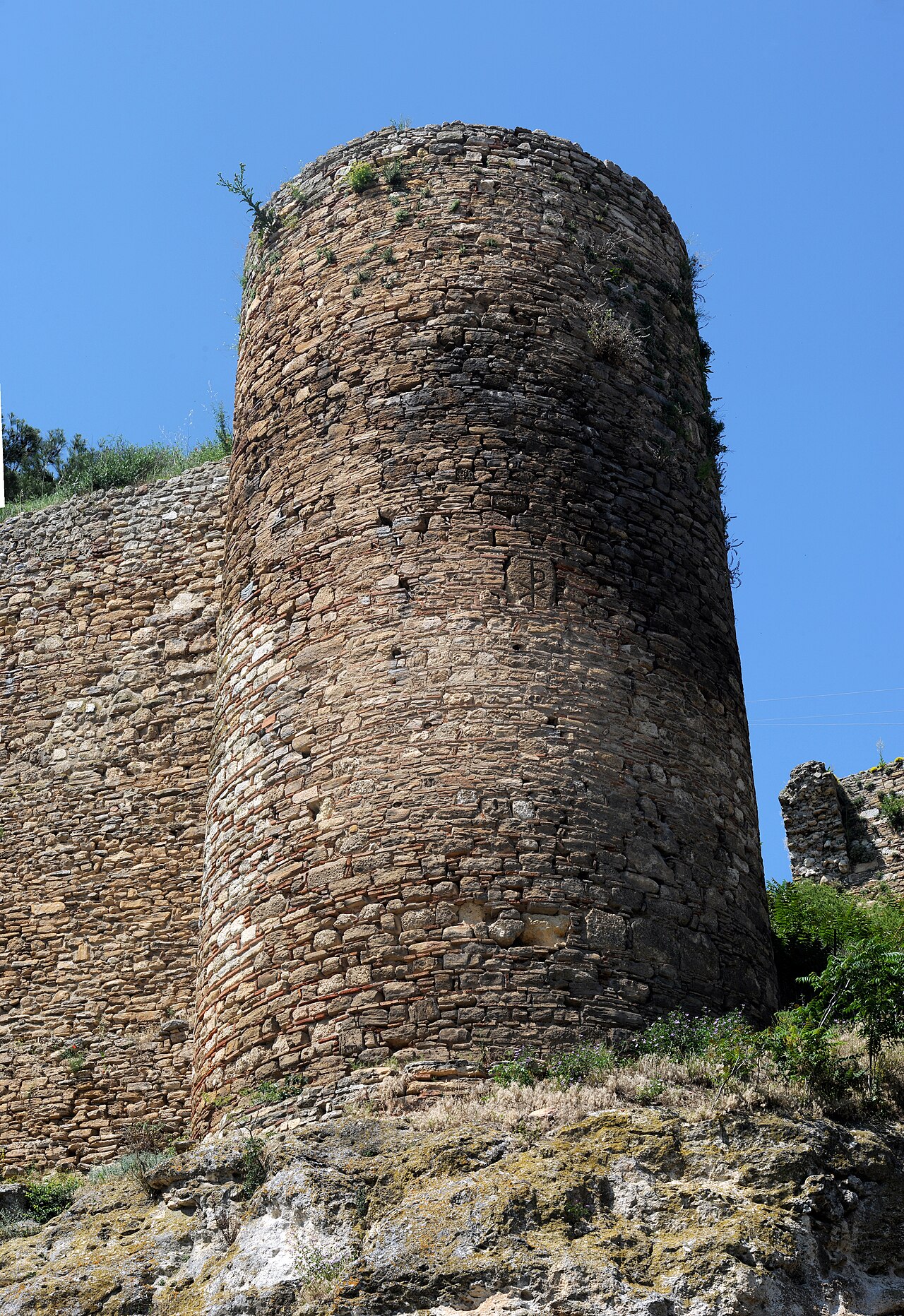
Today, Harala Castle stands largely in ruins, with only a few structural remnants visible. The most prominent surviving feature is a portion of a square tower, which would have served as a defensive lookout and stronghold within the castle complex. Additionally, two other isolated wall fragments remain, hinting at the castle's original layout and defensive walls.

The castle's construction likely incorporated local stone and traditional Byzantine masonry techniques, characterized by robust walls designed to withstand sieges. The hilltop location and the castle's oblong shape would have influenced the arrangement of its defensive structures, optimizing the use of natural terrain for protection.

Below the castle hill lies a modern reservoir lake, created several decades ago, which has altered the immediate landscape but does not affect the castle ruins themselves.

Cultural significance and visitor experience

While Harala Castle may not be as architecturally grand or extensively preserved as other medieval fortresses, it offers visitors a unique experience of solitude and panoramic views over the Thracian plains. Its remote location and sparse remains provide a tangible connection to the region's Byzantine and Ottoman past.

The site is freely accessible to the public, making it an appealing destination for those interested in medieval history, castle architecture, and natural landscapes. Visitors can explore the ruins and enjoy the quiet atmosphere, reflecting on the castle's role in the shifting powers of medieval Anatolia and Thrace.

Possible historical village site

There is some indication that the castle hill may have been the original site of the village of Altınyazı. This pattern of relocating villages from hilltop fortresses to more accessible locations at the base was common under Ottoman rule, reflecting changes in settlement patterns and defensive needs.

Access and preservation status

Harala Castle is classified as a hill castle due to its elevated position. It dates from the high medieval period and exhibits architectural elements typical of Byzantine military construction. The castle is currently in a state of ruins, with only partial structures remaining.

The site is open to visitors without restrictions, but facilities and detailed interpretive information are limited, emphasizing the castle's raw historical presence rather than a developed tourist attraction.

Frequently asked questions (FAQ)

How do I get to Harala Castle?
Harala Castle is located near the village of Altınyazı in Edirne Province, Turkey. Visitors can reach the site by road, following local directions to Altınyazı Köyü İç Yolu. The castle hill is accessible on foot from the village.
What remains can I see at Harala Castle?
Visitors can see the ruins of a square tower and two other wall fragments. These remnants reflect the castle's original defensive structures from the Byzantine period.
Is Harala Castle open to the public?
Yes, Harala Castle is freely accessible to visitors year-round. There are no entrance fees or restrictions, but facilities are minimal.
What is the historical significance of Harala Castle?
Harala Castle was built in the 13th century by the Byzantine Empire and later captured by the Ottomans in 1362. It served as a strategic lookout over the Thracian plains during the high medieval period.
Can I visit the village of Altınyazı when I go to Harala Castle?
Yes, the village of Altınyazı lies at the foot of the castle hill and can be visited. It is believed the village was relocated there from the original castle site by the Ottomans.

Information

Hill Castle

Address

Altınyazı Köyü İç Yolu, Turkey

Loading map...

Visitor reviews

No reviews yet. Been here? Write the first review and help other travelers!

Write the first review

Visited this castle? Share your experience

Your review helps other travelers and adds first-hand knowledge to our encyclopedia.
Write a review

(5/5)

0/2000 characters

Your review will be visible after admin approval

Nearby castles

31.7 km
Didymoteicho Fortress — Greece castle

Didymoteicho Fortress

Didymoteicho, Greece

Didymoteicho Fortress stands as a monumental example of Byzantine military architecture in the region of Thrace, Greece. Perched strategically on a hill overlooking the Erythropotamos River and the vital road to Constantinople, it commanded significant control over the surrounding landscape. This hill castle has origins dating back to the 6th century AD, with its earliest fortifications attributed to the reign of Emperor Justinian I. Its imposing walls and towers have witnessed centuries of historical events, from Byzantine civil wars to Ottoman conquests, making it one of the most important medieval fortresses in the Balkans. Historical significance and evolution The fortress's history is deeply intertwined with the turbulent dynamics of the Byzantine Empire and its neighbors. According to the historian Procopius, the original fortifications were extensively rebuilt under Justinian I as part of his efforts to secure the empire's northern frontiers against incursions by Slavic tribes, Bulgarians, and Avars. These early walls formed the foundation of the fortress that would be enhanced and contested for centuries. During the 8th century, the walls were further reinforced under the reign of Constantine V in response to ongoing military threats, notably from the Bulgarians. The fortress, then known as Demotika, played a key role in regional defense and control. In the early 13th century, the fortress changed hands amid the decline of Byzantine power. It was besieged by Bulgarian Tsar Kaloyan in 1206 and later occupied by the Latin Empire following the Fourth Crusade. Byzantine forces reclaimed it around 1303, with master builder Constantine Tarchaneiotes overseeing significant fortification upgrades, as evidenced by the distinct building materials and techniques from this period. The 14th century saw the fortress become a center of political and military strife during Byzantine civil wars. It served as the residence of Emperor Andronic III Palaiologos (1321–1328) and later as the stronghold where John VI Kantakouzenos declared himself emperor in 1341. The nearby Battle of 1352 was a decisive moment, marking the first major Ottoman victory on European soil, which ultimately led to the fortress's capture by the Ottoman Empire in 1361. Under Ottoman rule, the fortress gradually lost its military importance and suffered neglect. It endured damage during the Russo-Turkish wars of the 19th century and was reportedly the place of house arrest for Charles XII of Sweden after his defeat at the Battle of Poltava in 1709. Architectural features and layout Fortifications and walls The fortress encompasses a roughly one-kilometer-long circuit of walls reaching up to 12 meters in height. These walls are punctuated by 24 towers, many of which bear Byzantine monograms and intricate decorative motifs that reflect the cultural and military heritage of the site. The fortifications exhibit a blend of construction phases, with the earliest elements dating to the Justinian period and later additions from the Byzantine and Ottoman eras. Gates and towers The most prominent entrances are the Kale Gates, flanked by five-sided towers originating from the 6th-century Justinian restoration. The west gate, facing the Erythropotamos River, remains largely intact and is a prime example of Byzantine military engineering. Adjacent to this gate is a smaller entrance and tower featuring pointed arches, a characteristic addition from the early Ottoman period, illustrating the fortress's adaptation to new defensive needs. Interior structures and caves Within the walls, visitors can find numerous carved caves hewn from the bedrock. These caves historically served as residential quarters and storage spaces, vital for sustaining inhabitants during sieges. The fortress also contains several post-Byzantine buildings, including the church of Aghia Aikaterini, notable for its burial tombs, the cathedral of Aghios Athanasios (built in 1834), and the church of Christ (constructed in 1846). These religious structures underscore the site's continued importance as a spiritual center well into the 19th century. Cultural legacy and preservation Didymoteicho Fortress is not only a military relic but also a symbol of the region's layered history, reflecting Byzantine resilience, Ottoman influence, and modern Greek heritage. Its preservation of Byzantine monograms and architectural details offers invaluable insights into medieval fortification techniques and artistic expression. Despite suffering damage from warfare and neglect over centuries, the fortress remains well-preserved in many sections, with all 24 towers and key buildings still standing. Recent conservation efforts aim to protect this cultural landmark, ensuring that its historical and architectural significance endures for future generations. The fortress is accessible to visitors who can explore its extensive walls, towers, and internal structures, gaining a vivid understanding of Byzantine military architecture and the complex history of Thrace. Notable historical anecdotes One of the fortress's enduring legends is the tale of the Forty Arches, a myth associated with the castle's impressive fortifications. Additionally, the imprisonment of Charles XII of Sweden within a cave near the 19th-century Cathedral of Saint Athanasios adds a fascinating chapter to its multifaceted past. The fortress's role in the Battle of 1352 also marks it as a site of major historical consequence, where the Ottoman Empire first asserted its military presence in Europe, signaling a shift in regional power dynamics.

Early Medieval (5th–10th c.)
Details
34.5 km

Pythion Castle

Pythio, Greece

Pythion Castle stands as one of the most significant and well-preserved examples of late medieval military architecture in Greece. Located on a low mound at the northeastern edge of the village of Pythio, near the Evros river and close to the Turkish border, its strategic position highlights its historical importance as a defensive stronghold in the region. The castle was constructed between 1330 and 1340 under the direction of John Kantakouzenos, who later became Byzantine Emperor. It was initially built as a residence and fortress during the civil war against Emperor John III Palaiologus, serving both military and administrative functions. This dual purpose is evident in the castle's design, which combines defensive features with monumental architectural elements befitting an imperial residence. Historical context and significance The foundation of Pythion Castle coincided with a turbulent period in Byzantine history marked by internal conflict and external threats. John Kantakouzenos, a prominent noble and general, established the fortress as a base of operations during the civil war of the 1340s. Despite its robust construction, the castle's use by the Byzantines was relatively brief. It was among the first fortifications to fall to the advancing Ottoman Turks during their early incursions into Europe. Following the Ottoman conquest, the castle lost its military prominence but remained a focal point for the local community. A village gradually developed around the fortress, integrating the castle ruins into its fabric. The site gained renewed historical attention during the Greek War of Independence in the early 19th century. Notably, Patriarch Kyrilos VI, executed by the Ottomans in Adrianople in 1821, was interred near the castle, linking the site to the broader narrative of Greek national struggle. Architectural features and layout The central tower The most prominent surviving feature of Pythion Castle is its central tower, constructed around 1331. This tower forms the heart of the fortress and exemplifies the military architectural style of the period. It is a robust, rectangular structure designed to serve both as a lookout and a last line of defense. The central tower's design closely resembles similar towers found in other Byzantine fortifications such as Paleapolis on Samothrace island and Adrianoupolis, as well as fortresses around Constantinople. This architectural consistency reflects the standardized military engineering practices of the Byzantine Empire during the 14th century. Secondary tower and entrance gateway Adjacent to the central tower is a smaller, later-built tower of similar shape. This secondary tower was constructed primarily for defensive purposes and features three floors accessible via stairways from the courtyard of the main tower. The two towers are connected by a wall that includes an arched gateway, which served as the main entrance to the castle's interior courtyard. The entrance area was equipped with makeshift facilities for guards and sentries, emphasizing the castle's role as a fortified military installation. The combination of towers and gateway formed a layered defense system designed to control access and protect the inhabitants. Possible third tower and fortifications Evidence suggests that a third tower may have existed on the northern boundary of the castle's natural elevation. However, this part of the site has been disrupted by modern infrastructure, including a railway line and road, which have altered the original landscape and partially obscured the castle's full extent. Remnants of the castle's exterior fortifications are still visible within the modern settlement of Pythio. These surviving walls provide insight into the scale and complexity of the fortress's defensive works, which combined natural terrain advantages with constructed barriers. Legacy and preservation Today, Pythion Castle remains a valuable cultural and historical landmark. Its well-preserved central tower and surviving walls offer a tangible connection to the Byzantine period and the military struggles of the 14th century. The castle's architecture reflects the strategic and aesthetic considerations of its builders, blending functionality with imperial grandeur. The site continues to attract interest from historians, archaeologists, and visitors interested in Byzantine military architecture and Greek history. The castle's proximity to the Evros river and the Turkish border adds to its historical significance as a frontier fortress during a period of shifting political boundaries. While the castle no longer functions as a defensive structure, its remains are integrated into the local community's identity. The village of Pythio, which grew around the fortress, preserves the memory of the site’s historical role and its connection to notable figures such as John Kantakouzenos and Patriarch Kyrilos VI.

Late Medieval (14th–15th c.)
Details
46.1 km

Kalealtı Castle

Kalealtı, Turkey

Kalealtı Castle, locally known as Kalealtı Kalesi, is a small fortress ruin situated on a hill west of the village of Kalealtı in the province of Çanakkale, Turkey. The castle occupies a strategic position on rocky terrain approximately 30 meters above a dirt road, offering commanding views of the surrounding landscape. Despite its modest size and largely overgrown state, the site retains historical significance as a defensive structure from the medieval period. Historical context and origins The origins of Kalealtı Castle are not definitively established, with sources differing on its historical background. The majority of academic and archaeological references identify the castle as a Byzantine fortification, suggesting it was constructed during the Middle Byzantine period, which spans roughly from the 9th to the 12th centuries. This period was marked by the Byzantine Empire's efforts to fortify its borders and key locations against various threats, including Seljuk incursions and later the expanding Ottoman Empire. Some alternative accounts propose that the castle may have been built or significantly modified by the Genoese, a powerful maritime republic active in the Black Sea and Aegean regions from the 13th to 15th centuries. The Genoese established numerous trading posts and fortifications along the Anatolian coast, which could explain architectural elements or strategic placement associated with their influence. However, no conclusive evidence has been found to confirm Genoese construction or occupation of Kalealtı Castle. Due to the scarcity of written records or detailed archaeological studies, much about the castle's precise historical role remains uncertain. It likely served as a local defensive outpost protecting trade routes or nearby settlements during periods of regional conflict. Architectural features and current condition The castle today is a small ruin largely obscured by vegetation, making detailed examination of its architectural features challenging. The remains are perched on rocky ground, which would have provided natural defenses and a vantage point over the surrounding area. The castle's layout, construction techniques, and materials are difficult to discern clearly due to the overgrowth and erosion. Typical Byzantine fortifications of this type often included thick stone walls, towers for surveillance, and limited internal space for garrison quarters and storage. While such features are expected, they cannot be definitively identified at Kalealtı Castle without further archaeological investigation. Access to the site is currently unrestricted, with visitors able to reach the ruins by ascending a short rocky incline from the dirt road below. The castle is not developed as a tourist site and lacks interpretive signage or facilities. Geographical and strategic significance Located in the Çanakkale Province, an area rich in historical sites and close to the Dardanelles Strait, Kalealtı Castle's position would have been strategically important for controlling inland routes and monitoring movements along the coast. The castle's elevation on a hill enhances its defensive capabilities, typical of hill castles designed to maximize visibility and protection. The region has seen numerous civilizations and military campaigns, including the Byzantine Empire, Genoese traders, and later Ottoman forces, making such fortifications valuable for regional control and defense. Preservation and visitor information Today, Kalealtı Castle remains in a state of ruins, with limited preservation efforts evident. The overgrowth and natural decay have obscured much of the site's original structure. Visitors should be prepared for a modest experience focused on exploring the ruins and appreciating the historical setting rather than viewing extensive restored architecture. There are no formal visitor facilities, guided tours, or entrance fees. The site is open year-round and can be accessed freely, though the terrain requires careful footing due to rocky and uneven paths. Research and future prospects Further archaeological research and excavation could provide valuable insights into the castle's construction phases, usage, and historical context. Detailed studies might clarify the debated origins between Byzantine and Genoese influences and reveal more about the castle's role in regional defense networks. Increased attention and preservation efforts could help protect the site and promote it as part of the cultural heritage of Çanakkale Province, which is already renowned for its ancient and medieval landmarks.

High Medieval (11th–13th c.)
Details

