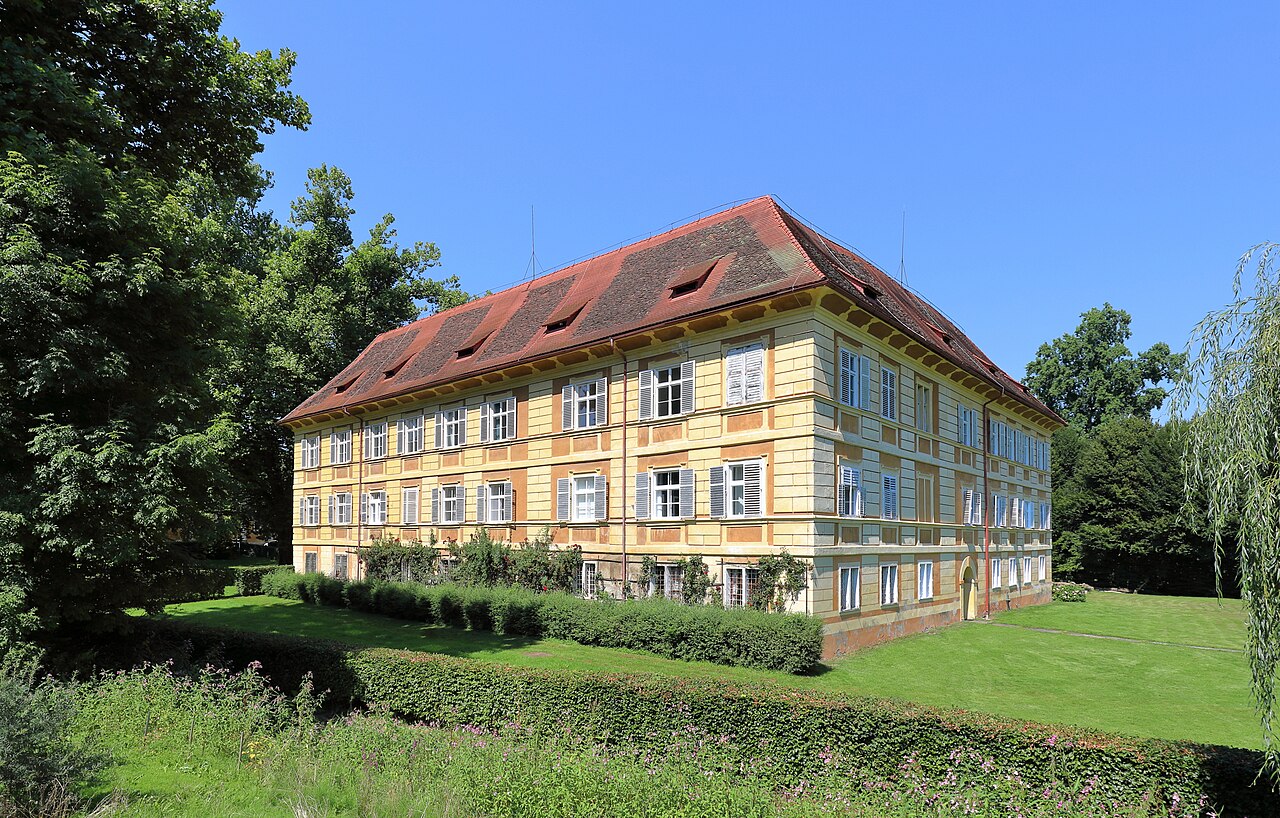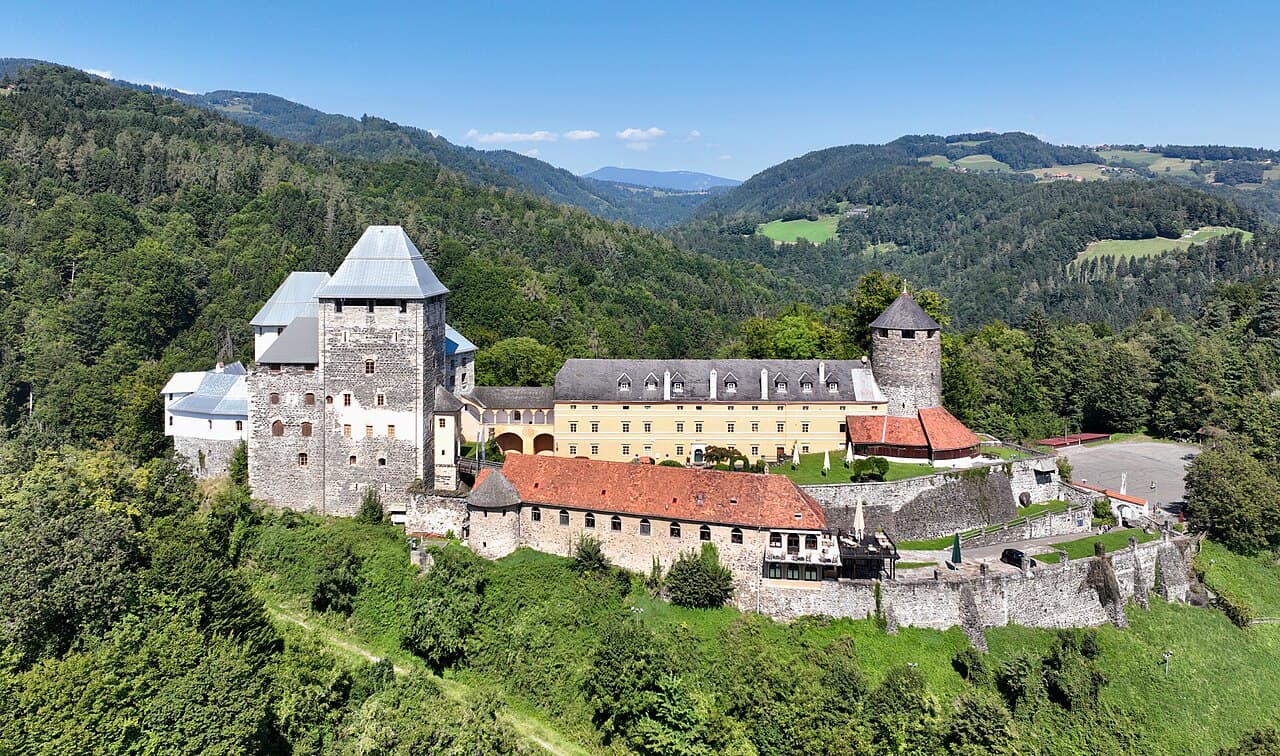
Deutschlandsberg Castle
Deutschlandsberg Castle is a prominent hill castle located in the town of Deutschlandsberg in the Austrian region of Styria. First documented in 1153, this castle is an important example of medieval architecture that has evolved over centuries, incorporating Romanesque, Gothic, and Renaissance styles. Situated at an elevation of 398 metres (1,306 feet) above sea level, Deutschlandsberg Castle occupies a strategic position overlooking the surrounding landscape, a common feature of hill castles designed for defense and control.
Historical background and construction
The origins of Deutschlandsberg Castle trace back to the 12th century, during the High Medieval period, a time when many castles were built across Europe to establish territorial control and protect trade routes. The castle was initially constructed in the Romanesque style, characterized by robust stone walls, semicircular arches, and simple, solid forms that emphasized defense.
Over the centuries, the castle underwent significant expansions and renovations, especially during the Gothic period, which introduced pointed arches, ribbed vaults, and larger windows, enhancing both the defensive capabilities and the aesthetic appeal of the structure. Later modifications in the Renaissance era added ornamental details and refined architectural elements, reflecting changing tastes and the castle's evolving function beyond purely military purposes.
Architectural features
Romanesque elements
The oldest parts of Deutschlandsberg Castle retain characteristic Romanesque features such as thick defensive walls, narrow slit windows for archers, and semicircular arches in doorways and windows. These elements highlight the castle's original role as a fortress designed to withstand sieges and attacks.
Gothic additions
During the Gothic period, the castle saw the construction of more elaborate structures, including pointed arch windows and doors, vaulted ceilings in key chambers, and improved fortifications like battlements and towers. These enhancements not only improved defense but also provided more comfortable living quarters and ceremonial spaces.
Renaissance influences
The Renaissance renovations introduced decorative stonework, larger glazed windows, and more spacious halls, signaling a shift towards residential comfort and status display. These changes often included the addition of ornamental facades and redesigned interiors to accommodate social functions and administrative activities.
Current use and preservation
Today, Deutschlandsberg Castle has been adapted for modern use as a hotel and a venue for weddings and other events, allowing visitors to experience its historical ambiance firsthand. The castle's preservation maintains many of its original architectural features while incorporating necessary modern amenities. This adaptive reuse helps sustain the castle's upkeep and promotes cultural tourism in the region.
Location and surroundings
Perched on a hill in Deutschlandsberg, the castle offers panoramic views of the Styrian landscape, including nearby forests, valleys, and agricultural lands. Its elevated position was historically significant for surveillance and defense. The town of Deutschlandsberg itself is a charming location with a rich history, complementing the castle's appeal as a cultural and historical destination.
Visiting information
Visitors to Deutschlandsberg Castle can explore the castle grounds, enjoy the architectural details from various periods, and participate in events hosted at the venue. The castle's hotel facilities provide an immersive experience, combining historical atmosphere with modern comfort. While the castle is primarily a private venue, public access may be available during special events or by arrangement.
Photo gallery

Information
Sources & official resources
Verify the information above using these authoritative references.
Loading map...
Visitor reviews
No reviews yet. Been here? Write the first review and help other travelers!
Write the first reviewVisited this castle? Share your experience
Your review helps other travelers and adds first-hand knowledge to our encyclopedia.