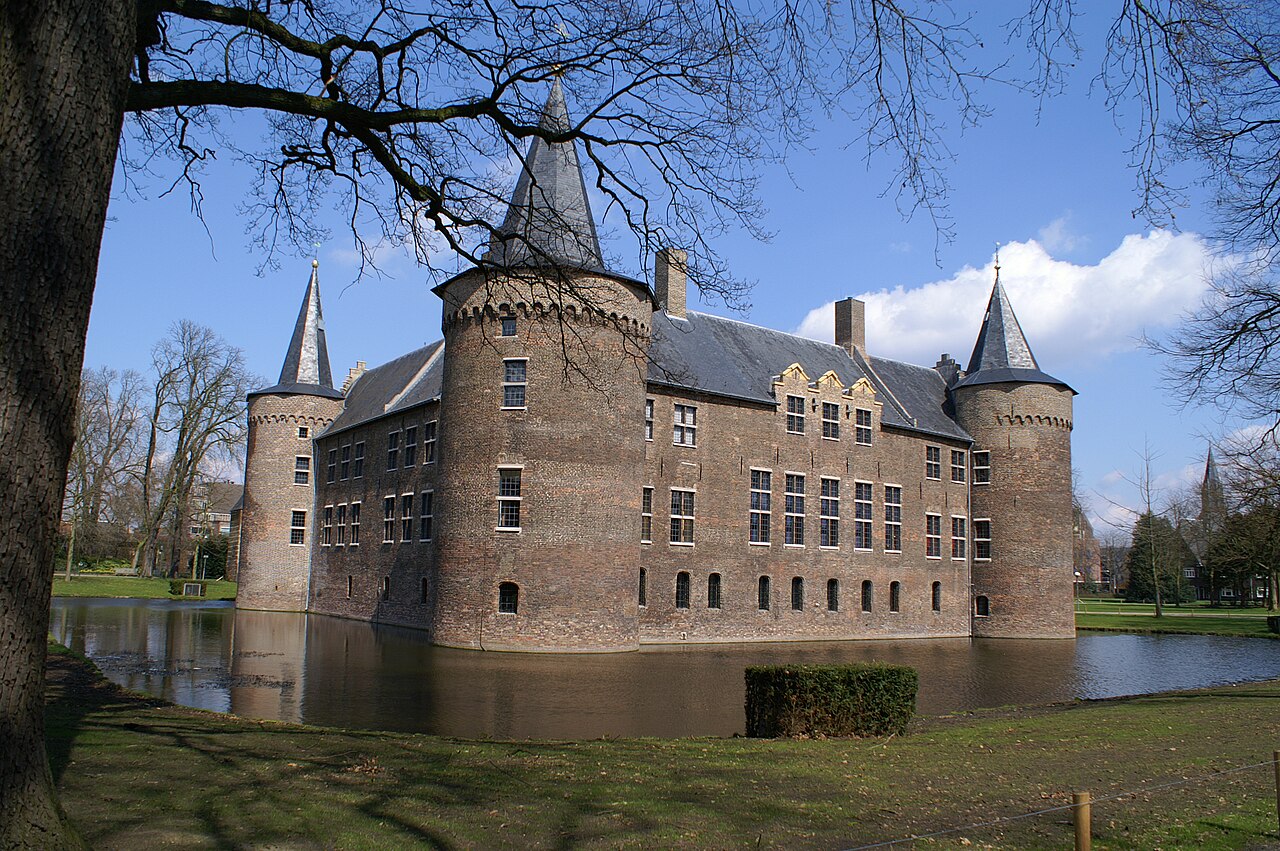
Deurne Castle
Deurne Castle, also known locally as Groot Kasteel or Nieuw Kasteel (meaning Great Castle or New Castle), is a historically significant castle located in the town of Deurne in the province of Limburg, Netherlands. Its origins trace back to the late 14th century, with the initial construction occurring shortly before 1387 by Gevaert Everaertszoon van Doerne. The castle was strategically situated on a sandy elevation within the swampy valley of a small stream called the Vlier, providing a natural defensive advantage despite its limited military purpose.
Early history and original construction
The original structure was a square building featuring multiple turrets. The walls were notably thick, suggesting that the castle was not primarily designed for military defense but rather as a fortified residence or status symbol. This early form of Deurne Castle reflected the architectural trends of the late medieval period in the region.
Destruction and rebuilding through the 16th and 17th centuries
In 1511, the castle suffered significant damage when it was burned down by troops from Guelders. It was subsequently rebuilt, only to face plundering by Spanish troops in 1599 during the turbulent period of the Eighty Years' War. The castle fell into decay but was revitalized in 1645 by the bailiff Otto de Vischere, who transformed the deteriorating structure into an inn.
Further enlargement occurred in 1653 under the ownership of Rogier, Baron of Leefdael, who had acquired the property two years earlier. This phase of construction is largely responsible for the 17th-century elements visible today, including expansions that enhanced the castle's size and functionality.
18th-century modifications and ownership
Around 1750, significant alterations were made to the castle's silhouette, including lowering the height of the turrets and removing their spires. Additionally, part of the north wing was demolished during this period. In 1759, the castle was purchased by Theodorus de Smeth. The de Smeth family undertook thorough rebuilding efforts, maintaining ownership of the castle until the upheavals of World War II.
Damage during World War II and current condition
During the liberation of Deurne in 1944, the castle sustained heavy damage from Allied fire. The present-day ruins primarily reflect the 17th-century reconstruction phase, with much of the original medieval fabric lost or altered. Today, the castle exists as a partially preserved ruin.
The site is currently utilized by a youth association, which has led to the installation of modern facilities such as a toilet building within the ruins. In 2002, conservation efforts were undertaken to stabilize the structure, including the removal of ivy from the walls to protect the masonry, although this diminished some of the castle's romantic aesthetic appeal. The castle's exterior is freely accessible to visitors.
Relationship with the predecessor castle: Klein Kasteel
Directly across the road from Deurne Castle stands its predecessor, known as the Klein Kasteel or Oud Kasteel (Little Castle or Old Castle). This earlier structure is a 14th-century tower house that was later expanded with farm buildings in the 19th century. The Klein Kasteel represents the medieval origins of the site and provides valuable context for the evolution of local noble residences.
Near the Klein Kasteel, visitors can also find a historic watermill, which adds to the cultural landscape surrounding the castles.
Architectural significance and heritage value
Deurne Castle exemplifies the transition from medieval fortifications to more residential and representative architecture typical of the Renaissance period in the Netherlands. Its thick walls and turreted design reflect defensive concerns of the late medieval era, while later modifications demonstrate adaptation to changing social and military conditions.
The castle's history of destruction and rebuilding over several centuries provides insight into the region's turbulent past, including conflicts such as the wars involving Guelders and Spanish forces, as well as the impact of World War II. Despite its ruined state, Deurne Castle remains a significant cultural landmark, embodying centuries of architectural evolution and noble lineage in Limburg.
Visiting information and public access
Today, Deurne Castle is an accessible historic site where visitors can explore the exterior ruins freely. The presence of the youth association and modern additions within the ruins may affect the visitor experience, but the castle's setting and historical ambiance continue to attract interest. Nearby, the Klein Kasteel and watermill provide additional points of interest for those wishing to explore the heritage of Deurne.
Frequently asked questions (FAQ)
- What is the historical significance of Deurne Castle?
- Deurne Castle reflects the architectural and historical evolution from the late 14th century through the Renaissance period, illustrating the region's turbulent history including wars and rebuilding phases.
- Can visitors access the interior of Deurne Castle?
- Visitors can freely access the exterior of Deurne Castle ruins, but the interior is currently used by a youth association and includes modern additions, limiting full access.
- When was Deurne Castle originally built?
- Deurne Castle was originally constructed shortly before 1387 by Gevaert Everaertszoon van Doerne on a sandy elevation in a swampy valley.
- What damage did Deurne Castle sustain during World War II?
- The castle suffered heavy damage from Allied fire during the liberation of Deurne in 1944, leaving primarily 17th-century remains visible today.
- What is the Klein Kasteel near Deurne Castle?
- The Klein Kasteel, or Old Castle, is a 14th-century tower house located across the road from Deurne Castle, later expanded with farm buildings in the 19th century.
Information
Address
Haageind 37, Netherlands
Loading map...
Visitor reviews
No reviews yet. Been here? Write the first review and help other travelers!
Write the first reviewVisited this castle? Share your experience
Your review helps other travelers and adds first-hand knowledge to our encyclopedia.