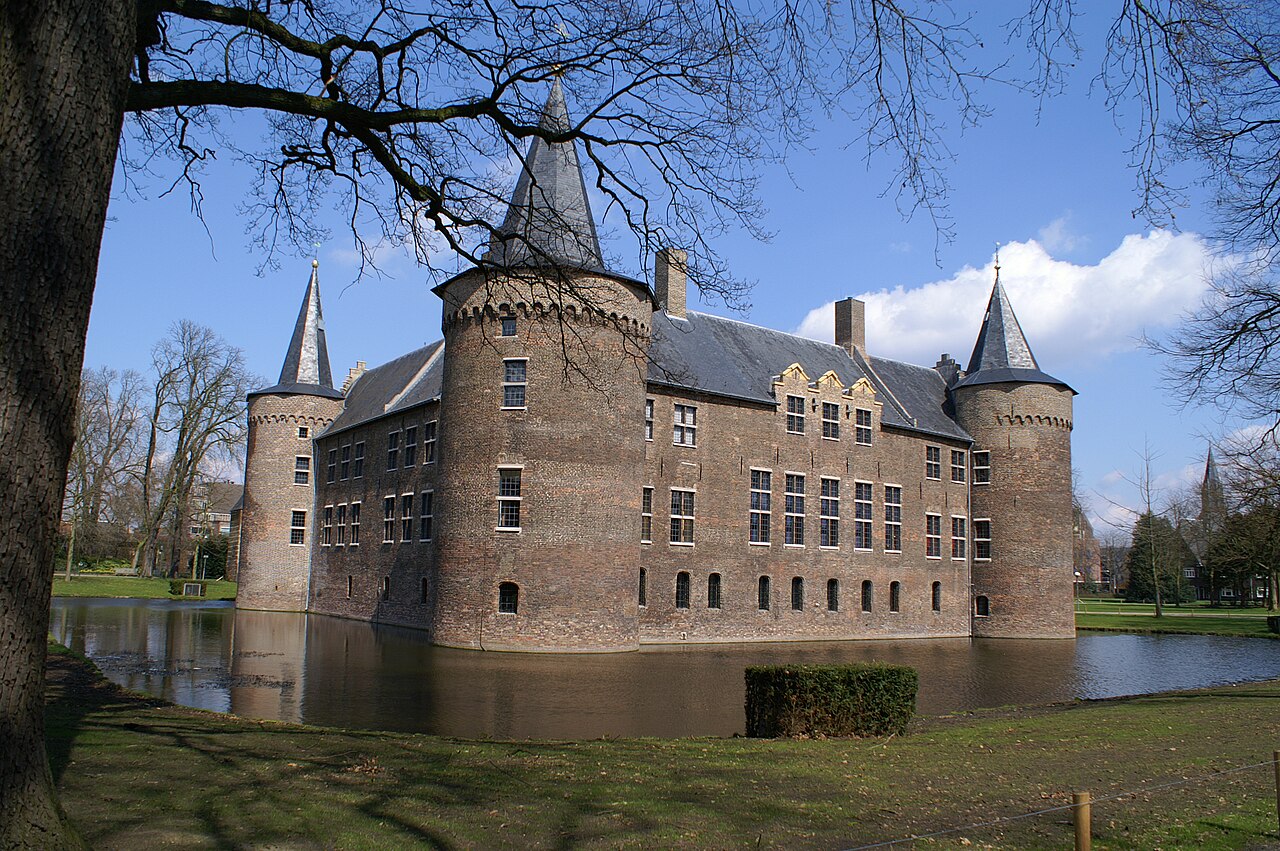
Asten Castle
Asten Castle, locally known as Kasteel Asten, is a historic castle ruin located south of the town of Asten in the province of North Brabant, Netherlands. This site reflects the architectural and historical evolution of Dutch castles from the late medieval period through the Renaissance era, revealing layers of construction, destruction, and restoration efforts over several centuries.
Origins and medieval construction
The earliest recorded mention of a stone building named Asten dates back to 1399. The castle itself was constructed in the early 15th century by Goosen van Berkel, marking it as a typical late-medieval fortress in the region. The original structure featured an almost square ground plan with three wings arranged around a central courtyard. A small corner tower added to its defensive capabilities, and the entire complex was encircled by a moat, a common protective feature in medieval castle design.
Transformation into a Renaissance manor
Between 1575 and 1625, the castle underwent significant rebuilding under the ownership of Bernard van Merode. This period saw the transformation of the medieval fortress into a Renaissance manor. The renovation included the construction of the present bailey and the digging of a second moat, enhancing both the defensive and aesthetic qualities of the estate. The Renaissance style introduced more residential comfort and ornamental elements compared to the austere medieval fortress.
Structural changes and decline
Around 1680, the west wing of the castle was demolished by Everard van Doerne, marking a reduction in the castle's footprint. Despite several repairs carried out around 1740, the castle was already in a state of decline. Ownership by regents who resided primarily in Holland meant the castle was not maintained as a primary residence, accelerating its deterioration.
Abandonment and ruin
From 1836 onwards, Asten Castle was no longer permanently inhabited. The lack of continuous occupancy led to gradual decay. The castle slowly fell into ruin, losing much of its former grandeur and structural integrity. The decline was typical of many Dutch castles during this period, as changing political and social circumstances reduced the need for fortified noble residences.
20th-century restoration attempts and wartime destruction
Between 1935 and 1942, Baron Clemens van Hövell tot Westerflier undertook a partial reconstruction of Asten Castle. This restoration was rigorous but included elements based partly on imagination rather than strict historical accuracy. Unfortunately, the castle's revival was short-lived. In 1944, during World War II, the castle was heavily damaged by German phosphor grenades, leaving it in ruins once again.
Current status and visitor experience
Today, the ruins of Asten Castle remain privately owned. The buildings within the bailey have been adapted for private residential use. Visitors can access the castle ruins, but only by appointment, accompanied by a guide, and as part of a group. This controlled access helps preserve the delicate remains while allowing public engagement with the site's rich history. The castle offers a unique glimpse into the architectural transitions from medieval fortification to Renaissance manor and the impact of modern warfare on heritage sites.
Architectural features of note
- The original square ground plan with three wings around a courtyard reflects typical late-medieval castle design.
- The corner tower provided a strategic vantage point for defense.
- The presence of two moats illustrates evolving defensive strategies over time.
- The Renaissance manor modifications introduced more refined living spaces and aesthetic details.
- The bailey served as an important functional and residential area within the castle complex.
Historical significance in the region
Asten Castle's history mirrors broader trends in Dutch castle development, including the shift from fortified residences to more comfortable manors and the challenges of preservation amid changing ownership and wartime destruction. Its ruins stand as a testament to the layered history of North Brabant and the Netherlands' medieval and early modern periods.
Frequently asked questions (FAQ)
- How do I get to Asten Castle?
- Asten Castle is located in the charming town of Asten, Netherlands. You can reach it by car or public transport, with local bus services connecting Asten to nearby cities. There is parking available near the castle for visitors who choose to drive.
- What is the historical significance of Asten Castle?
- Asten Castle dates back to the medieval period and has played a vital role in the region's history. Originally built as a defensive structure, it has witnessed numerous historical events and changes in ownership throughout the centuries. Today, it serves as a symbol of local heritage and attracts history enthusiasts.
- When was Asten Castle built?
- Asten Castle was constructed in the 14th century, making it one of the oldest landmarks in the area. Its architecture reflects the style of the time, with notable features that have been preserved over the years. The castle has undergone various renovations, but its historical essence remains intact.
- Can I visit Asten Castle year-round?
- Yes, Asten Castle is open to visitors throughout the year. However, specific opening hours may vary by season, so it is advisable to check the official website for the most current information. Guided tours are also available, providing a deeper insight into the castle's history and architecture.
- Why is Asten Castle a popular tourist attraction?
- Asten Castle attracts visitors due to its rich history, stunning architecture, and beautiful surroundings. The castle offers a unique glimpse into the past, and its picturesque setting makes it ideal for photography and leisure walks. Additionally, the castle often hosts events and exhibitions that engage visitors of all ages.
- Is it possible to access Asten Castle for individuals with disabilities?
- Yes, Asten Castle strives to be accessible for all visitors. There are facilities in place to accommodate individuals with mobility challenges, including ramps and designated areas. It is recommended to contact the castle ahead of your visit to ensure a comfortable experience.
- What are the best times to visit Asten Castle?
- The best times to visit Asten Castle are during the spring and early autumn when the weather is pleasant, and the surrounding gardens are in full bloom. Weekdays tend to be less crowded, allowing for a more relaxed experience. Special events and festivals may also be worth considering for a unique visit.
- What are the ticket prices for Asten Castle?
- Ticket prices for Asten Castle vary depending on age and the type of tour you choose. Discounts are often available for students, seniors, and groups, making it an affordable visit for families. Be sure to check the official website for the latest pricing and any special offers.
- What are the opening hours of Asten Castle?
- Asten Castle typically opens at 10 AM and closes at 5 PM, with extended hours during peak tourist seasons. It is closed on certain public holidays, so visitors should check the schedule in advance. Early arrival is recommended to make the most of your visit and participate in guided tours.
Information
Address
Kasteellaan 12, Netherlands
Loading map...
Visitor reviews
No reviews yet. Been here? Write the first review and help other travelers!
Write the first reviewVisited this castle? Share your experience
Your review helps other travelers and adds first-hand knowledge to our encyclopedia.