Desmond Castle
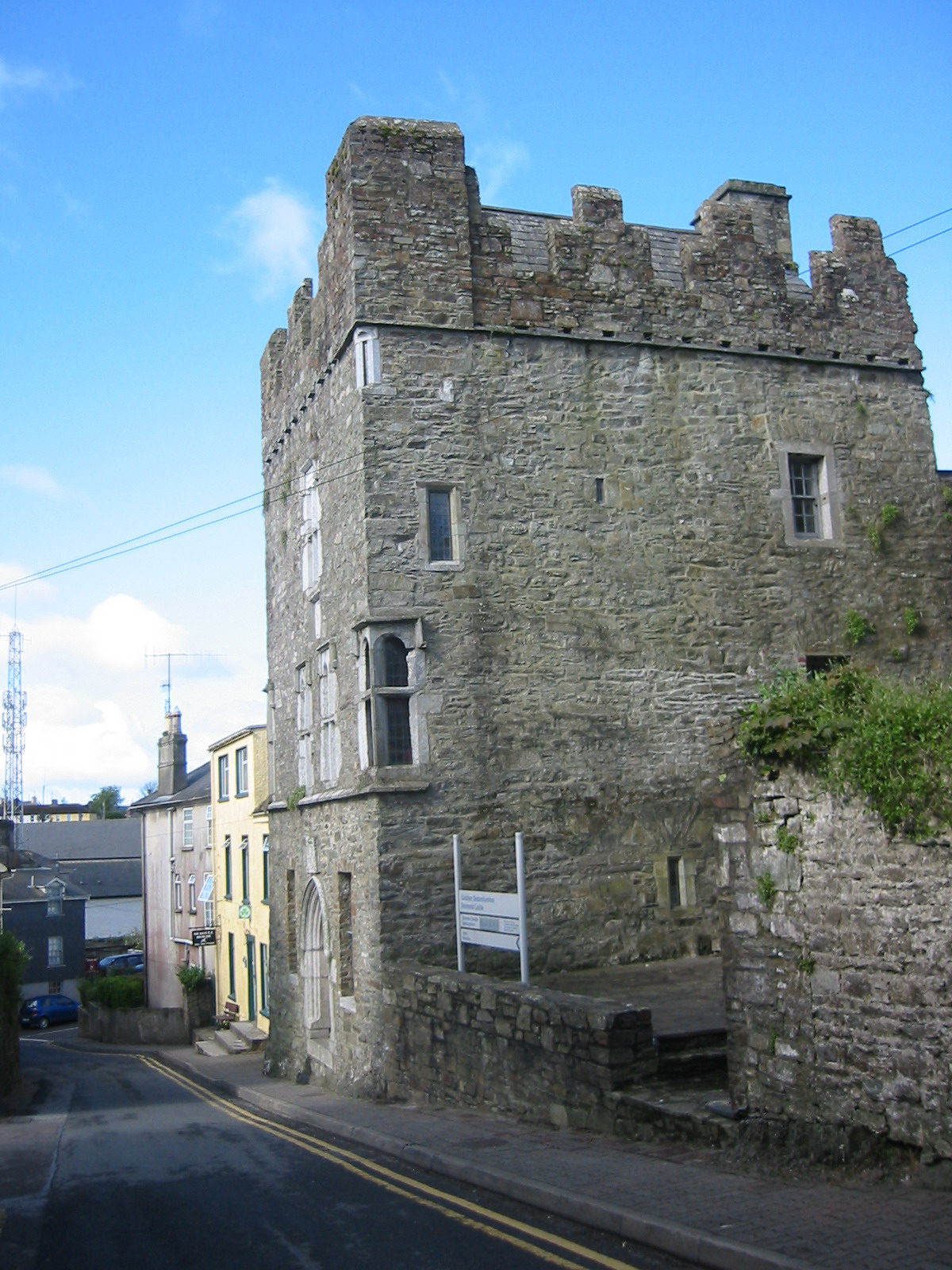
Desmond Castle stands prominently in the historic town of Kinsale, located in County Cork, Ireland. This urban tower house dates back to around 1500 and was originally constructed by Maurice FitzGerald, 9th Earl of Desmond. The castle was built to serve as the Customs House for the bustling port of Kinsale, reflecting the town's growing importance in maritime trade during the late medieval period.
The castle's design typifies the fortified residences known as tower houses, which were common in Ireland during the late medieval period. Desmond Castle consists of a three-storey keep with adjoining storehouses at the rear. Its robust stone construction and strategic location in the town center enabled it to oversee and control customs duties on goods entering the port. Another similar example of this type of urban tower house is Tynte's Castle in Youghal.
Historical significance and transformations
Early history and customs house role
The establishment of Desmond Castle shortly after King Henry VII's grant of customs rights in 1497 marked a pivotal moment in Kinsale's development as a maritime hub. Maurice FitzGerald built the castle on the site of an earlier fortification associated with the first Earl of Desmond. The castle's primary function for much of the 16th century was to serve as the official customs house, managing the collection of duties on imports and exports through Kinsale's port.
Military use during the battle of kinsale
During the Spanish occupation of Kinsale in 1600-1601, Desmond Castle was repurposed as an arsenal by Don Juan de Aguila. This occupation lasted approximately 100 days and culminated in the Battle of Kinsale in 1601, a decisive conflict in Irish history. The castle's strategic location made it a key military asset during this period.
Conversion to a naval prison and town gaol
After the construction of a new customs house in 1641, Desmond Castle was converted into a naval prison. It primarily housed French prisoners of war captured at sea, earning it the local nickname the "French Prison." The castle's prison function continued well into the 18th century.
In 1747, a tragic fire broke out in the castle, resulting in the deaths of 54 prisoners. Later, in 1791, the castle was donated to the town of Kinsale by James Kearney, MP. Subsequently, it served as the town's local jail until 1846.
Role during the great famine and 20th-century restoration
During the devastating Great Famine in Ireland, Desmond Castle was repurposed as a workhouse to provide relief for those suffering from starvation. By the early 20th century, the castle had fallen into a state of disrepair.
In the 1930s, the castle came under state care, and extensive restoration efforts were undertaken in the late 20th century, culminating in its reopening to the public. These restorations preserved the castle's essential medieval features while adapting it for modern use.
Architectural features and layout
Structure and design elements
Desmond Castle is a classic example of an urban tower house, characterized by its vertical emphasis and fortified construction. The main keep rises three stories high, constructed from locally sourced stone with thick defensive walls designed to withstand attack.
The rear of the castle includes storehouses that supported its function as a customs facility, allowing for the secure storage of goods and materials. The castle's layout reflects its dual role as both a defensive stronghold and a center of commercial administration.
Modifications through its history
Over the centuries, Desmond Castle underwent various modifications to suit its changing roles. The conversion to a prison introduced internal changes to accommodate cells and security features. The fire of 1747 likely necessitated repairs and rebuilding of affected sections.
Despite these alterations, the castle retains much of its original late medieval character, with restoration efforts carefully balancing preservation with functional adaptation for its current use as a museum.
Cultural significance and current use
International museum of wine
Today, Desmond Castle is home to the International Museum of Wine, which celebrates Ireland's historic connections to the global wine trade. The museum is operated by the Order of the Wine Geese, an organization dedicated to highlighting the Irish influence on the wine industry abroad.
The museum exhibits a collection of artifacts, documents, and displays that trace the history of wine and its cultural impact, particularly focusing on Irish emigrants who contributed to wine production in countries such as France, Spain, and Australia.
Visitor experience and accessibility
Visitors to Desmond Castle can explore the castle's interior, including its stone chambers, courtyards, and defensive features. The museum is open seasonally, typically during the tourist season, and admission is charged to support maintenance and programming.
While some visitors find the museum's focus specialized, the castle itself offers a fascinating glimpse into Ireland's maritime, military, and penal history. Its central location in Kinsale makes it easily accessible and a popular stop for those exploring the region's heritage.
Frequently asked questions (FAQ)
- When was Desmond Castle built and by whom?
- Desmond Castle was built around 1500 by Maurice FitzGerald, 9th Earl of Desmond, as a customs house for the port of Kinsale.
- What architectural style characterizes Desmond Castle?
- Desmond Castle is a late medieval urban tower house built in the Gothic style, featuring a three-storey keep and robust defensive walls.
- What was the castle's role during the Battle of Kinsale?
- During the Spanish occupation of Kinsale in 1600-1601, Desmond Castle served as an arsenal under Don Juan de Aguila, playing a strategic military role.
- Why is Desmond Castle also called the 'French Prison'?
- After 1641, Desmond Castle was converted into a naval prison primarily holding French prisoners of war, which led to its local nickname the 'French Prison'.
- What tragic event occurred at Desmond Castle in 1747?
- A fire in 1747 tragically killed 54 prisoners housed in Desmond Castle when it was functioning as a prison.
- What is the current use of Desmond Castle?
- Today, Desmond Castle houses the International Museum of Wine, celebrating Ireland's historic connections to the global wine trade.
Information
Opening hours
Seasonal, typically during tourist season
Ticket prices
Admission fee applies
Current owner
State museum
Website
Visit websiteAddress
Cork Street, Kinsale, County Cork, Ireland
Sources & official resources
Verify the information above using these authoritative references.
Loading map...
Visitor reviews
No reviews yet. Been here? Write the first review and help other travelers!
Write the first reviewVisited this castle? Share your experience
Your review helps other travelers and adds first-hand knowledge to our encyclopedia.