James Fort
James Fort is a historic military fortification located on the Castlepark peninsula, just south of the town of Kinsale in County Cork, Ireland. This early 17th-century fort was constructed in the aftermath of the Battle of Kinsale, a pivotal conflict that marked the end of the Nine Years' War in Ireland. The fort's strategic position on the peninsula allowed it to control access to Kinsale Harbour, serving as a key defensive installation guarding the estuary.
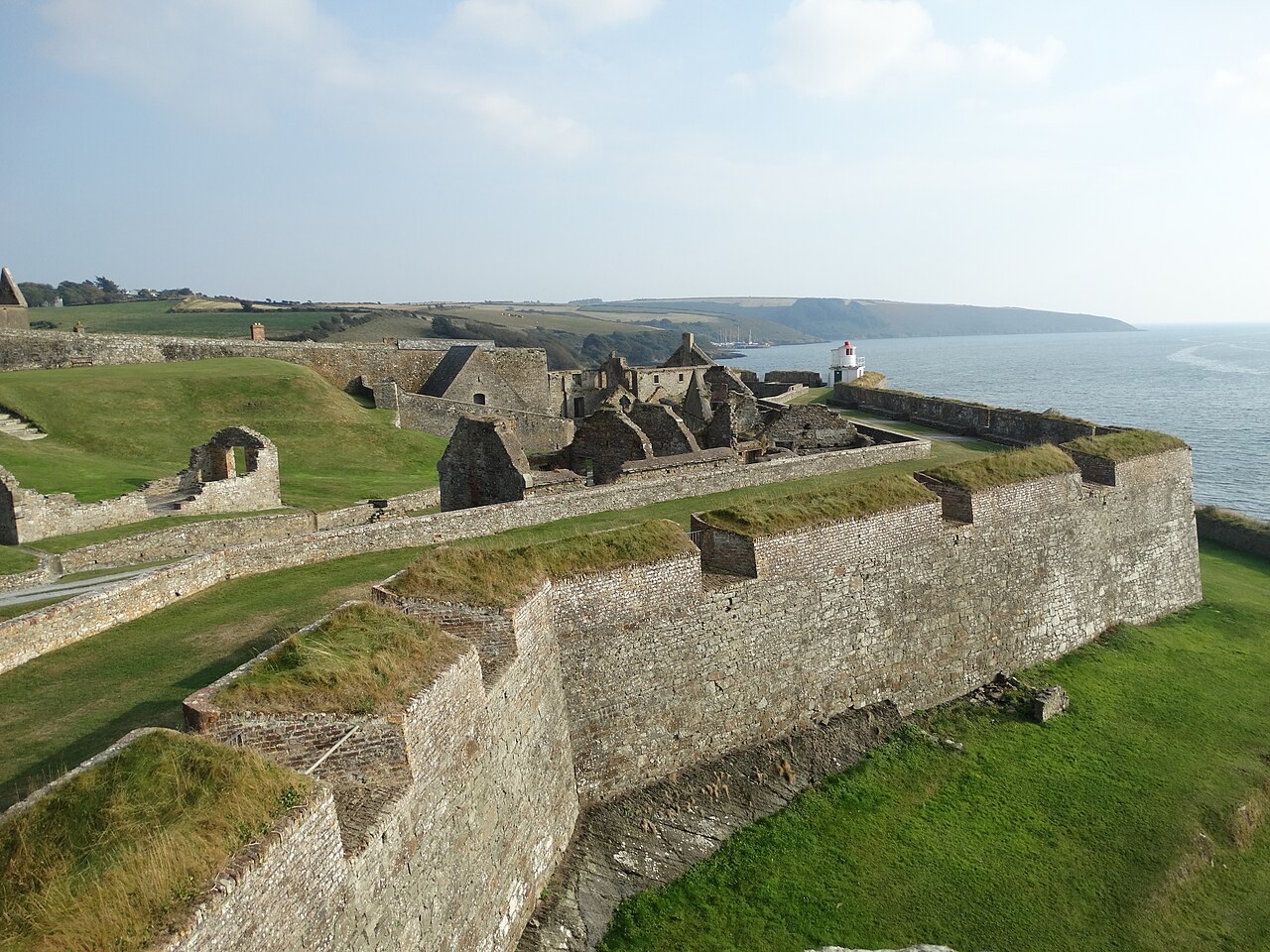
Construction of James Fort began in 1602 under the direction of the notable military engineer Paul Ive. The fort was completed by 1604 at a cost of £645, a significant investment reflecting its military importance. James Fort is designed as a pentagonal bastioned fort, a style characterized by angled bastions projecting outward to cover adjacent walls, enabling defenders to repel attackers more effectively. The fort is enclosed by a substantial rampart of earth and sod topped with a parapet, which provided protection for the garrison and artillery.
Architectural features and defensive structures
The fort's outer defenses include a deep ditch and a counterscarp, designed to impede enemy advances. On the northeast side, a covered way leads to a water battery positioned at the shore, allowing artillery to command the approach by sea. The main entrance is located in the southern curtain wall, providing controlled access to the interior.
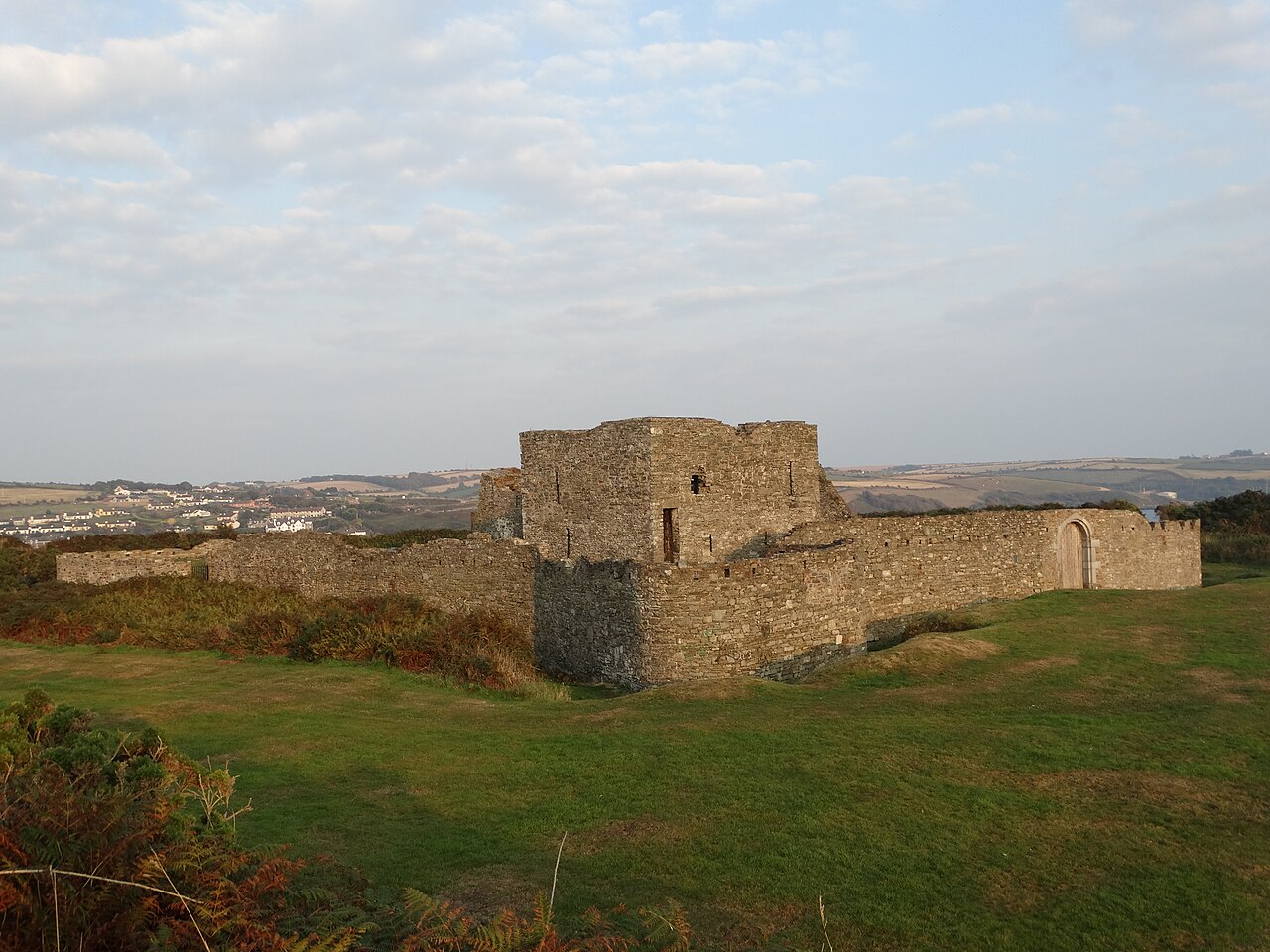
In 1611, the fort's defenses were enhanced with the addition of a stone inner fort, which included a gatehouse and a drawbridge. This inner fortification likely incorporated remnants of a small medieval tower that existed on the site prior to the construction of James Fort, suggesting continuity of defensive use at this strategic location.
Historical significance and military engagements
James Fort played a significant role during the turbulent 17th century in Ireland. In 1649, the fort was captured without resistance by forces loyal to Oliver Cromwell during his campaign in Ireland. This peaceful surrender indicates the fort's strategic value and possibly the overwhelming strength of Cromwell's forces.
Further defensive improvements were made in 1667, reflecting ongoing military concerns in the region. The fort's most notable historical episode occurred in 1689 when King James II landed at Kinsale with French support in an attempt to reclaim the English throne during the Williamite War in Ireland. James Fort, along with Charles Fort on the opposite shore of the estuary, came under Jacobite control.
In 1690, Williamite forces commanded by the Duke of Würtemburg and John Churchill (later the 1st Duke of Marlborough) launched an assault on both forts. After a siege, James Fort surrendered, marking a crucial moment in the Williamite victory. The fort was held for King James II by Colonel O'Driscoll, a notable Jacobite commander.
Current condition and visitor experience
Today, James Fort remains a significant historical site with much of its outer earthen ramparts freely accessible to visitors. The inner stone fort can be visited, though access may be restricted at times. The fort's location offers picturesque views of the surrounding coastline and estuary, enhancing its appeal as a heritage attraction.
Nearby historic sites include Ringrone Castle and Charles Fort, the latter situated across the estuary, providing visitors with a comprehensive understanding of the area's military history. James Fort's preservation allows insight into early modern military architecture and the strategic defense systems employed in Ireland during the 17th century.
Architectural style and classification
James Fort is classified as a water castle due to its coastal location and its role in controlling maritime access. Its design reflects the early modern bastioned fortification style, which evolved in response to advances in artillery technology. The fort's pentagonal layout with bastions allowed for overlapping fields of fire, a significant improvement over medieval castle designs.
Legacy and cultural importance
As a well-preserved example of a 17th-century bastioned fort, James Fort holds cultural and historical significance in Ireland. It exemplifies the military engineering techniques of the period and the geopolitical struggles involving English, Irish, and French forces. The fort's history is intertwined with major events such as the Battle of Kinsale and the Williamite War, making it a key site for understanding Ireland's complex past.
Frequently asked questions (FAQ)
- How do I get to James Fort in Kinsale?
- James Fort is located on the Castlepark peninsula just south of Kinsale town center. It is accessible by car or local taxi services, with parking available nearby. Walking from Kinsale town takes about 15-20 minutes along scenic coastal paths.
- What is the historical significance of James Fort?
- James Fort was built after the Battle of Kinsale in the early 1600s to control access to Kinsale Harbour and played key roles in the Cromwellian conquest and Williamite War. It is a prime example of early modern bastioned fortifications in Ireland.
- Can I visit the inner stone fort at James Fort?
- The inner stone fort at James Fort is sometimes open to visitors, but access may be limited or closed depending on maintenance or preservation efforts. The outer earthworks are freely accessible year-round.
- What architectural style is James Fort built in?
- James Fort is an example of early modern bastioned fortification, designed with a pentagonal layout and angled bastions to optimize defense against artillery, typical of post-Renaissance military architecture.
- Is James Fort suitable for family visits?
- Yes, James Fort is suitable for families, offering open outdoor spaces and scenic views. Visitors should be cautious on uneven ground and near defensive ditches. There are no extensive facilities, so plan accordingly.
Information
Architect
Paul Ive
Address
Castlepark peninsula, Kinsale, County Cork, Ireland
Loading map...
Visitor reviews
No reviews yet. Been here? Write the first review and help other travelers!
Write the first reviewVisited this castle? Share your experience
Your review helps other travelers and adds first-hand knowledge to our encyclopedia.