Degenfeld-Schonburg mansion in Ács
The Degenfeld-Schonburg mansion in Ács, Hungary, is an important example of a hill castle that reflects the region's aristocratic heritage and architectural evolution. Although the precise construction date is not well documented, the mansion is traditionally associated with the noble Degenfeld-Schonburg family, who were prominent landowners in the area. The mansion stands on elevated terrain, characteristic of hill castles, which were often chosen for their strategic vantage points and defensive advantages.
Historical background and ownership
The mansion was built as a residence for the Degenfeld-Schonburg family, a noble lineage with roots in Central Europe. The family played a significant role in the local history of Ács and the surrounding region. While detailed records of the mansion's construction phases are scarce, it likely dates to the late 18th or early 19th century, a period when many aristocratic estates in Hungary were constructed or renovated to reflect contemporary tastes and social status.
The Degenfeld-Schonburg family maintained ownership of the mansion for several generations, using it as a country residence and administrative center for their estates. The mansion's location in Ács situates it within the Győr-Moson-Sopron region of Hungary, an area known for its rich history and cultural heritage.
Architectural features and style
The mansion exhibits architectural elements typical of aristocratic residences of its era, blending classical influences with regional stylistic details. It is characterized by a symmetrical façade, large windows, and decorative elements that emphasize elegance over fortification, distinguishing it from medieval castles primarily designed for defense.
The structure includes notable features such as a central entrance with a pediment, a multi-wing layout, and well-proportioned rooms arranged around a central courtyard or garden. The use of local materials and craftsmanship is evident in the masonry and decorative detailing.
Interior and grounds
Inside, the mansion likely contains spacious halls, reception rooms, and private chambers decorated with period furnishings and artwork, reflecting the lifestyle of the Hungarian nobility. The grounds surrounding the mansion would traditionally include landscaped gardens, outbuildings such as stables or carriage houses, and possibly a small chapel or family mausoleum.
The mansion's role in the local context
As a noble residence, the Degenfeld-Schonburg mansion served not only as a home but also as a social and economic hub within Ács. It symbolized the influence and status of the family and played a role in local governance and estate management. The mansion's elevated position provided a commanding view of the surrounding countryside, reinforcing its prominence in the area.
Current condition and preservation
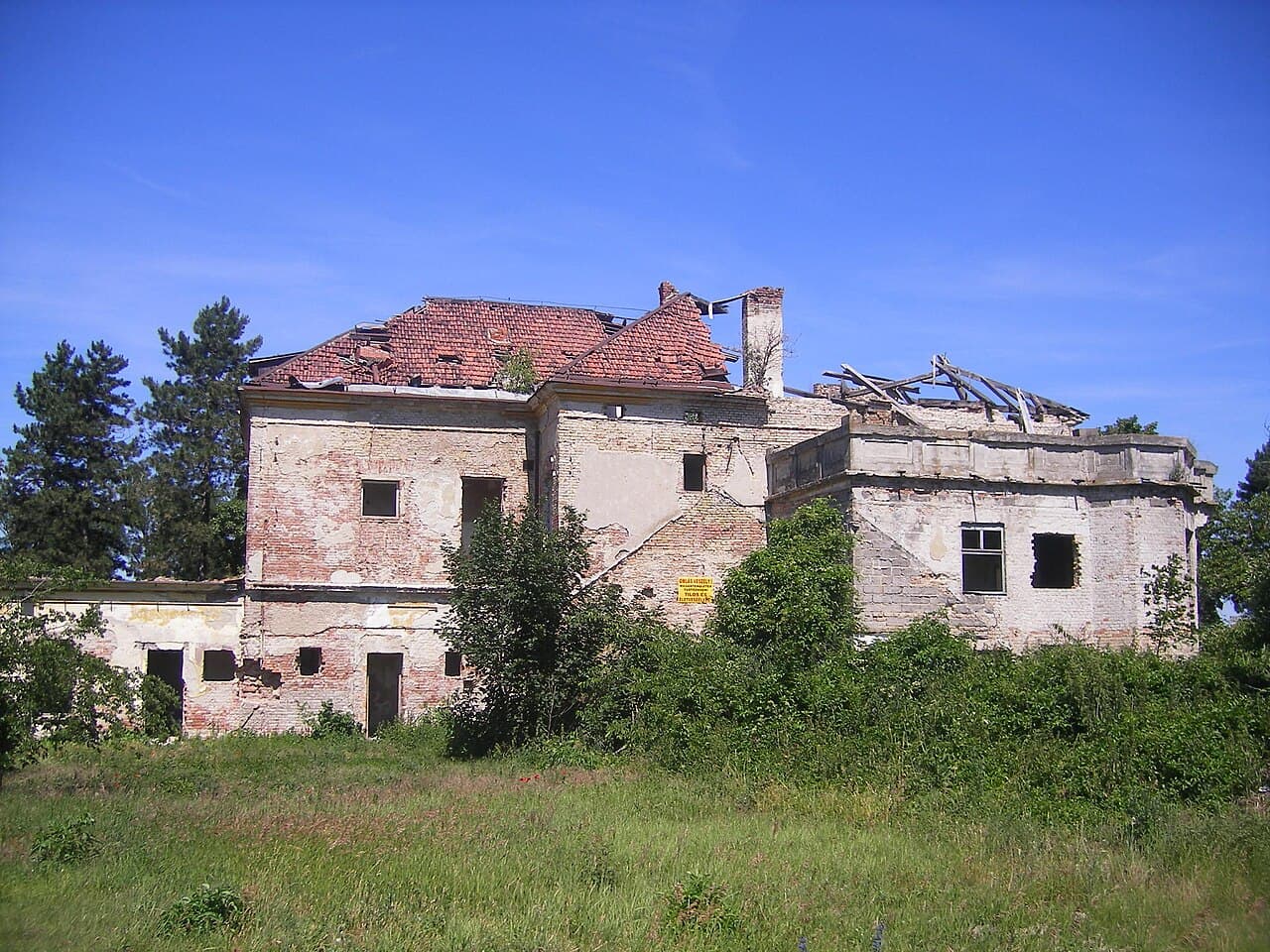
Today, the mansion's condition varies depending on preservation efforts. While some parts may remain well preserved or restored, others might show signs of wear or partial deterioration. The building is a valuable cultural asset, representing the architectural and historical legacy of the Hungarian nobility in the region.
Efforts to maintain and protect the mansion contribute to the cultural tourism and heritage appreciation in Ács, attracting visitors interested in Hungary's aristocratic past and architectural history.
Frequently asked questions (FAQ)
- What is the historical significance of the Degenfeld-Schonburg mansion?
- The Degenfeld-Schonburg mansion reflects the heritage of a prominent noble family in Ács and serves as an example of aristocratic residences in Hungary from the late 18th or early 19th century.
- Can visitors tour the Degenfeld-Schonburg mansion?
- Visiting information is limited, and access may depend on current ownership and preservation status. It is advisable to check locally for tours or public access opportunities.
- What architectural style characterizes the mansion?
- The mansion blends classical architectural influences typical of aristocratic estates from the late 18th and early 19th centuries, with a focus on elegance rather than fortification.
Photo gallery

Information
Loading map...
Visitor reviews
No reviews yet. Been here? Write the first review and help other travelers!
Write the first reviewVisited this castle? Share your experience
Your review helps other travelers and adds first-hand knowledge to our encyclopedia.