Deganwy Castle
Deganwy Castle is a historically significant early medieval hill castle located in the small seaside town of Deganwy, Wales, overlooking the mouth of the River Conwy. Its position atop a massive volcanic rock outcrop provided a naturally defensible site, making it a key military stronghold from the 6th century onward. The castle's origins trace back to the early medieval period when it served as the royal court of Maelgwn Gwynedd, the powerful 6th-century King of Gwynedd, establishing Deganwy as a center of Welsh power and governance.
Early medieval origins and strategic importance
The site of Deganwy Castle was likely first occupied during the Roman period, but it rose to prominence after the Roman withdrawal from Britain due to its protection from Irish raids. The original fortress was constructed primarily from timber atop the western volcanic hill, utilizing the natural rock for defense. This early stronghold was significant as the headquarters of Maelgwn Gwynedd around 520–547 AD, a ruler who consolidated power in North Wales. Nearby landmarks such as Bryn Maelgwyn and local place names preserve the legacy of this era.
The wooden fortress was destroyed by a lightning strike in 812, a catastrophic event that ended the initial phase of occupation. It was subsequently rebuilt but suffered destruction again during Saxon invasions in the early 9th century. Despite these setbacks, Deganwy remained an important site for Welsh rulers through the centuries.
Norman conquest and medieval transformations
Following the Norman conquest of England in 1066, Deganwy Castle came under Norman influence. In 1073, Robert of Rhuddlan, lord of North Wales, constructed a new fortification at Deganwy, marking the transition from timber to more durable defensive works. However, the Normans faced persistent resistance, and Welsh forces expelled them from Deganwy in 1094 during widespread uprisings.
The 12th century remains poorly documented for Deganwy, but by the 13th century, the castle gained renewed strategic importance. Llywelyn ab Iorwerth, Prince of Gwynedd, undertook significant stone fortifications, including a stone ring wall encircling the summit of the western hill. These improvements reflected the castle's role in the ongoing Welsh-English border conflicts of the era.
In 1210, the castle was captured by the Earl of Chester but was soon retaken by Llywelyn, who further strengthened its defenses. The castle featured a large hall known as a palas, likely serving as the lord's residence, and a round tower within the inner ward. The outer bailey between the volcanic hills was also fortified, including gatehouses and defensive walls.
Conflicts and royal interventions in the 13th century
The castle's turbulent history continued with repeated cycles of destruction and rebuilding. In 1241, Dafydd ap Llywelyn ordered the castle's destruction to prevent its use by English forces. Shortly afterward, King Henry III of England seized Deganwy and initiated an extensive reconstruction program. He invested over £2200 in fortifications, adding stone walls, gatehouses, and a bailey. Henry III also founded a small borough near the castle, including a chapel and a horse mill, supporting a modest settlement.
Despite these efforts, the castle was destroyed again in 1263 by Llywelyn ap Gruffudd, Prince of Wales, during ongoing conflicts with English forces. This destruction marked the decline of Deganwy's military significance.
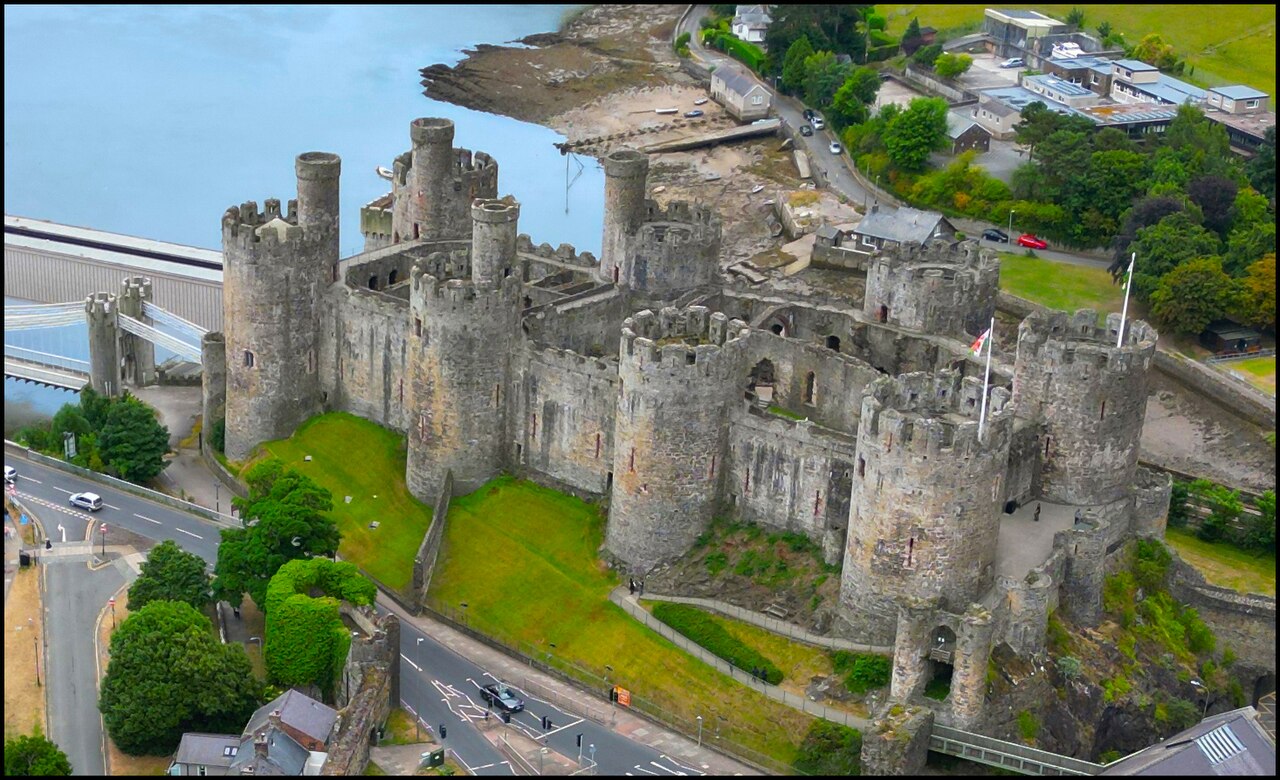
In 1283, King Edward I of England constructed Conwy Castle across the estuary, which supplanted Deganwy as the dominant fortress in the region. Materials from Deganwy were reportedly reused in Conwy's construction, and Deganwy was left in ruins, symbolizing the shifting balance of power in North Wales.
Architectural features and archaeological findings
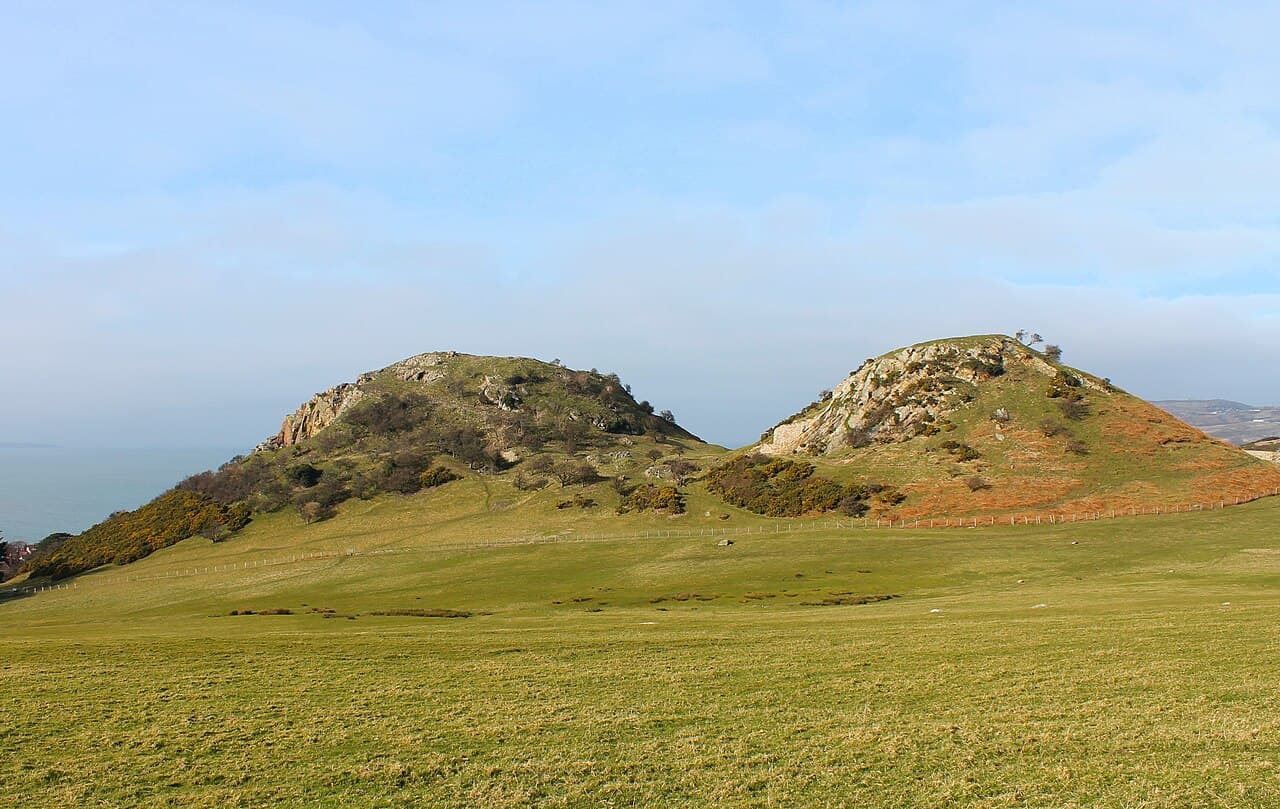
Deganwy Castle occupies two volcanic hills connected by a bailey. The earliest fortifications were timber structures atop the western hill, now visible only as earthworks including ditches and mounds. Excavations have revealed the layout of the original wooden stronghold and its defensive earthworks.
The 13th-century stone phase introduced a ring wall around the western summit, enclosing a round tower and a large hall (palas). The outer bailey featured stone walls and gatehouses, including a notable gatehouse flanked by D-shaped towers on the southern side. The northern side had a partially completed stone wall and ditch with an unfinished gate tower.
On the eastern hill stood a distinctive U-shaped tower known as Mansell's Tower, now lost to time. The castle's masonry remnants provide insight into the ambitious 13th-century building efforts. Nearby archaeological work uncovered remains of the borough established by Henry III, including a chapel and horse mill, illustrating the castle's role as a center of local administration and economy.
Notably, excavations led by Leslie Alcock in the 1960s revealed connections between Deganwy's early medieval rulers and broader trade networks, including imported Mediterranean pottery. A 2009 geophysical survey further explored the bailey and surrounding land, enhancing understanding of the site's occupation and layout.
Legacy and current condition
Today, Deganwy Castle is largely a site of earthworks and scattered stone ruins, reflecting its long history of construction, destruction, and strategic importance. The visible remains include defensive ditches, mounds, and fragments of stone walls and towers. The castle's location in the suburbs of modern Llandudno places it within a landscape rich in Welsh history.
Deganwy Castle remains a symbol of early Welsh power and the turbulent medieval history of North Wales. Its story illustrates the complex interactions between Welsh princes and English monarchs, as well as the evolution of castle architecture from timber fortifications to stone strongholds. The site continues to attract historians, archaeologists, and visitors interested in the heritage of medieval Wales.
Frequently asked questions (FAQ)
- How do I get to Deganwy Castle?
- Deganwy Castle is located in Deganwy, United Kingdom, and is easily accessible by car or public transport. If you are traveling by train, the nearest station is Llandudno Junction, which is a short bus or taxi ride away from the castle.
- What is the historical significance of Deganwy Castle?
- Deganwy Castle dates back to the 11th century and played a crucial role in the defense against Viking invasions. It is often associated with the legendary King Arthur and is considered an important site in Welsh history.
- When was Deganwy Castle built?
- Deganwy Castle was originally built in the 11th century, with significant renovations occurring in the 13th century. Its strategic location has made it a focal point for various historical battles and sieges throughout the centuries.
- Can I visit Deganwy Castle?
- Yes, Deganwy Castle is open to visitors, allowing them to explore its ruins and enjoy the stunning views of the Conwy Estuary. However, it is essential to check for any seasonal opening hours or special events before planning your visit.
- Why is Deganwy Castle popular among tourists?
- Deganwy Castle is popular for its rich history and breathtaking views of the surrounding landscape. Visitors are drawn to its architectural remnants and the stories of its past, making it a fascinating destination for history enthusiasts and casual travelers alike.
- Is it possible to access the castle with limited mobility?
- Access to Deganwy Castle may be challenging for individuals with limited mobility due to its location and terrain. It is advisable to contact local visitor information for specific accessibility options or alternative viewpoints.
- What are the opening hours for Deganwy Castle?
- Deganwy Castle typically opens to visitors during daylight hours, although specific times can vary by season. It is recommended to check the official website or local tourist information for the most accurate and up-to-date opening hours.
- Are there any nearby attractions to visit?
- Yes, there are several nearby attractions, including Conwy Castle and the picturesque town of Llandudno. Both locations offer additional historical sites and scenic views, making them perfect complements to your visit to Deganwy Castle.
- What are the ticket prices for Deganwy Castle?
- Entry to Deganwy Castle is generally free, as it is primarily in ruins. However, donations are appreciated to help maintain the site, and guided tours may have associated fees.
Photo gallery

Information
Website
Visit websiteSources & official resources
Verify the information above using these authoritative references.
Loading map...
Visitor reviews
No reviews yet. Been here? Write the first review and help other travelers!
Write the first reviewVisited this castle? Share your experience
Your review helps other travelers and adds first-hand knowledge to our encyclopedia.