Conwy Suspension Bridge
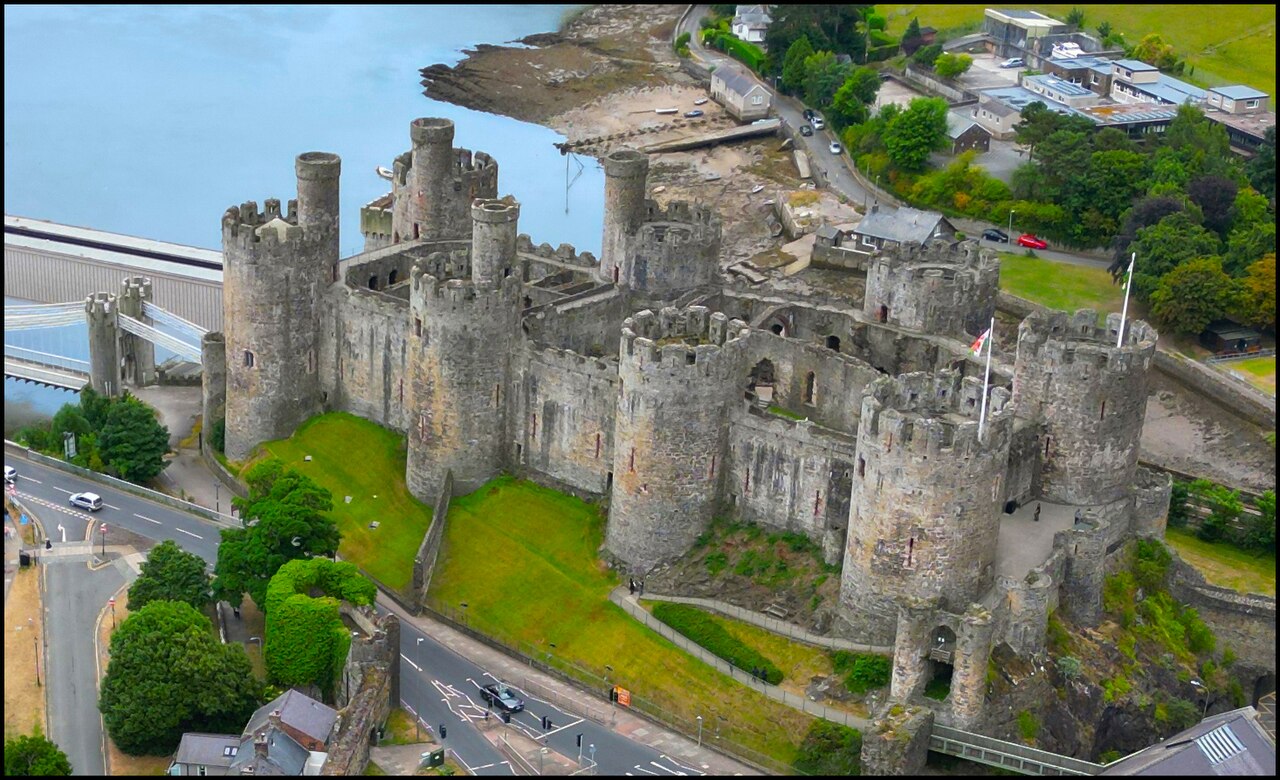
Conwy Suspension Bridge stands as a remarkable example of early 19th-century engineering adjacent to the medieval Conwy Castle in Wales. While the castle itself, constructed in the 1280s under the orders of King Edward I, represents one of the finest examples of medieval military architecture in Europe, the nearby suspension bridge is a pioneering feat of the Industrial Revolution.
Conwy Castle is a World Heritage site, celebrated for its massive curtain walls, eight imposing towers, and strategic position overlooking the River Conwy. Its construction was part of Edward I's campaign to subdue Wales, and it exemplifies late 13th-century military fortification with its concentric defenses and robust stonework.
In stark contrast, the Conwy Suspension Bridge was completed in 1826 and designed by the renowned civil engineer Thomas Telford. This bridge is historically significant as one of the first road suspension bridges in the world, marking a major advancement in bridge engineering. Its design includes large castellated towers that visually echo the medieval castle, blending historical architectural motifs with modern industrial materials and techniques.
Historical context and significance
The bridge was built to replace a ferry service that had long operated across the River Conwy. Before its construction, crossing the river was dependent on weather and tides, limiting transport and trade. The new suspension bridge facilitated reliable, year-round passage for horse-drawn carriages and pedestrians, significantly improving connectivity in the region.
Although the bridge originally carried both vehicular and pedestrian traffic, it did not have a dedicated pedestrian walkway until 1904. By 1958, a new road bridge was constructed nearby to accommodate modern vehicular traffic, and since then, the original suspension bridge has been used exclusively as a footbridge, preserving its historical structure and allowing visitors to appreciate its engineering and aesthetic qualities up close.
Architectural and engineering features
Design and construction
Thomas Telford employed innovative engineering techniques for the time, using wrought iron chains suspended between two massive stone towers. These towers are notable for their castellated design, which stylistically complements the adjacent medieval castle, creating a harmonious visual link between the two structures.
The bridge spans approximately 99 meters (325 feet) across the River Conwy. Its deck is suspended by iron rods attached to the wrought iron chains, a design that allowed for a lighter and more flexible structure compared to traditional stone or timber bridges. This suspension system was revolutionary, influencing the design of many later bridges worldwide.
Materials and preservation
The use of wrought iron was cutting-edge at the time, reflecting the advances of the Industrial Revolution. The stone towers were constructed using local materials, carefully crafted to match the medieval aesthetic of the castle. Today, the bridge is well preserved and maintained as a historic monument, with conservation efforts ensuring its structural integrity and appearance remain intact for future generations.
Relationship with Conwy Castle
The proximity of the bridge to Conwy Castle creates a unique juxtaposition of medieval and industrial heritage. The castle, a symbol of medieval military power and royal authority, contrasts with the bridge's representation of technological progress and the expansion of transportation networks in the 19th century.
Visitors to the site can experience both the imposing medieval fortress and the elegant suspension bridge in one location, offering insights into different eras of architectural and engineering achievement. The bridge’s castellated towers serve as a deliberate architectural nod to the castle, linking the two structures visually and historically.
Visiting and cultural importance
Today, the Conwy Suspension Bridge is a pedestrian-only crossing, popular with tourists exploring the historic town of Conwy and its famous castle. The bridge offers scenic views of the river and surrounding landscape, making it a favored spot for photography and leisurely walks.
Its status as one of the earliest suspension bridges in the world, combined with its aesthetic harmony with the medieval castle, makes it a significant cultural and heritage landmark in Wales. The bridge and castle together attract visitors interested in history, architecture, and engineering.
Accessibility and visitor experience
The bridge is accessible year-round and free to cross, providing an engaging experience for those interested in the evolution of bridge design. Nearby facilities and the town of Conwy itself offer additional historical attractions, dining, and accommodations, making it a comprehensive destination for cultural tourism.
Frequently asked questions (FAQ)
- How do I get to Conwy Suspension Bridge?
- You can reach Conwy Suspension Bridge by car or public transport. The bridge is located in the town of Conwy, which is well-connected by road and rail, making it accessible for visitors from various locations in the UK.
- What is the historical significance of Conwy Suspension Bridge?
- Conwy Suspension Bridge, completed in 1826, was designed by the renowned engineer Thomas Telford. It played a crucial role in improving transportation and trade in the region by providing a vital link across the River Conwy.
- When was Conwy Suspension Bridge built?
- The bridge was constructed between 1822 and 1826 and opened to the public on December 1, 1826. It was one of the first suspension bridges in the UK and remains an important example of early 19th-century engineering.
- Can I walk across Conwy Suspension Bridge?
- Yes, visitors are welcome to walk across the bridge and enjoy stunning views of the surrounding area. The bridge is designed for pedestrians and provides a unique perspective of the historic Conwy Castle nearby.
- Why is Conwy Suspension Bridge a popular tourist attraction?
- Conwy Suspension Bridge is popular due to its historical significance, architectural beauty, and the breathtaking scenery it offers. It is part of a UNESCO World Heritage Site, attracting history enthusiasts and nature lovers alike.
- Is it possible to visit Conwy Suspension Bridge year-round?
- Yes, the bridge is accessible year-round, allowing visitors to explore its beauty in any season. However, it's advisable to check local weather conditions and any potential maintenance work that might affect access.
- What are the opening hours for Conwy Suspension Bridge?
- Conwy Suspension Bridge is open to the public throughout the day, but specific opening hours may vary based on the season. It is best to visit the official website for the most up-to-date information on visiting times.
- Are there any nearby attractions to visit?
- Yes, nearby attractions include the impressive Conwy Castle, the smallest house in Great Britain, and the picturesque town of Conwy itself. These sites complement your visit to the bridge and provide an enriched historical experience.
- What are the ticket prices for Conwy Suspension Bridge?
- Visiting Conwy Suspension Bridge is free for pedestrians, making it an affordable destination for everyone. However, there may be charges for parking or guided tours in the area, so it's best to check ahead.
Information
Loading map...
Visitor reviews
No reviews yet. Been here? Write the first review and help other travelers!
Write the first reviewVisited this castle? Share your experience
Your review helps other travelers and adds first-hand knowledge to our encyclopedia.