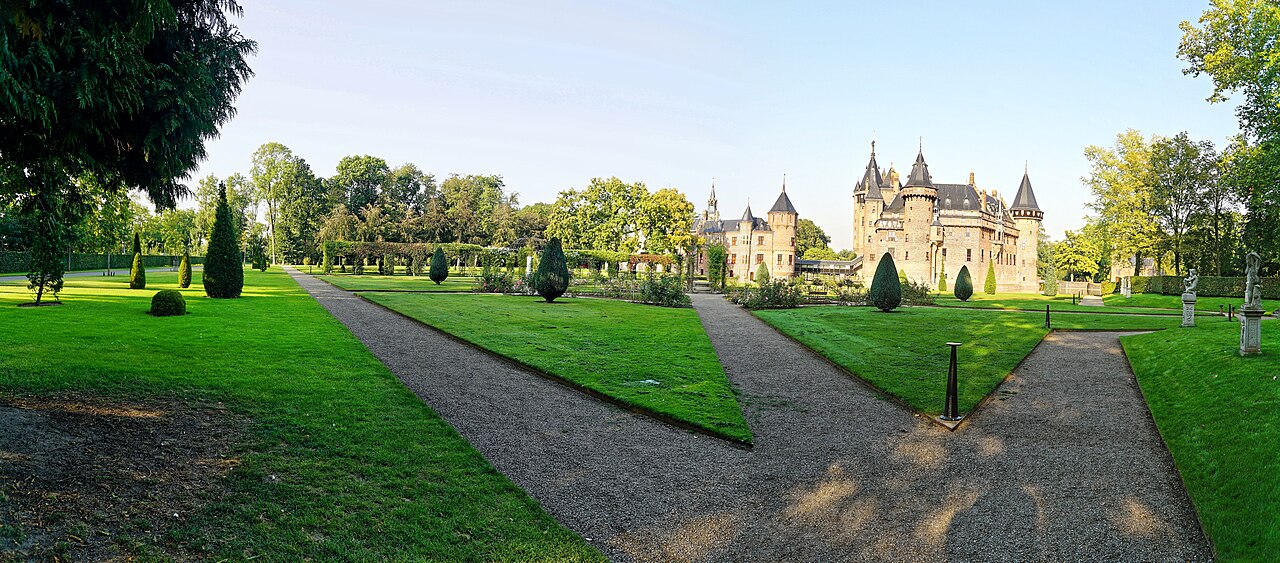
De Haar Castle
De Haar Castle (Dutch: Kasteel de Haar, formerly known as Het Huys te Haer) stands as a magnificent example of neo-Gothic architecture in the Netherlands. Located near the village of Haarzuilens in the municipality of Utrecht, this castle is renowned as the largest castle in the country. Its origins trace back to the 13th and 14th centuries, although the present appearance is the result of an extensive restoration and rebuilding project undertaken between 1892 and 1912 by the celebrated Dutch architect Pierre Cuypers, who is also known for designing the Rijksmuseum and Amsterdam Central Station.
Historical background and ownership
The castle originally belonged to the noble families Van de Haar and Van Zuylen van Nijevelt, who played significant roles in the region's history. Over the centuries, the castle experienced periods of decline and neglect, leading to its near ruin by the late 19th century. The restoration was commissioned by Baroness Hélène van Zuylen and her husband Baron Etienne van Zuylen van Nyevelt, who sought to revive the castle as a family residence and symbol of their heritage. Although the castle is now owned by the city of Utrecht, descendants of the Van Zuylen family continue to reside there for a short period each year, particularly during September when the castle is closed to the public.
Architectural features and design
The restoration under Pierre Cuypers transformed De Haar Castle into a grand neo-Gothic fortress, combining medieval elements with modern comforts of the time. The castle features towers, turrets, battlements, and a surrounding moat, all characteristic of Gothic revival style. Cuypers meticulously integrated historical fragments with new construction, creating a romanticized medieval appearance that includes richly decorated interiors, stained glass windows, and ornate woodwork.
The castle grounds and gardens
Surrounding the castle are extensive gardens and parklands designed in harmony with the castle’s architecture. The grounds include formal gardens, tree-lined avenues, and water features that enhance the castle’s picturesque setting. These gardens contribute to the castle’s reputation as a prime example of a romantic neo-Gothic estate in the Netherlands.
Cultural significance and public access
Today, De Haar Castle is a prominent cultural landmark and tourist attraction, drawing visitors interested in Dutch history, architecture, and noble heritage. The castle hosts various events, exhibitions, and tours throughout the year, showcasing its rich history and architectural splendor. Visitors can explore the lavishly furnished rooms, including the great hall, chapel, and private chambers, all restored to reflect their early 20th-century grandeur.
While the castle is generally open to the public, it closes annually in September to accommodate the Van Zuylen family’s private residency. This tradition maintains a living connection between the castle’s historic owners and its modern role as a heritage site.
Preservation and restoration efforts
De Haar Castle remains a well-preserved monument, thanks to ongoing conservation efforts by the city of Utrecht and heritage organizations. The castle’s condition is a testament to the successful balance between maintaining historical authenticity and adapting to contemporary needs. Its status as the largest castle in the Netherlands and its exemplary neo-Gothic style make it a vital part of the country’s architectural and cultural landscape.
Architectural style and period
The castle exemplifies the neo-Gothic architectural style prominent in the late 19th and early 20th centuries, reflecting a revival of medieval Gothic forms with modern construction techniques. The original medieval foundations and some elements date back to the High to Late Medieval periods (13th-14th centuries), but the castle’s current form is largely a product of the post-medieval restoration carried out by Pierre Cuypers.
Frequently asked questions (FAQ)
- When was De Haar Castle originally built and by whom?
- De Haar Castle was originally constructed in the 13th and 14th centuries. Its earliest owners were the noble families Van de Haar and Van Zuylen van Nijevelt, who played a significant role in its history.
- What architectural style characterizes De Haar Castle?
- De Haar Castle is renowned for its neo-Gothic architectural style, which was applied during the extensive restoration and rebuilding by Pierre Cuypers between 1892 and 1912.
- Can visitors tour the interior of De Haar Castle?
- Yes, visitors can explore the richly decorated interiors, including the great hall, chapel, and private chambers, which reflect the castle's early 20th-century grandeur.
- Is De Haar Castle open to the public year-round?
- The castle is generally open daily from 10:00 to 17:00 but closes every September to allow the Van Zuylen family to reside there privately.
- What makes De Haar Castle significant in Dutch heritage?
- As the largest castle in the Netherlands and a prime example of neo-Gothic architecture, De Haar Castle holds great cultural and historical importance, showcasing noble heritage and architectural revival.
Information
Opening hours
10:00-17:00, daily
Ticket prices
€15 adult, €7.50 child
Architect
Pierre Cuypers
Current owner
City of Utrecht
Loading map...
Visitor reviews
No reviews yet. Been here? Write the first review and help other travelers!
Write the first reviewVisited this castle? Share your experience
Your review helps other travelers and adds first-hand knowledge to our encyclopedia.