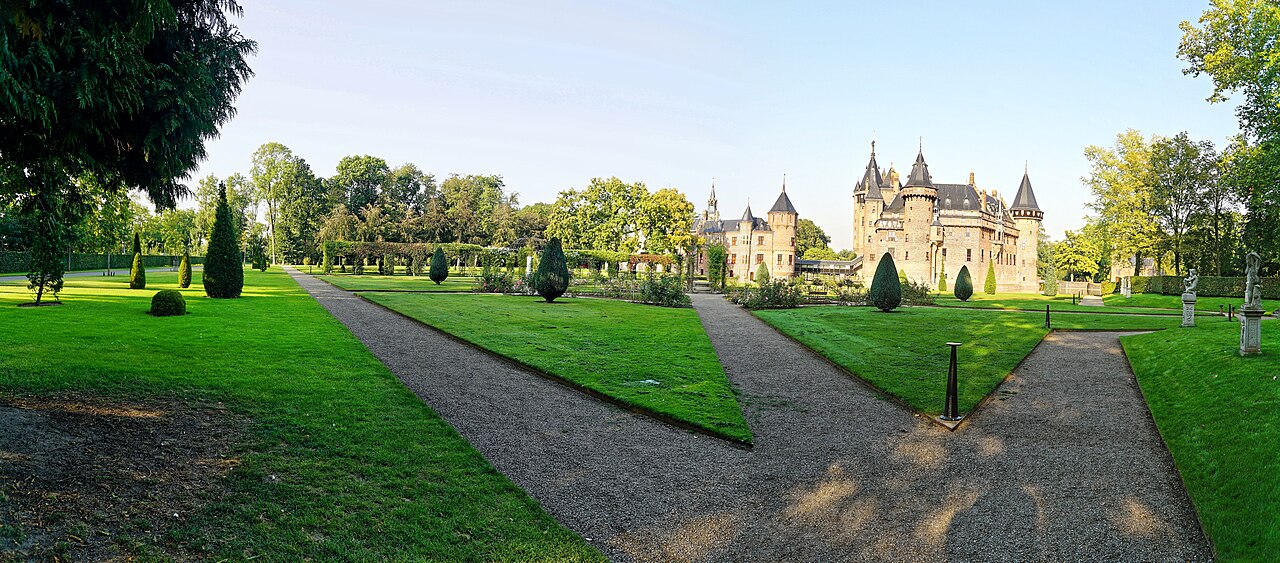
Den Ham Castle
Den Ham Castle, also known locally as Kasteel Den Ham or Hamtoren (Ham Tower), is a remarkable example of medieval fortification located near the village of Vleuten in the province of Utrecht, Netherlands. This castle is visible from the railway line connecting Woerden and Utrecht, making it a notable landmark in the region.
The origins of Den Ham Castle trace back to the High Medieval period, with the earliest parts of the structure, specifically the lower section of the keep, dating from the 13th century. While some sources suggest the initial construction could have begun in the 12th century, the most reliable evidence points to the early 1200s as the period when the first stone tower house was established on the site. This tower house later evolved into a more substantial square castle complex, reflecting architectural developments over the centuries.
The architectural evolution of Den Ham Castle
The castle began as a tower house, a common form of fortified residence during the medieval period, designed for both defense and habitation. Over time, it expanded into a square castle with additional fortifications and living quarters. The castle's most prominent surviving feature is its imposing keep, which stands on a small islet surrounded by water, a typical defensive feature in medieval Dutch castles.
The keep and its features
The keep of Den Ham Castle, partly dating from the 13th century, was raised in height in 1642 to reach its current stature of seven stories. It measures approximately 10 meters in length and 9 meters in width, with walls varying in thickness from 1.40 to 1.80 meters, demonstrating the robust construction techniques of the period. The keep's interior includes a vaulted cellar beneath it, where archaeologists discovered remnants of a fireplace and a dungeon, indicating its use for both domestic and defensive purposes.
Above the cellar, the wooden-floored stories each contained fireplaces, suggesting a degree of comfort and permanence unusual in purely military structures. The first floor likely served as the kitchen, evidenced by remains of a sink found during excavations. This combination of defensive and domestic features illustrates the dual role of the castle as a fortress and noble residence.
Historical significance and events
Den Ham Castle was historically the seat of the Utenham family, a noble lineage influential in the region. The castle suffered significant damage in 1481, during a period of local conflict. The following year, Frederik Utenham, a family member, was executed by beheading due to his allegiance to Bishop David of Burgundy during a contentious struggle between the bishop and the citizens of Utrecht. This event underscores the castle's involvement in the political and military turmoil of the late medieval Netherlands.
Later modifications and decline
By the 19th century, much of the castle had been demolished, leaving only the towering keep intact. In 1870, the rest of the castle was torn down, a fate common to many medieval castles that had lost their military or residential function. Efforts to preserve the keep included waterproofing its roof in 1943 to prevent further deterioration from rainwater.
Current status and accessibility
Today, Den Ham Castle is privately owned and inhabited, which means it is not open to the public. Despite its limited accessibility, the castle remains an important cultural and historical monument in Utrecht. Its well-preserved keep offers valuable insights into medieval castle architecture and the region's feudal history.
Architectural and cultural importance
Den Ham Castle exemplifies the transition from early medieval tower houses to more complex castle structures in the Netherlands. Its survival, particularly the keep, provides a rare glimpse into the construction methods and lifestyle of the medieval nobility. The castle's connection to significant historical figures and events adds to its cultural heritage value.
While visitors cannot enter the castle, the site can be appreciated from nearby public areas, including views from the railway line. This visibility helps maintain Den Ham Castle's presence in the public imagination as a symbol of Utrecht's medieval past.
Frequently asked questions (FAQ)
- Can I visit Den Ham Castle?
- Den Ham Castle is privately inhabited and not open to the public, so visitors cannot enter the castle. However, it can be viewed from nearby public areas and the railway line between Woerden and Utrecht.
- When was Den Ham Castle originally built?
- The earliest parts of Den Ham Castle, particularly the keep, date back to the 13th century, although some sources suggest origins in the 12th century. The castle evolved from a tower house into a square castle over time.
- What architectural features does Den Ham Castle have?
- Den Ham Castle features a seven-story keep with thick stone walls, vaulted cellars, fireplaces on each floor, and remains of a medieval kitchen. It originally had defensive water features and extensions typical of medieval hill castles.
- What historical events are associated with Den Ham Castle?
- The castle was home to the Utenham family and was damaged in 1481. Frederik Utenham was executed in 1482 for siding with Bishop David of Burgundy during conflicts with Utrecht citizens.
- Is Den Ham Castle well preserved?
- The castle's keep is well preserved and was waterproofed in 1943 to prevent damage. Most of the original castle was demolished in the 19th century, but the keep remains a significant medieval structure.
Information
Current owner
Private owner
Address
Hamlaan 3, Netherlands
Loading map...
Visitor reviews
No reviews yet. Been here? Write the first review and help other travelers!
Write the first reviewVisited this castle? Share your experience
Your review helps other travelers and adds first-hand knowledge to our encyclopedia.