Duborg Castle
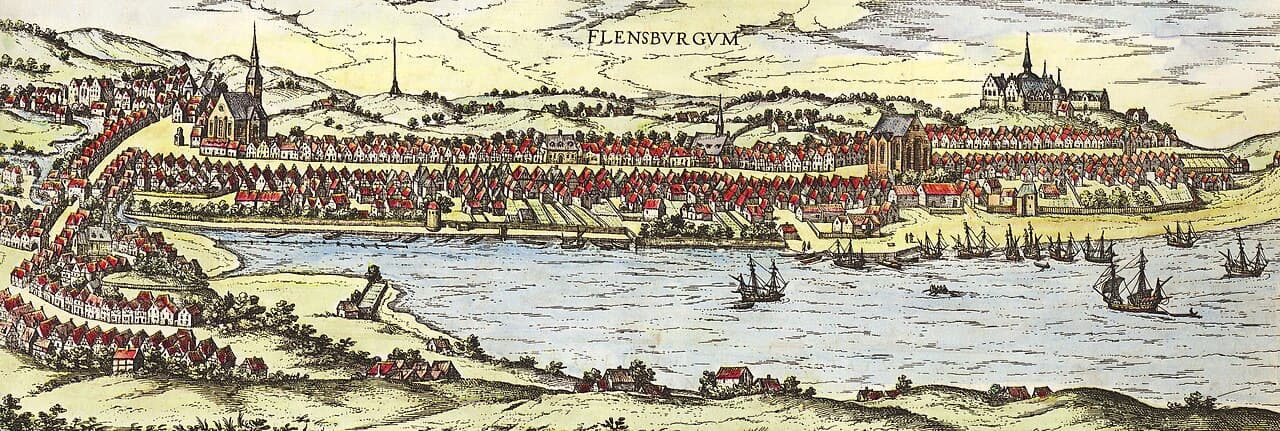
Duborg Castle (Danish: Duborg Slot, German: Duburg Schloss) is a historic hill castle located in Flensburg, in the region of Schleswig, Germany. Constructed in the 15th century during the late medieval period, the castle functioned as a significant fortification and noble residence throughout the Middle Ages and into the early modern era. It is also historically known by the name Flensborghus (German: Flensburghaus), reflecting its importance within the local territorial power structures.
Historical background and significance
The origins of Duborg Castle trace back to the late medieval period, a time marked by territorial conflicts and the consolidation of noble power in the Schleswig region. The castle was strategically positioned on elevated terrain, characteristic of a hill castle, which provided natural defensive advantages overlooking the surrounding landscape and controlling key trade routes near the Danish-German border.
Throughout its history, Duborg Castle played a role in the complex political dynamics between the Danish crown and the German duchies. Its location in Flensburg, a city with a mixed Danish and German cultural heritage, made the castle a focal point in regional power struggles. The castle’s fortifications and residential quarters were adapted over time to meet evolving military and domestic needs.
Architectural features and layout
The castle’s architecture reflects typical late medieval design elements, including robust stone walls, defensive towers, and a fortified gatehouse. The elevated site allowed for the construction of curtain walls that enclosed the inner courtyard and residential buildings. Defensive features such as battlements and arrow slits were incorporated to enhance protection against sieges.
While detailed architectural plans of Duborg Castle are limited, historical records suggest the presence of a central keep or donjon serving as the main stronghold and residence. The castle likely included ancillary buildings such as stables, storage facilities, and a chapel within its walls, consistent with the multifunctional nature of medieval castles.
Defensive structures
The castle’s defensive system was typical of hill castles from the 15th century, featuring thick stone walls designed to withstand artillery and siege weapons that were becoming more prevalent during this period. The gatehouse would have been heavily fortified, possibly with a drawbridge and portcullis, to control access effectively.
Residential and functional spaces
Inside the castle, the residential quarters were designed to accommodate the lord and his household, with halls for dining and administration. The presence of a chapel would have provided for the spiritual needs of the inhabitants. The layout balanced defensive priorities with the requirements of noble domestic life.
Later history and current status
Following the early modern period, the military importance of Duborg Castle declined as warfare evolved and centralized state powers reduced the need for local fortifications. Over time, the castle fell into disuse and was partially dismantled or repurposed. Today, only limited remains or archaeological traces of the original structure may survive, reflecting its status as a historical site rather than an intact fortress.
Duborg Castle’s legacy persists in the cultural memory of Flensburg and the Schleswig region, symbolizing the medieval heritage and the intertwined Danish-German history of the area.
Duborg Castle in the context of regional heritage
As a late medieval hill castle, Duborg Castle represents the architectural and strategic trends of northern European fortifications during the 15th century. Its role in the borderland between Denmark and Germany highlights the complexities of medieval political geography and cultural exchange.
The castle’s historical significance is recognized in local heritage conservation efforts and serves as a point of interest for scholars and visitors interested in medieval architecture and the history of Schleswig-Holstein.
Frequently asked questions (FAQ)
- When was Duborg Castle built and what was its primary purpose?
- Duborg Castle was built in the 15th century during the late medieval period. It primarily served as a fortification and noble residence in the strategically important region of Flensburg, Schleswig.
- What architectural features characterize Duborg Castle?
- Duborg Castle features typical late medieval defensive elements such as thick stone walls, battlements, arrow slits, and a fortified gatehouse. It was constructed as a hill castle to take advantage of elevated terrain for defense.
- Is Duborg Castle open to visitors today?
- Today, Duborg Castle exists mainly as an archaeological site with limited visible remains. Visitors interested in medieval history can explore the area, but the castle itself is not fully preserved or restored.
- What is the historical significance of Duborg Castle in regional politics?
- The castle played a role in the complex political relations between the Danish crown and German duchies, reflecting the mixed cultural heritage of Flensburg and the Schleswig region during the Middle Ages.
- Where is Duborg Castle located?
- Duborg Castle is located in the city of Flensburg, in the Schleswig region of Germany, near the Danish border.
Photo gallery

Public domain
Information
Loading map...
Visitor reviews
No reviews yet. Been here? Write the first review and help other travelers!
Write the first reviewVisited this castle? Share your experience
Your review helps other travelers and adds first-hand knowledge to our encyclopedia.