Cursat Castle
Cursat Castle, also known locally as Kozkalesi, Qalaat Qoseir, or Kürsat Kalesi, is a significant late medieval fortress located on a hill near the village of Kozkalesi in the Hatay province of Turkey. This castle stands as a testament to the turbulent history of the region, witnessing numerous sieges, political intrigues, and power struggles during the Crusader and Mamluk periods.
The castle first appears in historical records in 1133 when it was captured by Fulk, King of Jerusalem. Its strategic location made it a valuable stronghold in the contested borderlands between the Crusader states and Muslim powers. Around 1155, it gained prominence as the refuge and treasury for Aimery of Limoges, the Latin Patriarch of Antioch. This role earned it the alternate name Castrum Patriarchae or "Patriarch's Castle." Aimery used Cursat Castle as a sanctuary during times of political and religious conflict, particularly when Prince Bohemond III of Antioch was compelled to install a Greek patriarch in Antioch under pressure from the Byzantine Emperor Manuel I Komnenos.
Historical significance and political conflicts
The castle's history is marked by a series of dramatic events involving key figures of the Crusader era. In 1165, Aimery sought refuge within its walls amid tensions with Bohemond III. The castle also played a role during the aftermath of a devastating earthquake in 1170 that severely affected Syria and led to the death of the Greek patriarch. Bohemond III's subsequent penance at Cursat Castle and his plea for Aimery's return to Antioch highlight the castle's importance as a political and religious refuge.
However, the relationship between Bohemond III and Aimery soured. In 1180, following Aimery's excommunication of Bohemond on orders from Pope Alexander III, Bohemond retaliated by besieging Cursat Castle. He captured the fortress, imprisoned the patriarch and other bishops, and looted their churches. This event underscores the castle's central role in the power struggles of the Crusader states.
Sieges and military architecture
During the late 12th and 13th centuries, Cursat Castle was a focal point of military action. In 1188, the castle and its lands were spared by the famous Ayyubid Sultan Saladin after Aimery paid a ransom, demonstrating the castle's continued strategic value. The castle underwent significant strengthening in 1256, enhancing its defenses to withstand sieges.
One of the most notable military episodes was in 1268, when the castle resisted a siege by the forces of the Mamluk Sultan Baibars while he was besieging Antioch. The castle's fortifications proved formidable, allowing it to hold out during this critical period. Following this, the castle was granted by the patriarch to a noble named Sir William, who maintained amicable relations with neighboring Muslim leaders, including a Muslim governor who interceded on his behalf with Baibars. This alliance ensured the castle was spared from destruction as long as its revenues were shared with the Muslim neighbors.
Despite these efforts, in 1275 the castle was again besieged by the Mamluks. After a prolonged blockade, the garrison surrendered, and the castle fell under Mamluk control. It remained occupied by a Mamluk warden until the 15th century, after which it was likely abandoned.
Architectural features and current condition
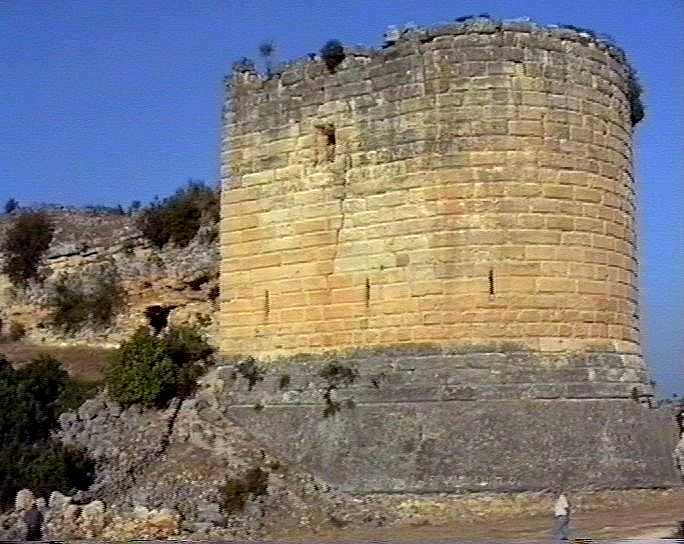
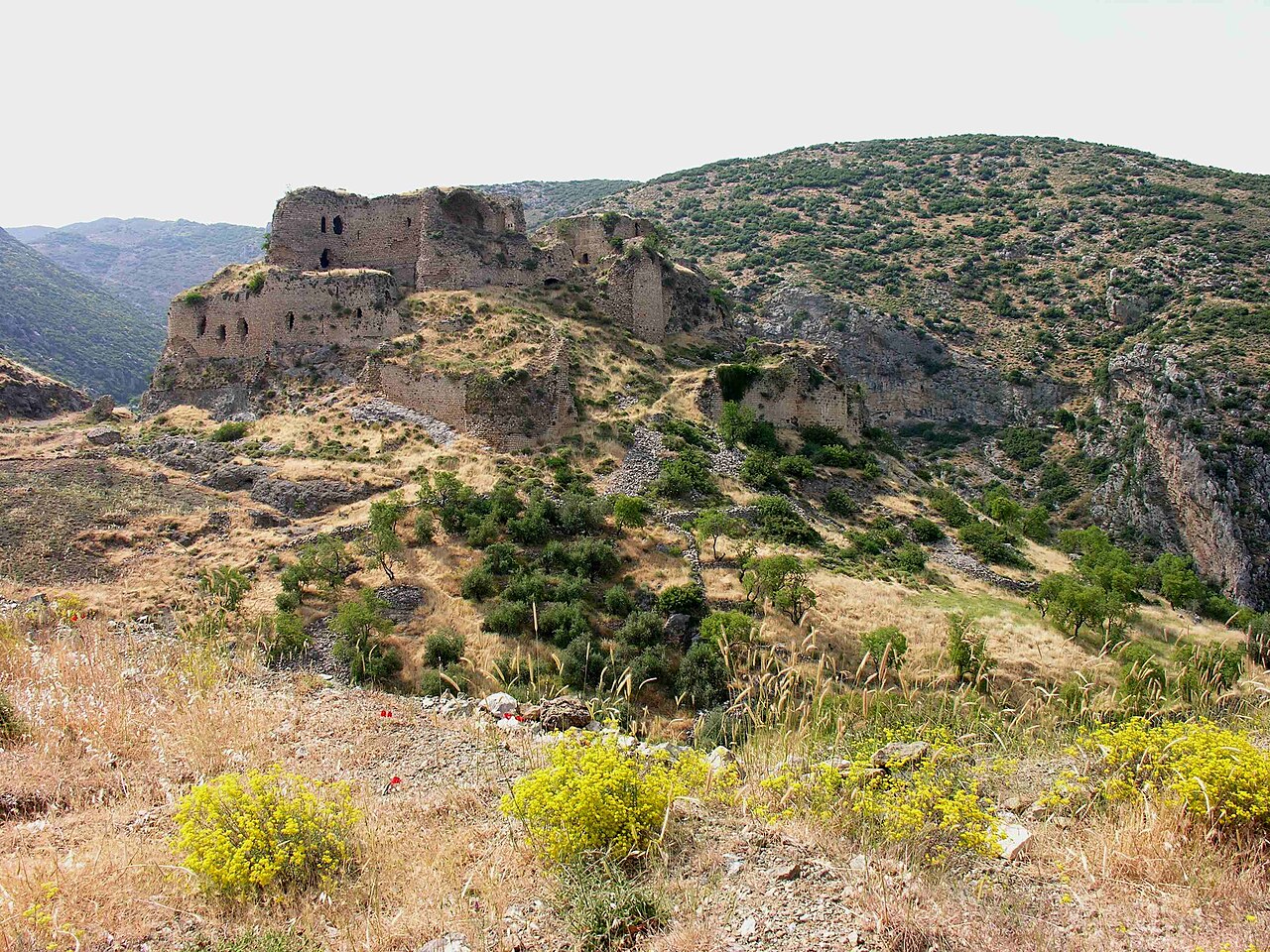
Cursat Castle occupies a large mound and today lies mostly in ruins, primarily due to the effects of several earthquakes that have struck the region over the centuries. Among the most prominent surviving features are two D-shaped towers dating from the 1256 strengthening campaign. These towers exemplify the military architectural style of the period, designed to deflect siege engines and provide strong defensive positions.
The summit of the mound reveals only the foundations of walls, vaulted chambers, and cisterns, indicating the castle's original complexity and self-sufficiency. The presence of cisterns suggests a well-planned water storage system, critical for withstanding sieges in the arid climate of the region.
Despite its ruined state, the castle is freely accessible and remains a compelling site for visitors interested in Crusader history and medieval military architecture. Its somewhat remote location makes it a lesser-known destination, offering a quiet and evocative glimpse into the past.
Geopolitical context and legacy
The castle's history reflects the broader geopolitical struggles in the Levant during the Crusader period, including the shifting alliances and conflicts among Latin Christians, Byzantines, Muslim rulers, and the Mamluks. Its role as a refuge for the Latin Patriarch and its endurance through multiple sieges highlight its strategic and symbolic importance.
Today, Cursat Castle stands as a valuable cultural heritage site within the Hatay region, contributing to the understanding of medieval fortifications and the complex history of the Crusader states in what is now southern Turkey.
Frequently asked questions (FAQ)
- How do I get to Cursat Castle near Kozkalesi?
- Cursat Castle is located near the village of Kozkalesi in Hatay province, Turkey. Visitors can reach it by road from the nearby towns, with local transport or private vehicle recommended due to its somewhat remote location.
- What is the historical significance of Cursat Castle?
- Cursat Castle played a key role during the Crusader period as a refuge for the Latin Patriarch of Antioch and was involved in significant political and military events, including sieges by Bohemond III and the Mamluks.
- Can I explore the ruins of Cursat Castle?
- Yes, the castle ruins are freely accessible. Visitors can explore the remains of the two D-shaped towers, wall foundations, vaulted chambers, and cisterns, which offer insight into medieval military architecture.
- When was Cursat Castle built and renovated?
- The castle dates back to at least the early 12th century, with major strengthening works carried out in 1256 to improve its defenses against sieges.
- Is there an entrance fee to visit Cursat Castle?
- Currently, there is no entrance fee to visit the ruins of Cursat Castle, making it an accessible site for history enthusiasts and tourists.
Information
Loading map...
Visitor reviews
No reviews yet. Been here? Write the first review and help other travelers!
Write the first reviewVisited this castle? Share your experience
Your review helps other travelers and adds first-hand knowledge to our encyclopedia.