Cullahill Castle
Cullahill Castle stands as a significant late-medieval fortress located in Ireland, historically serving as the principal stronghold of the MacGillapatricks of Upper Ossory. Constructed around 1425, this castle was strategically positioned to oversee the surrounding lands and maintain control over the region. Its name derives from the ancient forest that once blanketed Cullahill Mountain and extended down to the nearby village of Cullahill, highlighting the castle's deep connection to the local landscape.
Historical context and ownership
The MacGillapatricks, a powerful Gaelic family, held sway over Upper Ossory, a barony in what is now County Laois. Cullahill Castle was their main seat, symbolizing their authority and military strength during the turbulent 15th and 16th centuries. The castle's construction in the early 15th century coincided with a period of frequent clan conflicts and shifting allegiances in Ireland, necessitating fortified residences such as Cullahill.
Throughout its history, the castle was involved in the complex power struggles characteristic of late medieval Ireland. It was eventually destroyed around 1650, likely a consequence of the widespread conflicts during the Cromwellian conquest of Ireland, which led to the downfall of many Gaelic strongholds.
Architectural features and layout
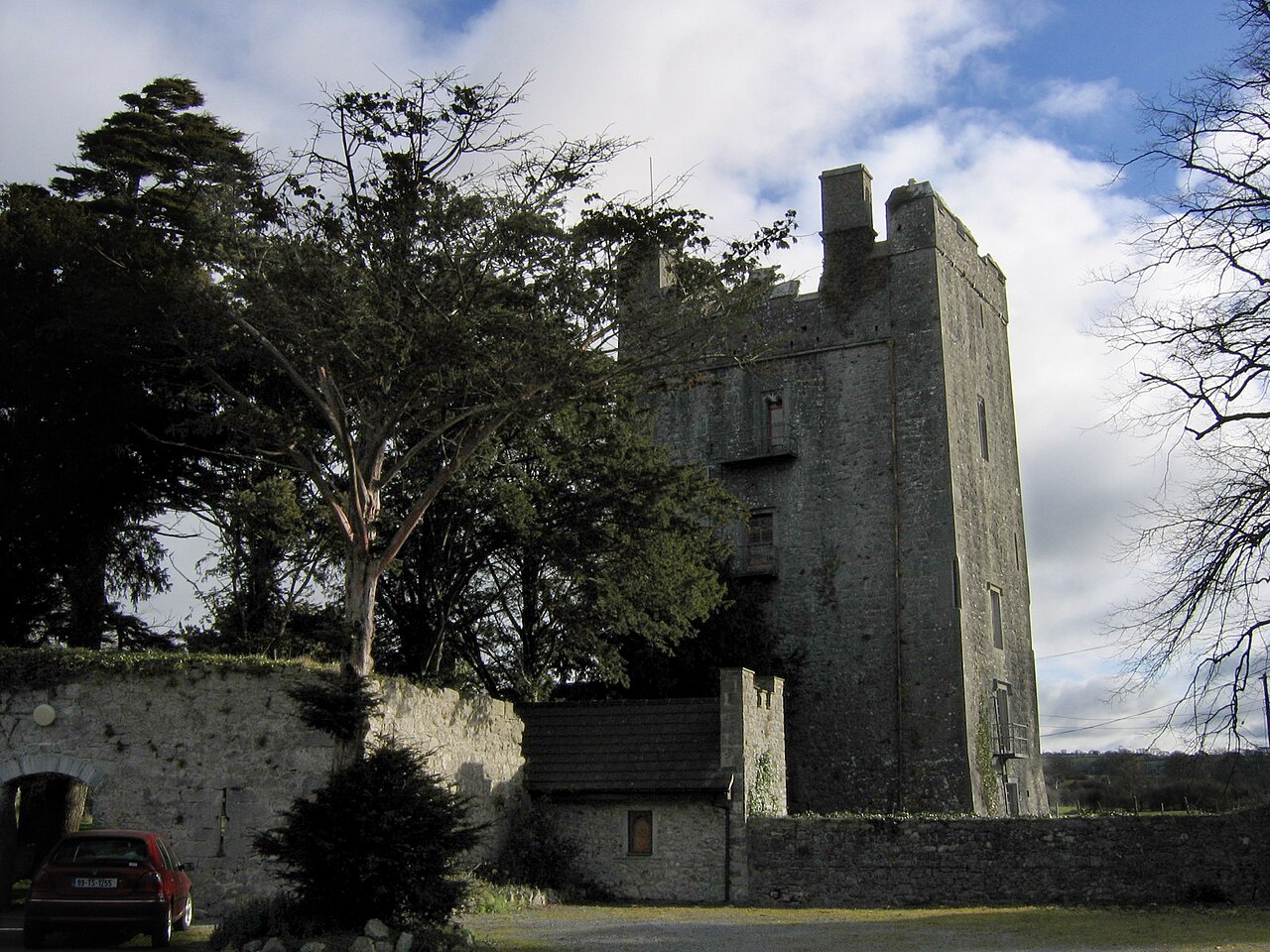
Though now in ruins, Cullahill Castle originally featured typical elements of a late-medieval Irish tower house. These structures were primarily defensive residences, combining living quarters with fortification. The castle likely included a rectangular tower with thick stone walls, narrow windows for archery defense, and a battlemented parapet.
The castle's elevated position on or near Cullahill Mountain would have provided natural defense advantages, with steep slopes making direct assault difficult. Surrounding the main tower, there may have been a bawn or defensive courtyard enclosed by a stone wall, offering additional protection and space for ancillary buildings.
Defensive elements
Typical of the period, Cullahill Castle's defenses would have included a murder hole over the entrance to repel attackers, as well as arrow slits and possibly a barbican or gatehouse to control access. The thick walls served both to withstand siege weapons and to insulate inhabitants from the harsh Irish climate.
Destruction and current condition
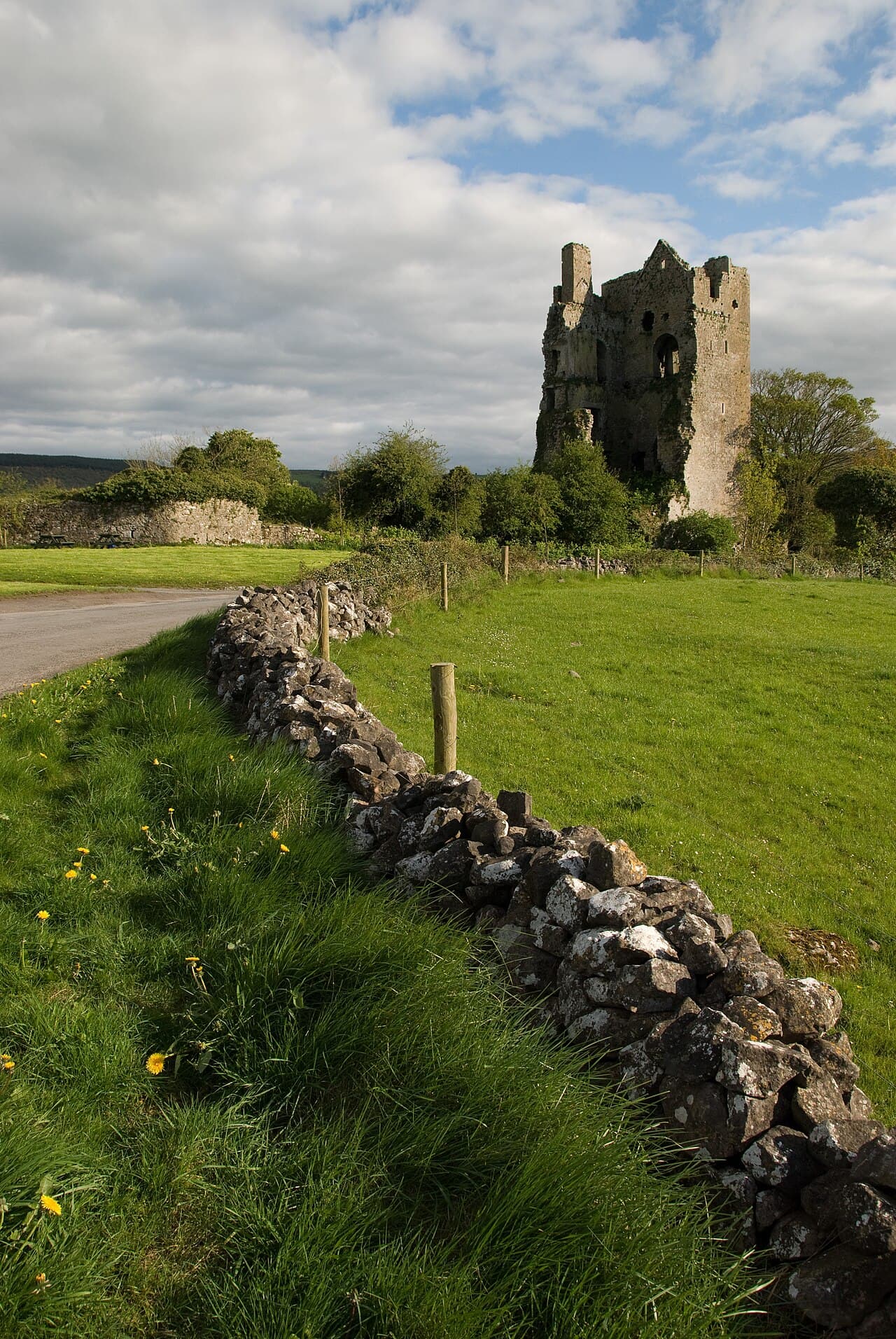
The castle was destroyed around 1650, during the Cromwellian campaigns, which resulted in the widespread dismantling of Gaelic power bases across Ireland. Today, Cullahill Castle remains as archaeological ruins, with portions of its stone walls still visible. The site offers valuable insights into medieval Irish fortifications and the lifestyle of Gaelic lords during a period of significant social and political upheaval.
Visitors to the site can explore the remnants of the castle's structure, appreciating its historical significance and the rugged beauty of its natural surroundings. The ruins stand as a testament to the resilience and strategic acumen of the MacGillapatricks in their era.
Location and cultural significance
Cullahill Castle is situated in a rural part of Ireland, near the village of Cullahill in County Laois. The castle's name and history are closely tied to the local geography, particularly the ancient forest that once covered the mountain and its environs. This connection underscores the importance of natural landscapes in the naming and strategic placement of medieval castles.
As a cultural landmark, the castle is part of Ireland's rich heritage of Gaelic lordship and medieval architecture. It attracts historians, archaeologists, and visitors interested in Ireland's turbulent past and the architectural legacy of its native clans.
Frequently asked questions (FAQ)
- How do I get to Cullahill Castle?
- Cullahill Castle is located near the village of Cullahill in County Laois, Ireland. Visitors typically reach the site by car, as public transport options are limited. It is advisable to check local maps and directions before traveling.
- What is the historical significance of Cullahill Castle?
- Cullahill Castle was the main stronghold of the MacGillapatricks of Upper Ossory during the late medieval period. It played a key role in regional power struggles and reflects the defensive architecture of Gaelic lords in 15th-century Ireland.
- Is Cullahill Castle accessible to visitors?
- Yes, the castle is accessible as an archaeological ruin. Visitors can explore the remains of the stone walls and appreciate the site's historical context, though facilities may be limited due to its ruinous state.
- When was Cullahill Castle destroyed?
- The castle was destroyed around 1650, likely during the Cromwellian conquest of Ireland, which led to the fall of many Gaelic strongholds.
- What architectural features are notable at Cullahill Castle?
- Cullahill Castle featured typical late-medieval defensive elements such as thick stone walls, narrow windows for defense, a battlemented parapet, and possibly a gatehouse or barbican. These features reflect its role as a fortified residence.

Information
Loading map...
Visitor reviews
No reviews yet. Been here? Write the first review and help other travelers!
Write the first reviewVisited this castle? Share your experience
Your review helps other travelers and adds first-hand knowledge to our encyclopedia.