Clomantagh Castle
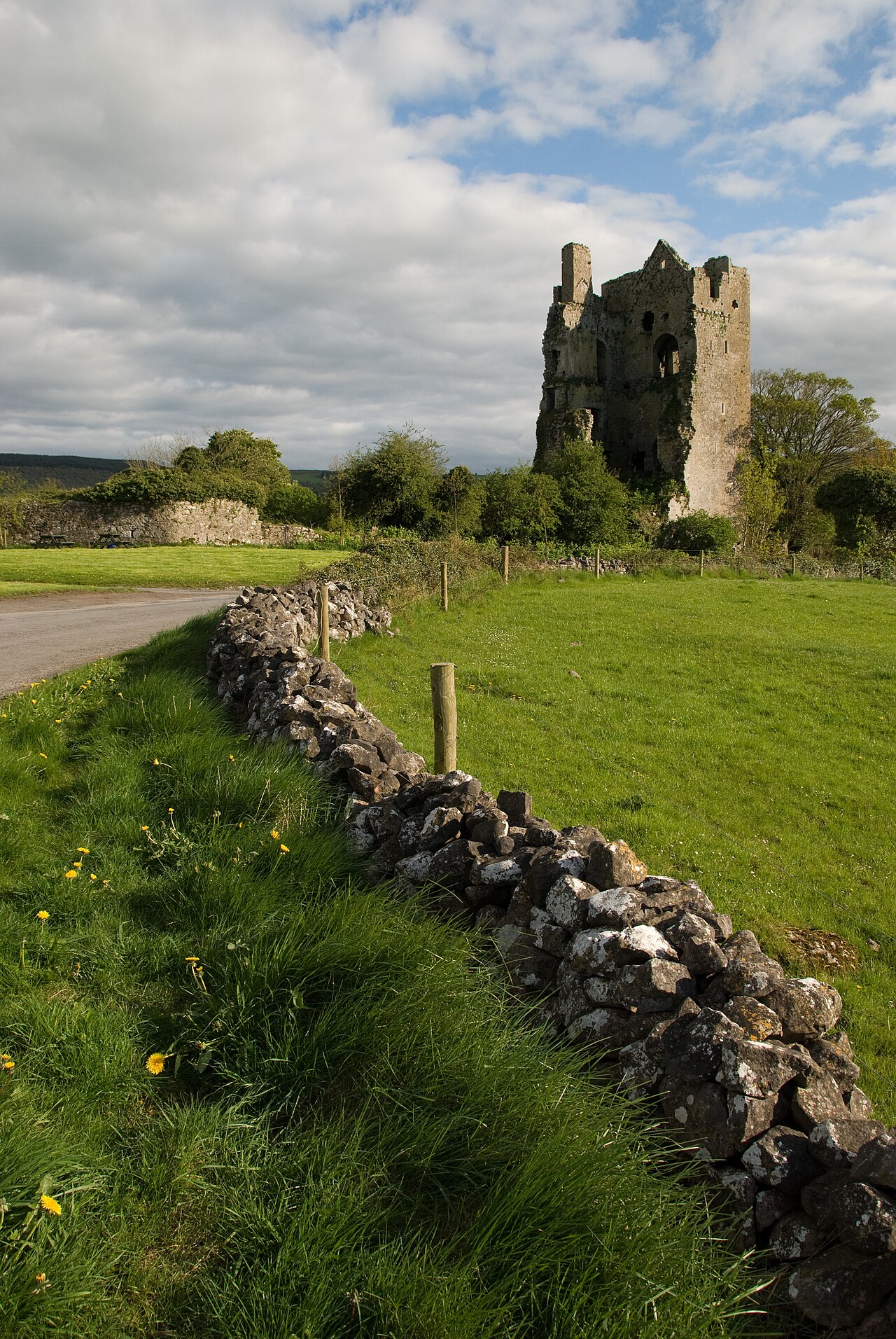
Clomantagh Castle stands as a remarkable example of a 15th-century Anglo-Norman tower house located near Freshford in County Kilkenny, Ireland. Constructed in the early 1400s, this fortified residence was typical of the defensive and domestic architecture favored by the Anglo-Norman gentry and minor nobility during the Late Medieval period. Its strategic siting on a hilltop provided both security and control over the surrounding lands, which originally belonged to the influential Earls of Ormond.
The castle was built in the 1430s, a time when tower houses were proliferating across Ireland as symbols of power and status. The Butler family, one of the most powerful Anglo-Norman dynasties in Ireland, held Clomantagh Castle for centuries. After the death of Pierce ‘Ruadh’ Butler, the 8th Earl of Ormond, in 1539, the property passed to Richard Butler, 1st Viscount Mountgarret. The Butlers of Mountgarret retained ownership throughout the 16th and 17th centuries, managing the estate until the upheavals of the Cromwellian conquest of Ireland in the mid-1600s, when the castle was confiscated.
Architectural features and construction
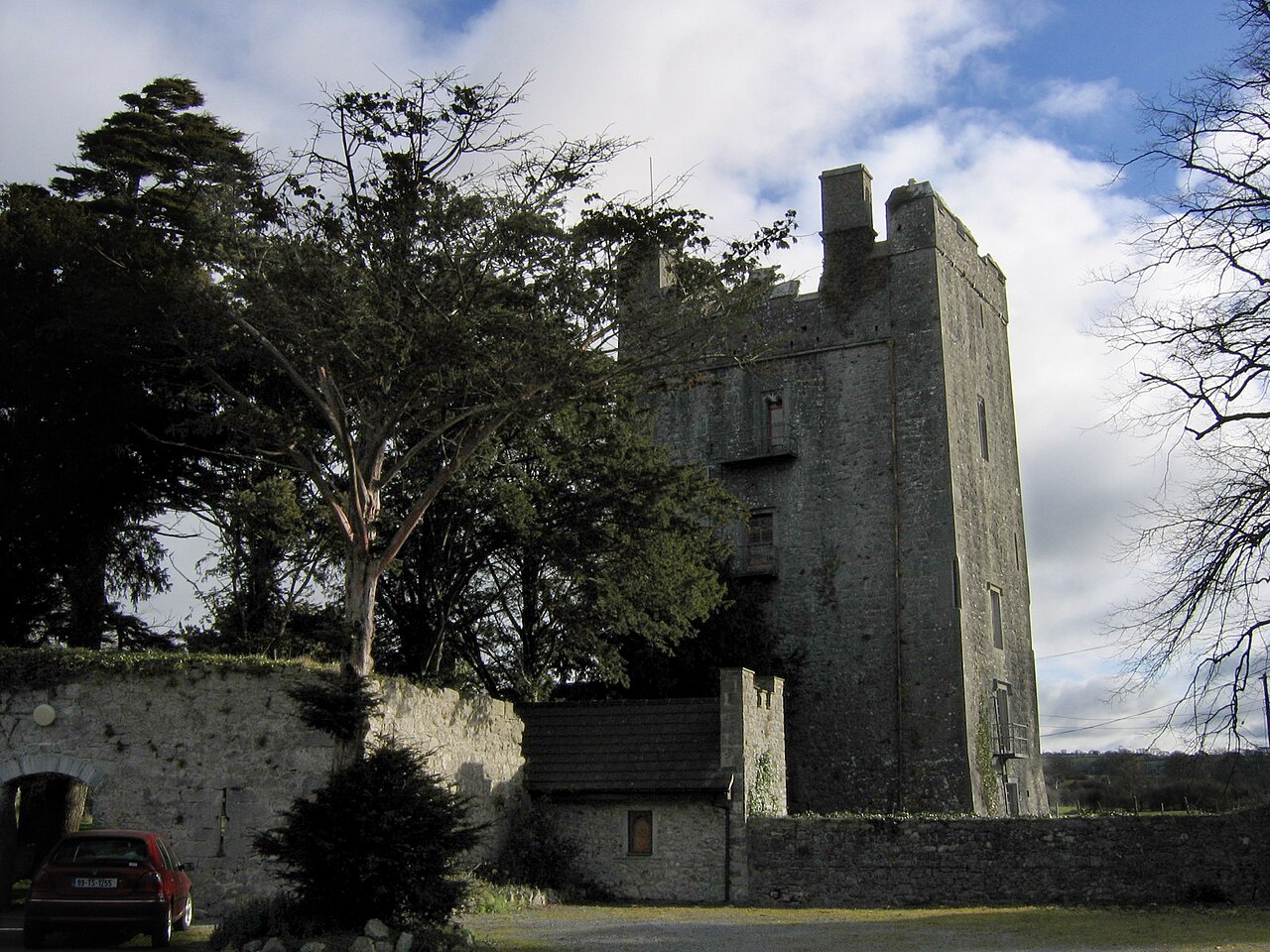
The core structure of Clomantagh Castle is a tall, rectangular tower house constructed from locally quarried stone. The walls are notably thick, designed to withstand attacks and provide a defensible refuge. The tower rises vertically with narrow slit windows, battlements, and a crenellated parapet that exemplify typical defensive features of the period. Internally, the castle would have contained a great hall, private chambers, and storage spaces arranged over multiple floors accessed by narrow spiral staircases.
One of the castle’s most intriguing features is a Sheela na gig carving on the exterior walls. This symbolic figure depicts a naked female form and is widely interpreted as a medieval fertility or protective motif. Such carvings are rare and provide valuable insight into the cultural and spiritual beliefs that intersected with the castle’s history.
Later additions and adaptations
In the 19th century, the castle complex was expanded with the addition of agricultural buildings, including a farmhouse attached directly to the tower. This reflects a shift from the castle’s original military and residential functions towards more practical rural uses. The integration of domestic agricultural structures with the medieval tower is a notable example of adaptive reuse over centuries.
Historical context and ownership
The castle’s history is closely intertwined with the Butler dynasty, who were key figures in Irish political and social life from the medieval period onward. The Earls of Ormond initially controlled the lands, and through inheritance and political maneuvering, the property came under the branch of the Viscounts Mountgarret. The Butlers maintained the castle as a fortified residence and estate center until the mid-17th century.
The Cromwellian conquest brought dramatic changes to land ownership in Ireland, and Clomantagh Castle was seized during this turbulent era. This marked a decline in the castle’s military importance and the beginning of its transition into an agricultural property.
Restoration and preservation efforts
By the late 20th century, Clomantagh Castle had undergone significant restoration to preserve its structural integrity and historical character. These conservation efforts were recognized by the Royal Institute of the Architects of Ireland for their sensitivity and quality. The restoration stabilized the medieval masonry and preserved key architectural elements, allowing visitors today to appreciate the castle’s historical fabric.
The castle remains in well-preserved condition, with much of the original tower house intact alongside the 19th-century additions. Its combination of medieval defensive architecture, symbolic carvings, and later agricultural buildings offers a rich narrative of evolving use and cultural significance.
Cultural significance and visitor experience
Clomantagh Castle is not only an architectural monument but also a cultural landmark that reflects the complex history of Anglo-Norman settlement, medieval power structures, and rural life in Ireland. The presence of the Sheela na gig carving adds a layer of mystery and spiritual symbolism that attracts historians and visitors interested in medieval folklore.
Visitors to the castle can explore the robust stone tower, observe the defensive features typical of the Late Medieval period, and appreciate the juxtaposition of medieval and 19th-century rural architecture. The castle’s setting in the scenic countryside of County Kilkenny enhances its appeal as a destination for those interested in history, architecture, and Irish heritage.
Frequently asked questions (FAQ)
- When was Clomantagh Castle built and by whom?
- Clomantagh Castle was built in the 1430s by Anglo-Norman builders during the Late Medieval period, typical of tower houses constructed for the gentry.
- What is a Sheela na gig and why is it significant at Clomantagh Castle?
- A Sheela na gig is a carved figure of a naked female form believed to have protective or fertility symbolism in medieval Ireland, adding cultural depth to the castle's history.
- Can visitors see the 19th-century farmhouse at Clomantagh Castle?
- Yes, the 19th-century farmhouse is attached to the medieval tower and reflects the castle's transition from a defensive structure to an agricultural dwelling.
- How has Clomantagh Castle been preserved over the years?
- The castle underwent careful restoration in the late 20th century, recognized for preserving its medieval masonry and architectural features in well-preserved condition.
- Who owned Clomantagh Castle historically?
- The castle was originally owned by the Earls of Ormond and later by the Butlers of Mountgarret until the Cromwellian conquest led to its confiscation.
Information
Loading map...
Visitor reviews
No reviews yet. Been here? Write the first review and help other travelers!
Write the first reviewVisited this castle? Share your experience
Your review helps other travelers and adds first-hand knowledge to our encyclopedia.