Cuerva Castle
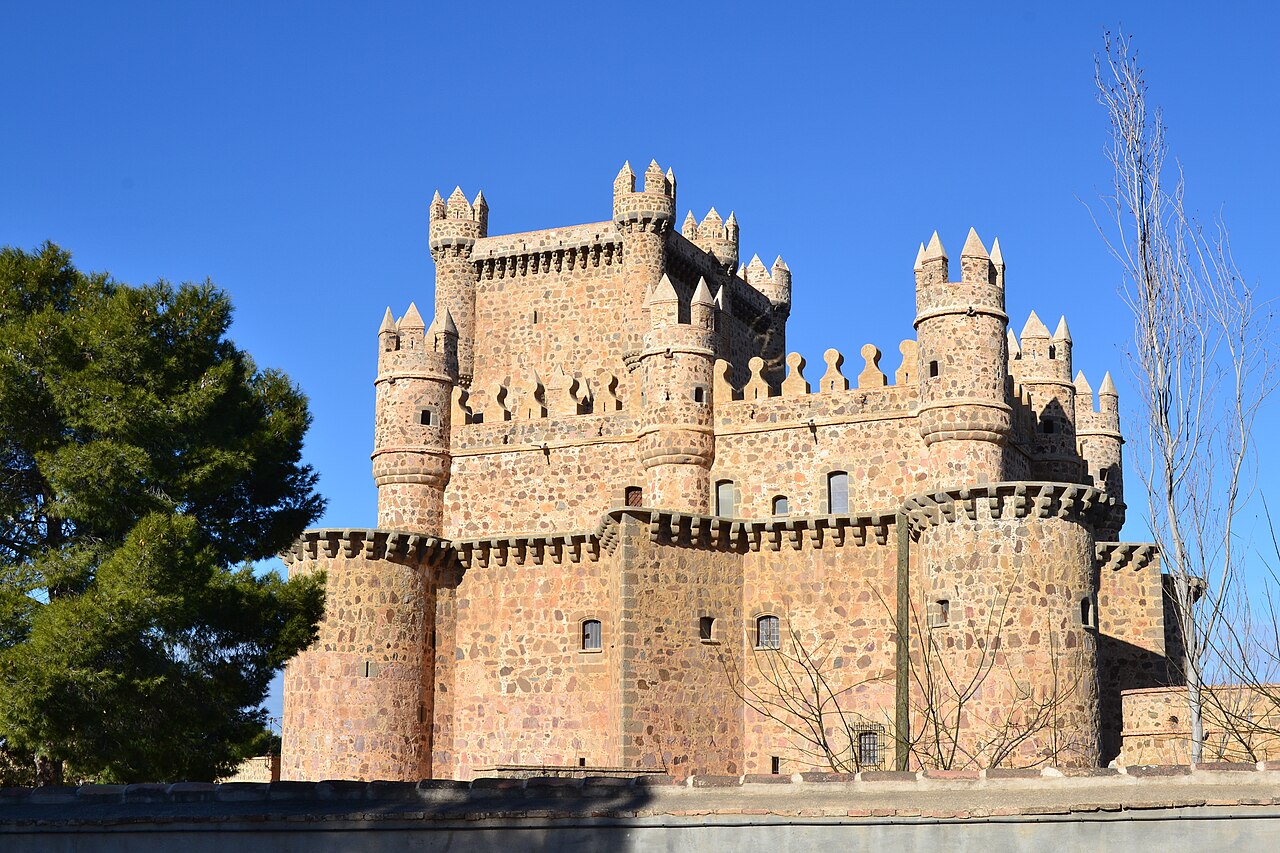
Cuerva Castle, also known as Castle Peñaflor, is a historic hill castle located near the village of Cuerva in the province of Toledo, Castile-La Mancha, Spain. The castle occupies a strategic position west of Cuerva village, close to the road connecting Cuerva and Gálvez, which historically would have been important for controlling local routes and territory.
Early origins and medieval foundations
The site of Cuerva Castle has a history dating back to the 12th century, when an earlier fortress was established. This original castle featured a rectangular ground plan with square towers at its corners. Of particular note was the southeast tower, which functioned as the keep or main fortified stronghold of the castle. The square towers were substantial in size, providing strong defensive capabilities typical of high medieval military architecture.
The early castle was designed primarily for defense, with thick walls and robust towers to withstand sieges common during the turbulent medieval period in Spain. Its location on a hill enhanced its defensive advantage, allowing visibility over the surrounding landscape and early warning of approaching enemies.
15th and 16th-century reconstruction and architectural features
Although the original castle dates to the 12th century, the present visible structure largely reflects modifications and reconstruction from the 15th and 16th centuries. During this time, the castle was remodeled to include a rectangular layout with circular towers positioned at three of its corners. These circular towers rise to about three stories in height, a design evolution from the earlier square towers whose foundations remain beneath them.
This architectural transition from square to circular towers was common in late medieval fortifications, as circular towers offered better deflection against projectiles and reduced blind spots for defenders. The surviving walls on the north, west, and south sides of the castle still stand, providing insight into the castle's defensive perimeter and construction techniques of the period.
Structural remnants and current condition
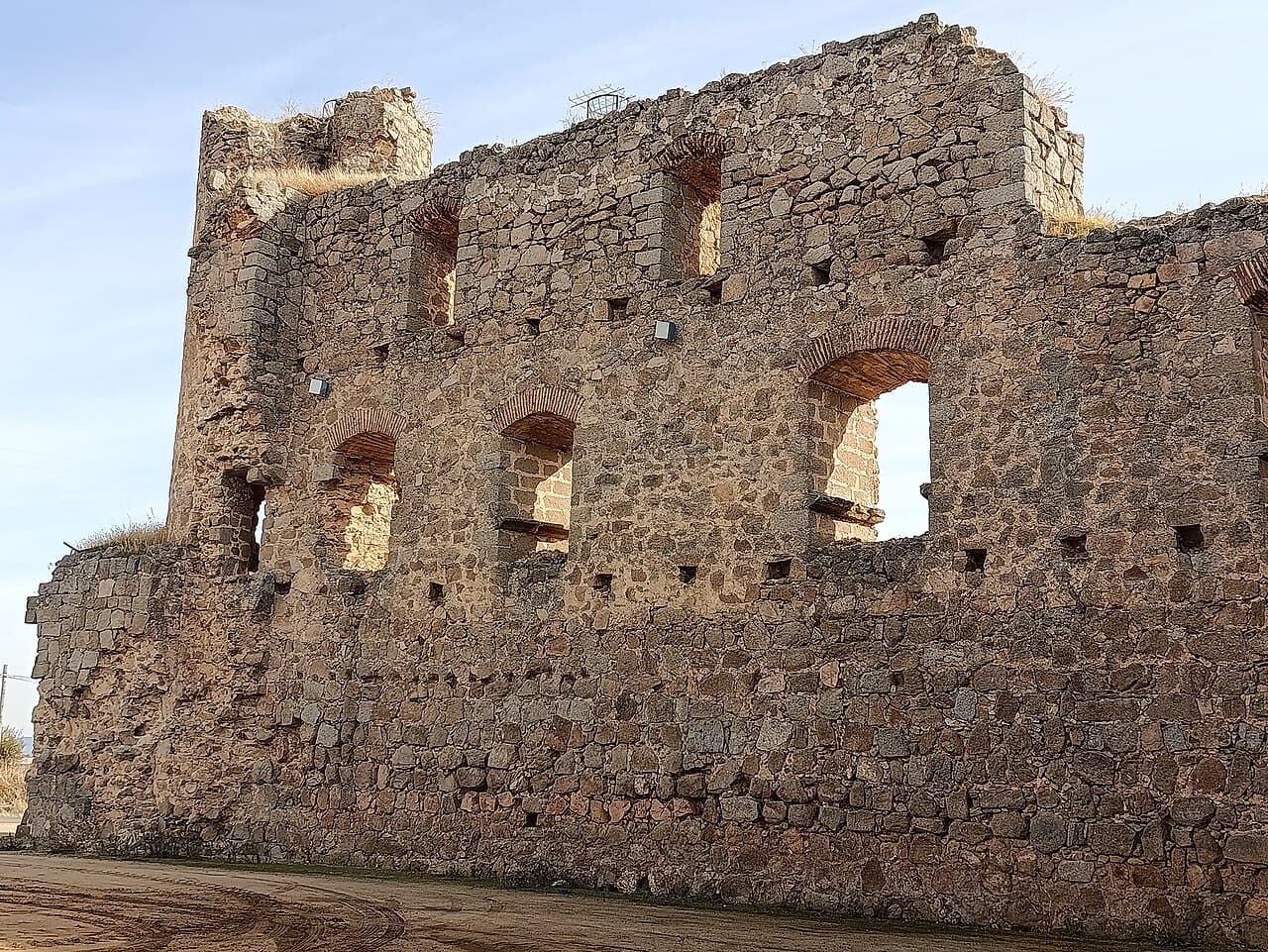
Today, only the north, west, and south walls of Cuerva Castle remain intact, with the eastern wall largely lost to time. The circular towers, built atop the foundations of the earlier square towers, demonstrate the layered history of the site. Despite partial ruin, the castle's footprint and surviving elements allow for an understanding of its original scale and defensive design.
The castle is currently in a partially preserved state, with no active restoration efforts reported. It remains freely accessible to visitors, situated just a few yards from the road between Cuerva and Gálvez, although it appears to have no contemporary use.
Historical ownership and significance
In the 15th century, Cuerva Castle was granted by King Enrique IV of Castile to Iñigo Vélez de Guevara, a nobleman of the period. Shortly thereafter, ownership passed to Garcilaso de la Vega, a notable figure in Spanish history. By the end of the 16th century, the castle had fallen into disrepair and was eventually abandoned.
The castle's history reflects the shifting fortunes of Spanish nobility during the late medieval and early modern periods. Its decline corresponds with changes in military technology and political structures that rendered many hill castles obsolete.
Architectural style and cultural heritage
Cuerva Castle exhibits characteristics typical of high medieval military architecture, with later adaptations reflecting the transition into the late medieval period. The combination of square and circular towers illustrates evolving defensive strategies. Its rectangular plan and robust stone construction are representative of castles built for both defense and residence.
The castle is part of the cultural heritage of Castile-La Mancha and contributes to the understanding of medieval fortifications in central Spain. Despite its ruinous state, it remains a point of interest for historians, architects, and visitors intrigued by Spain's medieval past.
Frequently asked questions (FAQ)
- What is the historical significance of Cuerva Castle?
- Cuerva Castle, located in the province of Toledo, Spain, is a remarkable example of medieval military architecture. Built in the 15th century, it served as a defensive stronghold during the turbulent times of the Reconquista, showcasing the historical struggles of the region.
- When was Cuerva Castle built?
- Cuerva Castle was constructed in the late 15th century, specifically around the year 1480. Its strategic location and robust design were essential for protecting the surrounding area from potential invasions.
- What are the opening hours for Cuerva Castle?
- Cuerva Castle is open to visitors from 10 AM to 6 PM, Tuesday through Sunday. It's advisable to check for seasonal variations in hours, especially during holidays or special events.
- Can I visit Cuerva Castle year-round?
- Yes, Cuerva Castle is open to visitors throughout the year, offering a unique glimpse into Spain's rich history. However, certain areas may be restricted during inclement weather or maintenance periods.
- Is it possible to access Cuerva Castle with a wheelchair?
- Cuerva Castle has limited accessibility due to its historic architecture and terrain. Visitors with mobility challenges may find certain areas difficult to access, so it’s recommended to contact the site in advance for specific accommodations.
- What is the best time to visit Cuerva Castle?
- The best time to visit Cuerva Castle is during the spring and fall months when the weather is mild and ideal for exploring. Additionally, visiting during these seasons allows you to enjoy fewer crowds and a more peaceful experience.
- Are there any nearby attractions to Cuerva Castle?
- Yes, Cuerva Castle is located near several fascinating attractions, including the charming village of Cuerva and other historical sites in the Toledo region. Visitors can easily plan a day trip that includes exploring the natural beauty and rich history of the surrounding area.
- What are the ticket prices for visiting Cuerva Castle?
- Ticket prices for Cuerva Castle are quite affordable, typically around 5 euros for adults and discounted rates for children and seniors. Tickets can be purchased on-site, and it's recommended to check for any special promotions or guided tour options.
Photo gallery

Information
Loading map...
Visitor reviews
No reviews yet. Been here? Write the first review and help other travelers!
Write the first reviewVisited this castle? Share your experience
Your review helps other travelers and adds first-hand knowledge to our encyclopedia.