Cserepvar
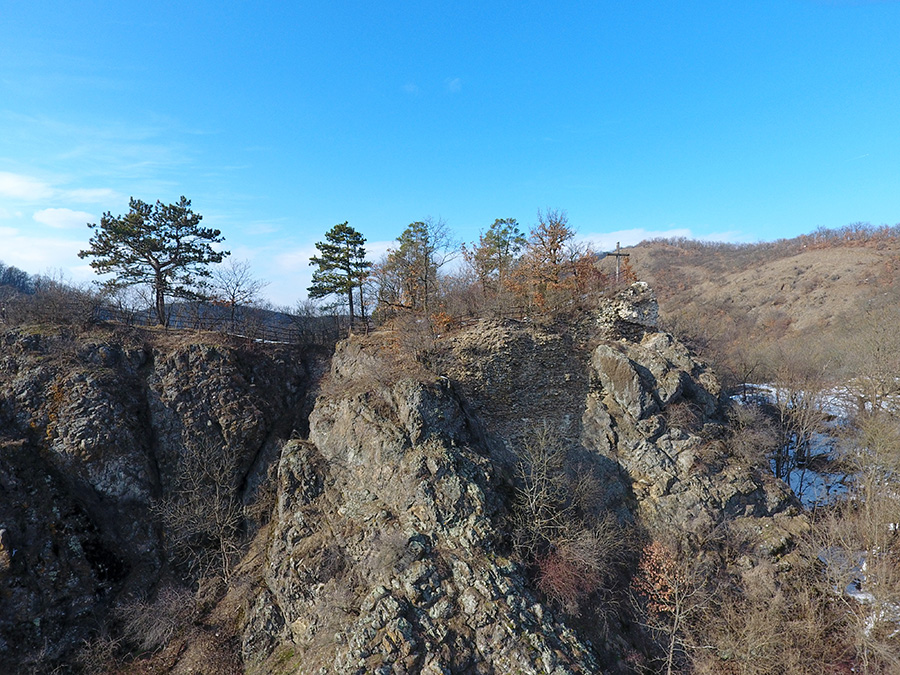
Cserepvar castle stands as a testament to Hungary's medieval fortifications, located in the southern part of the Bükk Mountains. The castle's ruins occupy a distinct hilltop at 290 meters above sea level, rising approximately 50 meters above the surrounding terrain. This strategic elevation provided a natural defensive advantage, typical of high medieval fortresses built during the era of the Árpád dynasty.
Early history and origins
The initial fortified structure at Cserepvar was likely constructed in the late 13th century, serving as a refuge for the noble Panyit family from nearby Miskolc. Early defenses probably consisted of wooden palisades enclosing residential and economic buildings, a common feature of smaller medieval fortifications before the widespread use of stone. Following the extinction of the Panyit lineage around 1330, ownership passed to the related Szécs family. By 1364, the estate was acquired by King Louis the Great, who incorporated it into the domain surrounding the prominent Diósgyőr castle.
Transition to stone fortifications
The first recorded mention of Cserepvar castle dates to 1408. By the late 14th century, the original wooden fortifications had been destroyed by fire and replaced with a stone castle. The new structure featured a robust stone wall approximately 1.6 to 1.9 meters thick, arranged in an oval plan about 40 meters in diameter. Buildings were constructed against the inner side of the curtain wall, with the main gate located on the southern side. Notably, the castle lacked a well, relying instead on a cistern for water storage, which would have influenced its defensive capabilities during sieges.
Ownership and political significance
In 1424, King Sigismund of Luxembourg gifted the castle to Queen Barbara of Cilli. From 1438, it belonged to their daughter, Queen Elizabeth of Hungary, wife of Albert of Habsburg. The following year, King Albert granted the castle to István "Pohárnok" Berzevici. By 1458, King Matthias Corvinus transferred the estate to the Rozgonyi family, who soon negotiated joint ownership with the Berzevici family. After the death of István Berzevici around 1462, the Rozgonyi family gained full possession. The castle later passed to the influential Báthory family in 1523 through the marriage of Katalin Rozgonyi and András Báthory.
Defensive enhancements and military role
The catastrophic defeat of the Hungarian forces at the Battle of Mohács in 1526 prompted widespread efforts to strengthen castles. Cserepvar was fortified with a second ring of walls, 2 to 3 meters thick and 4 to 5 meters high, accompanied by a 12.5-meter-wide moat reinforced with an earthen rampart and palisade. A small bastion, possibly adapted for firearms, was likely constructed on the eastern side, reflecting evolving military technologies. Despite these improvements, Cserepvar was of limited strategic importance and housed only a small garrison, relying heavily on the nearby fortress of Eger for regional defense.
Turkish occupation and later history
Following multiple Turkish incursions after 1552, the castle was repeatedly captured but not held long-term. The fall of Eger to the Turks in 1596 led to Cserepvar's peaceful occupation. Around 1614, Ottoman forces renovated and strengthened the castle, using it as a forward base. The fortress was reclaimed by Hungarian forces in 1687 during the liberation of Eger. Subsequently, it continued to be used militarily, with calls for restoration from commanders such as Buttler. During the early 18th century, the castle served as a prison for the Bishop of Eger amid the Kuruc uprisings led by Francis II Rákóczi.
Decline and current state
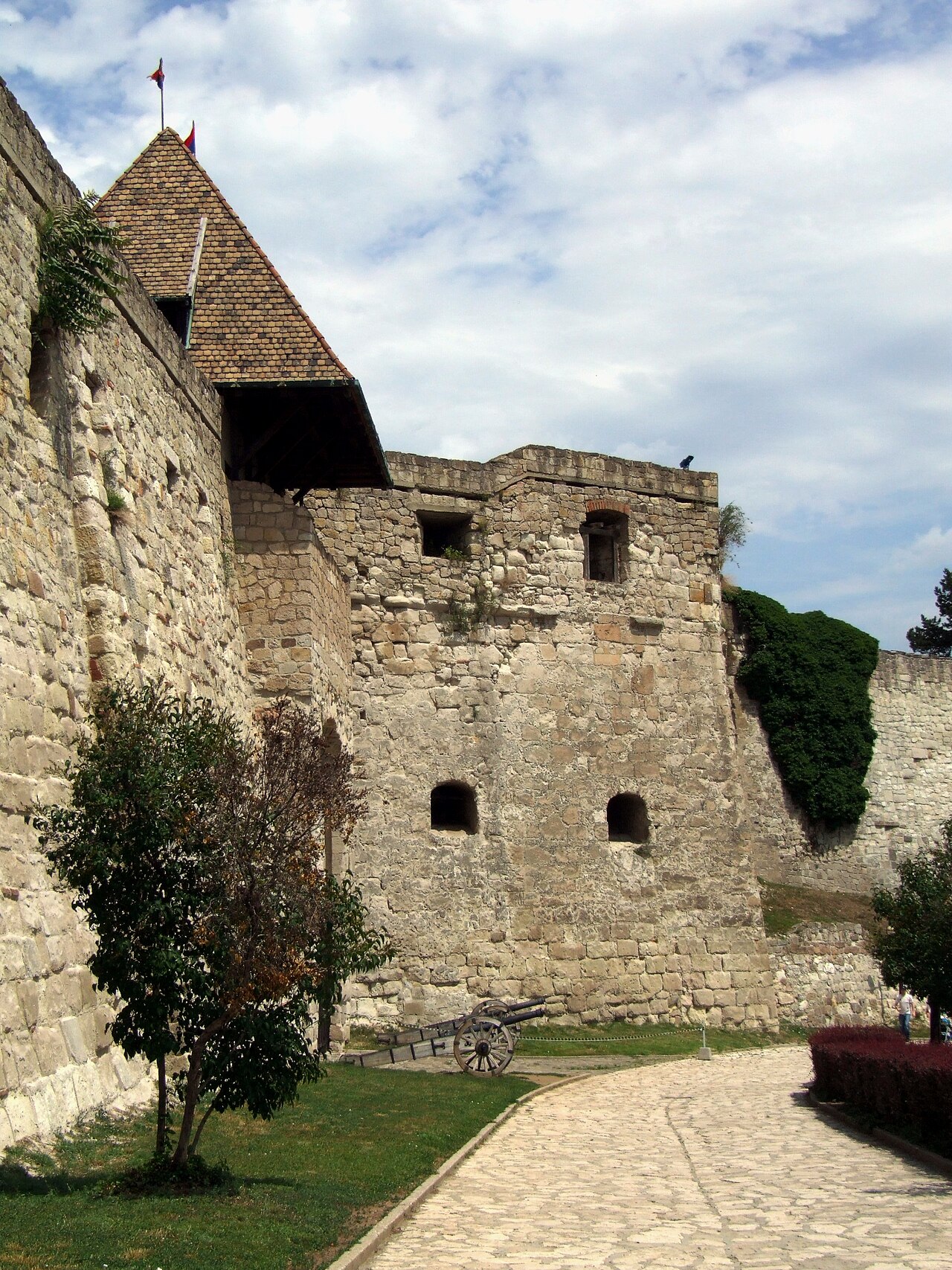
In the early 1700s, the castle became property of the French L’Huillier family, who constructed a Baroque palace at the hill's base around 1719, now lost to time. The medieval castle's stone walls were quarried for building materials, accelerating its deterioration. Today, the site is a wooded ruin with modest remains of stone walls. Recent archaeological excavations have gradually unveiled more about Cserepvar's layered history, offering valuable insights into its construction phases, ownership lineage, and military significance.
Architectural features and layout
Cserepvar castle exemplifies a bastioned fortress adapted over centuries to meet changing defensive needs. The oval-shaped curtain wall enclosing the core area is a notable feature, with thickness varying between 1.6 and 1.9 meters. The addition of a second defensive wall and moat in the 16th century reflects the transition from medieval to early modern fortification principles. The probable bastion on the eastern side indicates an early adaptation to gunpowder weaponry. The absence of a well and reliance on a cistern suggest logistical limitations common in smaller fortresses.
Site topography and strategic location
Situated on a hill rising distinctly above the surrounding landscape, Cserepvar's location provided commanding views and control over local routes. The 50-meter relative height advantage was critical for surveillance and defense. The hilltop's natural features were integrated into the castle's design, maximizing its defensive potential despite its modest size.
Cultural heritage and archaeological research
Cserepvar castle is a significant cultural monument illustrating the evolution of Hungarian medieval fortifications and noble estates. Its history reflects the complex political and military dynamics of the region from the Árpád dynasty through the Ottoman period and into the early modern era. Ongoing archaeological investigations have uncovered foundational walls, artifacts, and structural details that enrich understanding of the castle's construction techniques and daily life within its walls.
Visitors today can explore the forested ruins and appreciate the castle's historical context within the broader landscape of Hungarian medieval architecture. Interpretive efforts continue to enhance public knowledge and preservation of this evocative site.
Frequently asked questions (FAQ)
- What is the historical significance of Cserepvar?
- Cserepvar is a notable castle in Hungary, known for its rich history that dates back to the Middle Ages. It played a crucial role in the defense against invasions and has witnessed many significant events in Hungarian history.
- When was Cserepvar built?
- The construction of Cserepvar began in the 14th century, with various modifications and expansions occurring over the centuries. Its architecture reflects the typical styles of the period, showcasing the evolution of castle design in Hungary.
- Can I visit Cserepvar year-round?
- Yes, Cserepvar is open to visitors throughout the year, although some areas may be restricted during winter. It is advisable to check the official website for any seasonal changes in accessibility.
- What are the opening hours for Cserepvar?
- Cserepvar is generally open from 9 AM to 5 PM daily, with extended hours during the summer months. Visitors should verify the current schedule before planning their trip, as hours may vary on holidays.
- Is it possible to take guided tours of Cserepvar?
- Yes, guided tours are available at Cserepvar, providing in-depth insights into its history and architecture. These tours are conducted in multiple languages, ensuring a rich experience for all visitors.
- What are the ticket prices for visiting Cserepvar?
- Ticket prices for Cserepvar are quite affordable, with discounts available for students and seniors. Family packages are also offered, making it a great option for visitors of all ages.
- When is the best time to visit Cserepvar?
- The best time to visit Cserepvar is during the spring and early autumn when the weather is mild and the surrounding landscape is particularly beautiful. These seasons also see fewer crowds, allowing for a more enjoyable experience.
- Are there any nearby attractions to visit while at Cserepvar?
- Yes, several attractions are located near Cserepvar, including picturesque villages and natural parks. Visitors can enjoy hiking trails and local cuisine, enhancing their overall experience in the region.
- How do I get to Cserepvar?
- Cserepvar is accessible by car and public transportation from major cities in Hungary. Detailed directions and transportation options are available on the castle's official website to help plan your visit.
Information
Loading map...
Visitor reviews
No reviews yet. Been here? Write the first review and help other travelers!
Write the first reviewVisited this castle? Share your experience
Your review helps other travelers and adds first-hand knowledge to our encyclopedia.