Crottorf Castle
Crottorf Castle is a notable example of a Renaissance hill castle located in Friesenhagen, Germany. Its origins trace back to the 13th century, with the estate first documented in 1326. The castle's early history is closely tied to the medieval nobility of the region, reflecting the typical evolution of German noble estates from fortified manors to more elaborate residences.
Historical development and ownership
The estate that would become Crottorf Castle was likely established during the High Medieval period, serving as a fortified residence for local lords. The first recorded mention in 1326 provides a starting point for its documented history, although the site may have had earlier fortifications or structures.
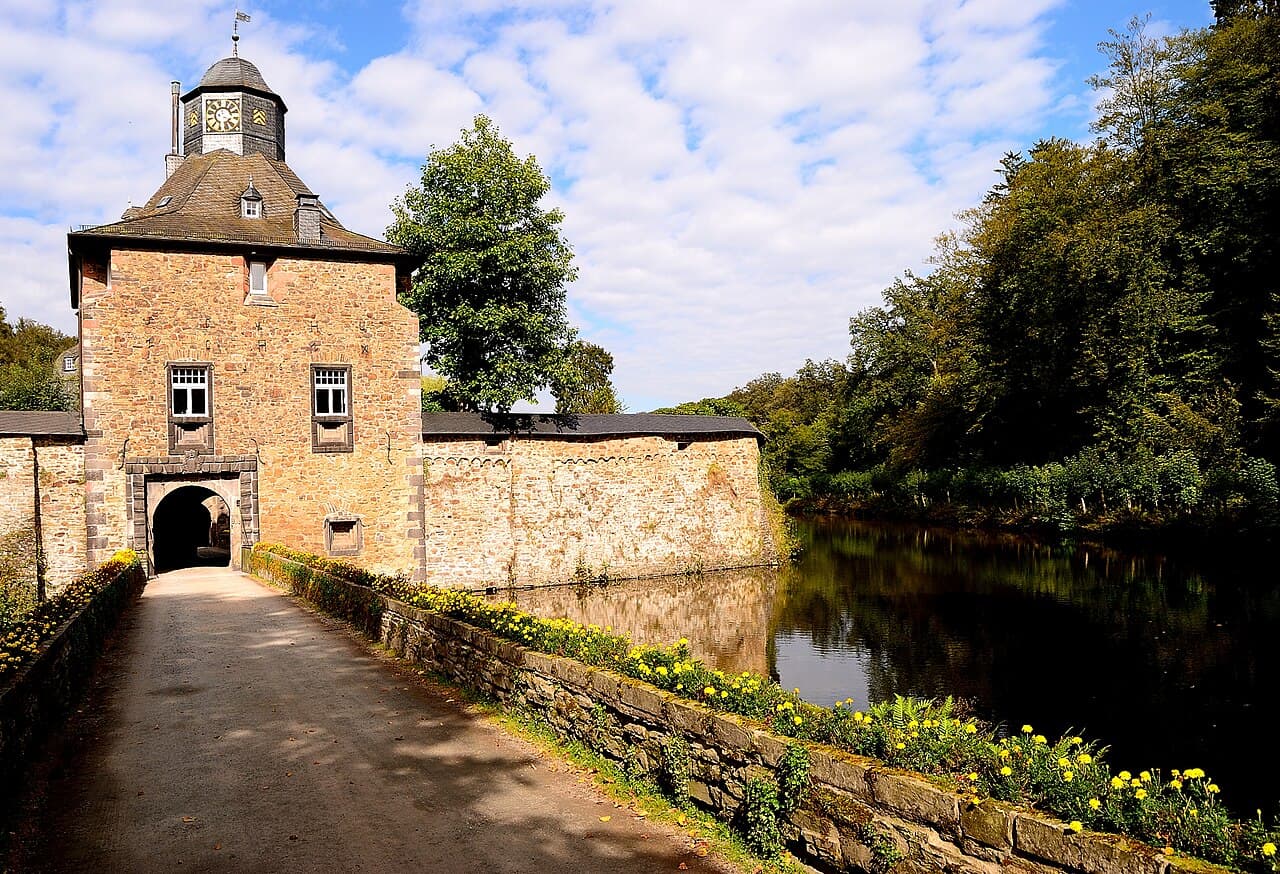
In around 1550, Johann von Selbach undertook a significant transformation of the estate, converting it into a grand moated castle. This renovation reflected the architectural trends of the Renaissance period, emphasizing both defense and residential comfort. The moat was a key defensive feature, typical of castles designed to withstand siege warfare and to symbolize status.
The castle underwent further renovations in the early 17th century, enhancing its defensive and residential elements. However, during the Thirty Years' War (1618-1648), Crottorf Castle suffered damage when it was looted by the Swedish army in 1631. This event marks a significant moment in the castle's military history, reflecting the widespread turmoil in the Holy Roman Empire during this period.
Architectural features and layout
Crottorf Castle is characterized by its moated design, which was a prominent defensive feature in Renaissance castles. The moat likely surrounded the main residential buildings and provided protection against attackers. The castle's layout would have included a fortified courtyard, living quarters, and possibly service buildings arranged to maximize defense and functionality.
The Renaissance renovations introduced architectural elements typical of the period, such as symmetrical facades, ornamental stonework, and larger windows to allow more light into the interiors. These features balanced the need for defense with the desire for comfort and aesthetic appeal.
Defensive structures
The moat was complemented by thick curtain walls and possibly bastions or towers that allowed defenders to cover all approaches. Gatehouses would have controlled access, often featuring drawbridges and portcullises. While detailed records of Crottorf's fortifications are limited, these elements were common in similar castles of the region and period.
Residential and service areas
The castle's residential quarters were designed to accommodate the noble family and their retinue, including halls for dining and reception, private chambers, and chapels. Service buildings such as kitchens, stables, and storage facilities supported daily life within the castle walls.
Later history and current status
After the devastation of the Thirty Years' War, Crottorf Castle's military importance declined as the region stabilized and warfare evolved. The castle continued to serve as a noble residence, undergoing various maintenance and minor renovations over the centuries.
Today, Crottorf Castle remains privately owned and is not generally open to the public. Its preservation reflects the care of its owners and the historical significance of the site within the local heritage of Friesenhagen and the broader region.
Significance in regional history
Crottorf Castle exemplifies the transition from medieval fortifications to Renaissance manor houses in Germany, illustrating changes in military technology, architecture, and noble lifestyles. Its history during the Thirty Years' War provides insight into the impact of continental conflicts on local estates.
The castle's enduring presence contributes to understanding the cultural landscape of North Rhine-Westphalia, where many such castles mark the historical development of the region from medieval times through the early modern period.
Frequently asked questions (FAQ)
- How do I get to Crottorf Castle?
- Crottorf Castle is located in Friesenhagen, Germany, and can be accessed by car or public transport. The nearest train station is located in the town of Siegen, from where you can take a bus or taxi to reach the castle.
- What is the historical significance of Crottorf Castle?
- Crottorf Castle dates back to the 12th century and is an important example of medieval architecture in the region. Its history is intertwined with various noble families and events that shaped the area, making it a key site for understanding local heritage.
- When was Crottorf Castle built?
- Crottorf Castle was originally constructed in the 12th century, with several renovations and expansions occurring over the centuries. The castle reflects the architectural styles and defensive needs of different historical periods, showcasing its evolution through time.
- Can I visit Crottorf Castle?
- Yes, Crottorf Castle is open to visitors, allowing them to explore its rich history and beautiful architecture. Guided tours are available, providing insights into the castle's past and its significance in the local area.
- Why is Crottorf Castle considered an architectural gem?
- Crottorf Castle is admired for its well-preserved medieval structures and unique architectural features. The combination of defensive elements and residential spaces showcases the ingenuity of medieval builders and the transition of castles from fortresses to noble residences.
- Is it possible to host events at Crottorf Castle?
- Yes, Crottorf Castle offers facilities for hosting various events, including weddings and corporate gatherings. The picturesque setting and historical ambiance make it a popular choice for memorable occasions.
- What are the opening hours for Crottorf Castle?
- Crottorf Castle typically opens to visitors from April to October, with varying hours depending on the day of the week. It is advisable to check the official website or contact the castle directly for the most accurate and up-to-date information regarding opening times.
- What are the ticket prices to enter Crottorf Castle?
- Ticket prices for Crottorf Castle vary depending on the type of tour and the visitor's age. Generally, adult tickets range from €5 to €10, while discounts may be available for children, students, and seniors.
- When is the best time to visit Crottorf Castle?
- The best time to visit Crottorf Castle is during the spring and summer months when the weather is pleasant, and the surrounding gardens are in bloom. Additionally, special events and guided tours are often scheduled during these seasons, enhancing the visitor experience.
- Are there any nearby attractions to visit after Crottorf Castle?
- Yes, there are several attractions near Crottorf Castle, including the beautiful natural landscapes of the surrounding region and other historical sites. Visitors can explore local hiking trails, quaint villages, and other castles, making for a full day of exploration.
Photo gallery

Information
Loading map...
Visitor reviews
No reviews yet. Been here? Write the first review and help other travelers!
Write the first reviewVisited this castle? Share your experience
Your review helps other travelers and adds first-hand knowledge to our encyclopedia.