Crni Kal Castle

Crni kal castle in črni kal, slovenia
Črni Kal, Slovenia
High Medieval (11th–13th c.)
Ruins

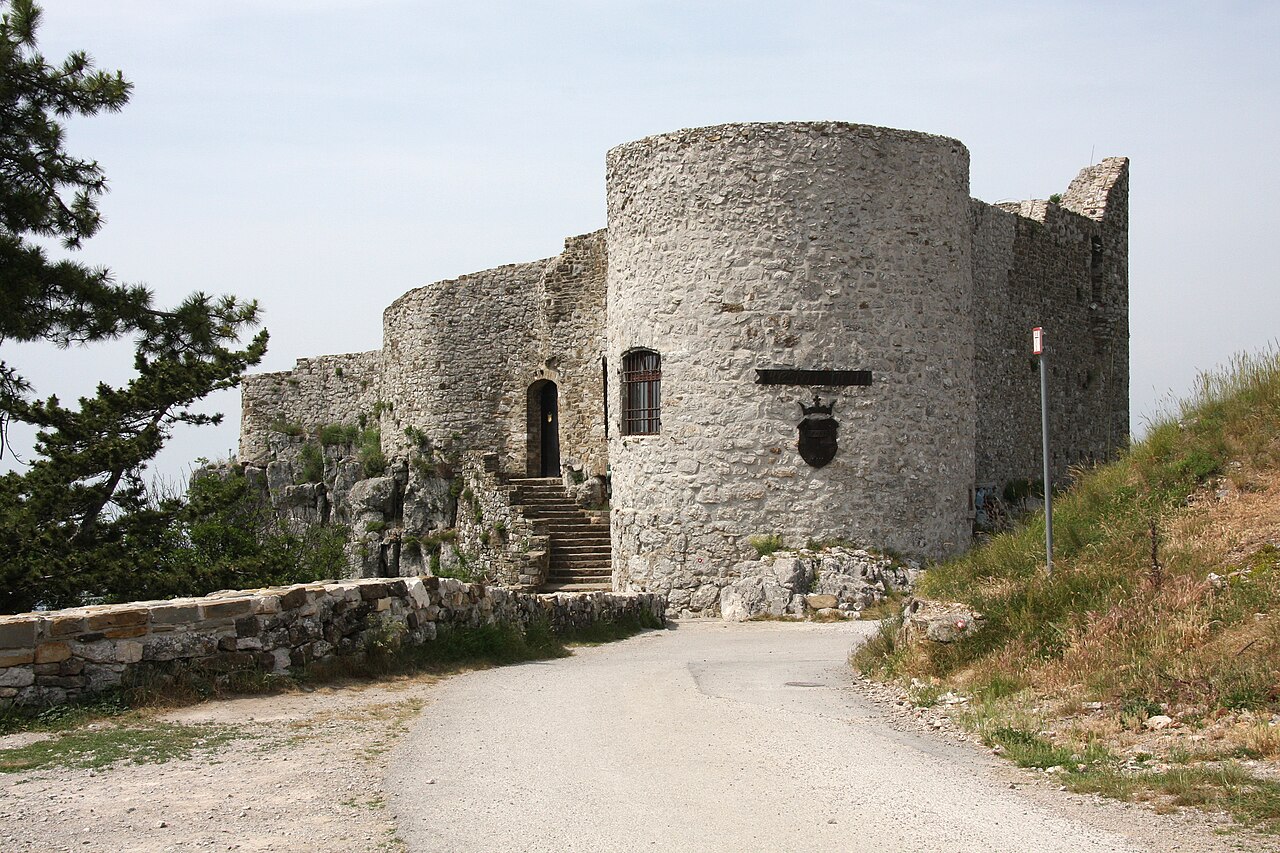
Crni Kal Castle, located in the village of Črni Kal in Slovenia, is a significant high medieval fortress first documented in the 11th century. Perched on a cliff approximately 30 meters high, the castle's ruins overlook the surrounding landscape and the important road through the Rižana Valley, which historically connected the Adriatic Coast with the interior regions. This strategic position placed the castle at the crossroads of competing powers, notably the Habsburgs and the Venetians, who vied for control over the nearby port city of Koper.

Historical significance and strategic role

Throughout its history, Crni Kal Castle served multiple purposes. It was a resting place for traders and travellers navigating the vital trade routes between the coast and inland territories. More importantly, it was a military stronghold during various conflicts, particularly the struggle for dominance over Koper. The castle witnessed confrontations between the Habsburg forces and the Venetians, as well as attacks by the Uskoks, who were known for their raids during the turbulent periods of the 15th to 17th centuries.

The castle's fortifications included a defensive complex that was crucial during the Uskok War. Alongside the nearby fortress of Socerb, Crni Kal controlled access to the valley and served as a launching point for Habsburg military incursions into Venetian-held territories. The fortress was strategically less important to the Venetians compared to Socerb, which influenced the outcomes of military engagements in the region.

Architectural features and defensive structures

The ruins of Crni Kal Castle reveal its original defensive design. The fortress was built on a steep cliff, making it naturally difficult to assault. Access to the castle was once possible only via a four-meter-long drawbridge, enhancing its defensibility by limiting entry points. The castle's elevated position allowed for surveillance of the surrounding valley and control over the key road leading to Klanec.

The castle complex included various typical medieval defensive elements such as walls, battlements, and likely towers, which would have provided vantage points for archers and lookouts. Although much of the structure is now in ruins, the remaining stonework testifies to its robust construction suited for the military needs of the time.

Post-medieval history and local significance

Following the wars against the Turks and the shifting political landscape, the entire defensive complex, including Crni Kal, came under the control of the Koper municipality. The castle's military importance declined over time, but it remained a site of local significance. During the frequent pillagings from the early 15th century to the mid-17th century, the local population established an unapproachable camp beneath the fortress to safeguard their possessions from raiders.

Today, the castle ruins serve as a cultural and historical landmark. The cliff on which the castle stands has become a popular destination for rock climbers, offering a variety of climbing routes with different grades and lengths throughout the year. This modern recreational use connects the site's medieval past with contemporary outdoor activities.

Local landmarks and attractions

Near the castle ruins is the 17th-century belfry of St. Valentine's Church, locally known as the 'leaning tower' due to its noticeable inclination caused by ground subsidence. This unique architectural feature adds to the area's cultural heritage and attracts visitors interested in historical architecture and local folklore.

Crni Kal Castle remains an important symbol of the region's medieval history and the complex interplay of power between the Habsburgs and Venetians. Its ruins, combined with the natural beauty of the surrounding landscape and the climbing opportunities the cliff provides, make it a noteworthy destination for history enthusiasts and outdoor adventurers alike.

Frequently asked questions (FAQ)

What is the historical significance of Crni Kal Castle?
Crni Kal Castle is a notable historical site in Slovenia, dating back to the late 15th century. It served as a strategic defensive fortress and has witnessed numerous historical events in the region, contributing to its rich cultural heritage.
When was Crni Kal Castle built?
The construction of Crni Kal Castle began in the late 15th century, specifically around 1470. It was built during a time of conflict in the region, highlighting its importance as a military stronghold.
Can I visit Crni Kal Castle?
Yes, Crni Kal Castle is open to visitors, allowing them to explore its beautiful architecture and stunning views of the surrounding landscape. It’s advisable to check the castle's official website for any specific visitor guidelines or restrictions.
What are the opening hours for Crni Kal Castle?
Crni Kal Castle typically opens its doors to visitors from 10 AM to 6 PM, with extended hours during the summer months. However, it is recommended to verify the current opening hours before planning your visit, as they may vary seasonally.
Is there an admission fee to visit Crni Kal Castle?
Yes, there is a nominal entrance fee to visit Crni Kal Castle, which helps maintain the site. Ticket prices are generally affordable, and discounts may be available for students or groups, so it's worth inquiring at the ticket office.
What is the best time to visit Crni Kal Castle?
The best time to visit Crni Kal Castle is during the spring and early autumn months when the weather is pleasant and ideal for outdoor exploration. These seasons also offer fewer crowds, allowing for a more enjoyable experience.
Is Crni Kal Castle accessible for people with disabilities?
Crni Kal Castle has made efforts to improve accessibility for all visitors, though some areas may still present challenges due to the castle's historical nature. It’s advisable to contact the castle management in advance to inquire about specific accommodations.
What nearby attractions should I visit while at Crni Kal Castle?
While visiting Crni Kal Castle, you can explore nearby attractions such as the picturesque village of Črni Kal and the stunning Karst region. Additionally, the coastal town of Piran is just a short drive away, offering beautiful seaside views and cultural experiences.

Information

Hill Castle

Loading map...

Visitor reviews

No reviews yet. Been here? Write the first review and help other travelers!

Write the first review

Visited this castle? Share your experience

Your review helps other travelers and adds first-hand knowledge to our encyclopedia.
Write a review

(5/5)

0/2000 characters

Your review will be visible after admin approval

Nearby castles

4.5 km
Socerb Castle — Slovenia castle

Socerb Castle

Socerb, Slovenia

Socerb Castle, also known as Grad Socerb or Grad Strmec, is a historic fortress perched on the edge of a 300-meter high karst cliff overlooking the Gulfs of Koper and Trieste. Located in the village of Socerb in Slovenia's Koper region, this castle's commanding position has made it a vital stronghold from ancient times through the medieval period and beyond. The site of Socerb Castle has been of strategic importance since Illyrian times, with archaeological evidence suggesting early fortifications. During the Roman period, the stronghold was modified and reinforced to control the crucial trade routes and coastal approaches. The current castle structure primarily dates back to the 13th century, placing it firmly in the high medieval period. Its location on a rocky outcrop provided natural defenses, complemented by man-made fortifications. Medieval origins and strategic significance Socerb Castle's medieval history is marked by its role as a key defensive and administrative center controlling the hinterlands of Trieste and the commercial routes between Carniola and the Adriatic coast. Throughout the 14th century, the castle was owned by prominent noble families, including the Venetian Ducaini family. Its position made it a coveted asset, resulting in frequent changes of ownership as regional powers vied for control. In the early 16th century, following the Trieste-Veneto war, the castle came under Austrian Habsburg control. Emperor Charles V granted the fief to the Carniolan nobleman Nicholas II Ravbar in 1521. The castle briefly returned to Venetian hands after the Council of Trent decision in 1535 but was lost again during the turbulent conflicts of the period. The uskok war and baron benvenuto petazzi During the Uskok War (1615-1617), Socerb Castle was a focal point of military action. Venetian attempts to regain the castle resulted in a costly battle in 1615, where Venice lost approximately 3,000 infantrymen. The castle's defense was led by Baron Benvenuto Petazzi, who commanded a private Uskok army. Petazzi purchased the castle in 1622 and was later titled Count of Socerb in 1630, establishing a noble lineage that controlled the castle until the late 17th century. Architectural features and later history Socerb Castle's architecture reflects its medieval origins and subsequent modifications. The fortress was built to exploit the natural karst rock defenses, with thick stone walls, battlements, and towers designed for surveillance and defense. The castle complex included residential quarters, a courtyard, and defensive structures adapted over centuries to meet evolving military needs. In 1678, the castle was documented by the noted historian Johann Weikhard von Valvasor, who included detailed drawings and descriptions in his work "Topographia Ducatus Carnioliae Modernae". This record provides valuable insight into the castle's layout and condition in the late 17th century. Ownership changed hands several times in the 18th century. The castle was acquired by the Petač family in 1702 and later sold to the Montecuccoli family of Modena in 1766. A devastating fire caused by lightning in 1780 severely damaged the castle, leading to its gradual decline and partial ruin. 20th-century restoration and modern use In the early 20th century, the dilapidated castle was purchased by Demetrio Economo, a baron from Trieste, who undertook partial restoration efforts in 1924-25. His work focused mainly on stabilizing and restoring the castle's surrounding walls, while other parts remained in ruin. During World War II, Socerb Castle's strategic location again made it a military asset. In 1944, it served as the seat of the VOS (Security-Intelligence Service) and the People's Court. The castle was occupied by German forces and fortified as a stronghold during the conflict. Today, Socerb Castle functions as a restaurant and tourist destination, offering visitors spectacular views of the Adriatic Sea and the surrounding karst landscape. Access to the castle is primarily through the restaurant, but the panoramic vistas alone make the journey worthwhile. The holy grotto and cultural heritage Near the castle entrance, at about 150 meters elevation, lies the Holy Grotto, a cave approximately 44 meters deep and 200 meters long. According to local legend, the young Saint Socerb (San Servolo) lived here as a hermit after converting to Christianity. He was reportedly executed around 283 or 284 AD by the Roman governor of Trieste due to his faith. The cave was transformed into a sanctuary where an annual mass was held on May 24 until the Second World War. This religious site adds a layer of spiritual significance to the castle's cultural landscape, linking it to early Christian history in the region. Historical significance and tourism Socerb Castle's rich history spans from ancient Illyrian fortifications through medieval power struggles involving Venice, Austria, and local noble families. Its role in regional conflicts, including the Austro-Venetian wars and the Uskok War, highlights its military importance. The castle's decline after the 1780 fire and partial restoration in the 20th century reflect broader historical shifts in the region. Today, Socerb Castle attracts visitors interested in history, architecture, and natural beauty. Its hill castle classification emphasizes its elevated defensive position, while its high medieval origins and Gothic architectural elements appeal to enthusiasts of medieval fortifications. The castle's preservation state is considered partially restored, with ongoing efforts to maintain its walls and structures. Visitors can explore the castle grounds, enjoy meals at the onsite restaurant, and take in the breathtaking views of the Adriatic coastline and the Karst region. The nearby Holy Grotto offers an additional point of interest for those fascinated by religious history and natural caves. Socerb Castle stands as a testament to the region's complex history and enduring cultural heritage, making it a significant landmark in Slovenia's architectural and historical landscape.

High Medieval (11th–13th c.)
Details
4.9 km

Hrastovlje Church

Coastal–Karst, Slovenia

Hrastovlje Church, located in the Coastal–Karst region of Slovenia, stands as a remarkable example of a fortified medieval church combining religious and defensive architecture. Despite its proximity to Trieste, this site remains relatively little known, yet it holds significant cultural and historical value. The church and its fortifications offer insight into the turbulent history of the area, marked by frequent invasions and the need for protection of sacred sites. The historical context and location The area around Hrastovlje has been inhabited since ancient times, with archaeological evidence pointing to a prehistoric fortification nearby. This valley has long been a crossroads of civilizations, rich with historical memories. The church, dedicated to the Holy Trinity (Sveta Trojica), was constructed between the 12th and 13th centuries. This period was marked by the growth of ecclesiastical power and the establishment of religious sites that often doubled as community refuges. Architectural features and fortifications In the 16th century, the church was surrounded by robust fortified walls, creating a tabor—a type of fortified church common in this region, including Collio and Carso. These walls were primarily defensive, built to protect the church and local inhabitants from frequent Turkish invasions that threatened Christian communities. The fortifications include thick stone walls with battlements and defensive towers, designed to withstand sieges and raids. The walls of Hrastovlje Church remain perfectly preserved, providing a vivid example of the military architecture adapted to religious buildings. The enclosure allowed villagers to seek refuge during attacks, making it an essential part of the community's survival strategy. The remarkable frescoes of Hrastovlje Church One of the most outstanding features of Hrastovlje Church is its interior decoration. During restoration work in the early 1950s, a layer of lime was removed to reveal an extensive cycle of original frescoes dating from 1490. These paintings cover the church walls and depict a rich array of religious and local themes. The frescoes include vivid portrayals of the Holy Trinity, the Magi, the Apostles, and various Saints. Additionally, they illustrate biblical narratives such as the creation of the world, the story of Adam and Eve, and the Passion of Christ. What makes these frescoes particularly unique is the inclusion of scenes depicting the life of the local community throughout the cyclical course of the seasons, offering a rare glimpse into medieval rural life. Artistic and cultural significance The frescoes are a masterpiece of late medieval religious art in this part of Europe. Their survival beneath the lime layer has preserved the vibrant colors and detailed iconography, which are invaluable for understanding the religious and social worldview of the time. The combination of sacred themes with everyday life scenes reflects the close relationship between faith and daily existence in the medieval period. The role of Hrastovlje Church in regional history Hrastovlje Church’s fortified nature and rich decoration make it a significant monument in the history of the Primorska region. The church not only served as a place of worship but also as a defensive refuge during periods of instability caused by Ottoman incursions. Its preservation allows modern visitors to appreciate the resilience and creativity of medieval communities in this borderland area. Preservation and current status Today, Hrastovlje Church is well preserved and remains a vital cultural and historical site. The fortifications and frescoes attract scholars, tourists, and art historians interested in medieval architecture and religious art. The church continues to be a symbol of the region’s heritage, offering educational opportunities and fostering appreciation for Slovenia's medieval past. Visiting Hrastovlje Church Visitors to Hrastovlje can explore the fortified walls and admire the remarkable frescoes inside the church. The site offers a unique combination of military and religious architecture, set within the picturesque landscape of the Coastal–Karst region. Guided tours provide detailed explanations of the church’s history, architectural features, and artistic treasures. The church’s location near Trieste makes it accessible for travelers interested in exploring the cultural heritage of this border area between Slovenia and Italy. Its preservation and the richness of its frescoes make it a must-see destination for those fascinated by medieval art and architecture.

High Medieval (11th–13th c.)
Details
5 km

Hrastovlje Castle

Hrastovlje, Slovenia

Hrastovlje Castle is located on a small hill near the village of Hrastovlje in Slovenia, just south of the Italian city of Trieste. Despite its name, this site is not a traditional castle but rather a fortified church known as the Church of the Holy Trinity. Its unique combination of religious architecture and military fortifications reflects the turbulent history of the region during the Late Medieval period. Historical context and origins The Church of the Holy Trinity was originally constructed between the 12th and 14th centuries, serving as a parish church for the local community. The church's Romanesque and early Gothic architectural elements reveal its medieval origins. During the 16th century, the region faced repeated threats from Ottoman incursions, prompting the local inhabitants to fortify the church to protect themselves and their valuables. Architectural features and fortifications To defend against these threats, a castle-like curtain wall was erected around the church. This defensive wall is notable for its thick stone construction and includes two round towers positioned at opposite corners. One of these towers serves as a gatehouse, controlling access to the enclosed courtyard. The walls and towers provided a refuge for villagers during times of siege and were designed to withstand attacks. The church's interior and frescoes Inside, the church is renowned for its 13th-century frescoes, which are among the most significant medieval artworks in Slovenia. These frescoes depict religious scenes with vivid colors and detailed iconography, offering insight into the spiritual and artistic culture of the period. The sacristy, however, was added later in the 19th century, reflecting continued use and adaptation of the building over time. Preservation and visitor information Today, Hrastovlje Castle is well preserved as a cultural monument. Visitors can explore the church and its frescoes for a small admission fee. The site provides a unique glimpse into the medieval defensive architecture adapted for ecclesiastical purposes, blending religious and military functions in a rural setting. Significance and legacy While not a traditional castle, Hrastovlje stands out for its fortified church design and its role in protecting the local community during periods of conflict. It exemplifies how religious buildings were adapted for defense in border regions vulnerable to raids and invasions. The combination of medieval art and fortification makes Hrastovlje an important heritage site in Slovenia.

Late Medieval (14th–15th c.)
Details
