Crickhowell Castle
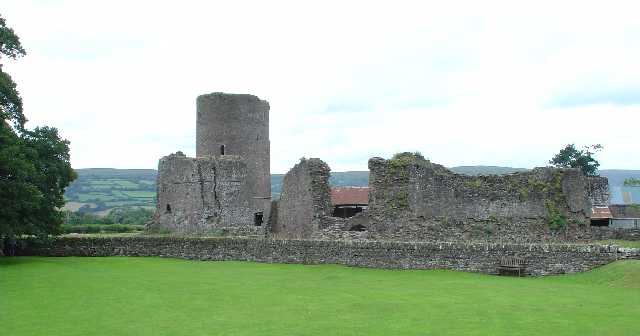
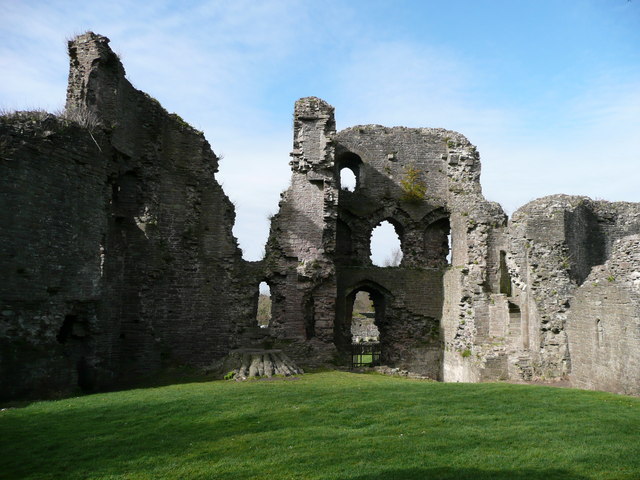
Crickhowell Castle is a notable High Medieval hill castle located in the town of Crickhowell, Wales. Its origins date back to around 1121, when the Norman lord Robert Turberville established a strategic motte-and-bailey fortress overlooking the confluence of a tributary stream and the River Usk. The castle’s elevated position on a spur of land allowed it to dominate the surrounding landscape and the emerging town below, which was planned to grow around its presence. Today, the castle stands largely in ruins, with visible remains of its earthwork motte, stone curtain walls, and defensive towers, reflecting its evolution from timber fortifications to a substantial stone stronghold.
Early construction and turberville family influence
The initial construction of Crickhowell Castle was typical of Norman military architecture, featuring a wooden motte-and-bailey design. The motte is oval-shaped and remains a prominent earthwork today, while the original wooden structures have long since disappeared. The Turberville family, tenants under the powerful Marcher lord Bernard de Neufmarché, held the castle for over a century and a half. During this period, notable figures such as Henry de Turberville, who served as Seneschal of Gascony, and Hugh Turberville, a military commander under King Edward I, played significant roles in both the castle’s history and the wider military campaigns in Wales and Gascony.
Military engagements and strategic role
In 1172, the castle was attacked by Welsh rebels led by Seisyllt ap Rhirid, highlighting its strategic importance in the contested borderlands between Norman-controlled territories and Welsh principalities. Later, Hugh Turberville was instrumental in training Welsh men-at-arms and commanding a force of 6,000 infantry in King Edward I’s campaigns to conquer Wales. His leadership underscored the castle’s role as a military hub in the turbulent Welsh Marches during the late 13th century.
Stone fortifications and architectural evolution
The castle underwent significant transformation beginning in 1242 when Sybil Turberville, daughter of Hugh Turberville, married Sir Grimbold Pauncefote. This marriage brought the castle into the possession of the Pauncefote family, who replaced the earlier wooden defenses with substantial stone fortifications. These included a stone shell keep atop the motte, a curtain wall enclosing the bailey, and multiple stone towers that strengthened the castle’s defensive capabilities. The transition to stone construction was part of a broader trend in medieval castle building, reflecting advancements in military architecture and the need for more durable defenses against increasingly sophisticated siege tactics.
Castle layout and surviving remains
The castle’s layout featured a classic motte-and-bailey arrangement, with the oval motte serving as the primary defensive mound. Beneath the motte’s surface lie the foundations of the stone shell keep, which are largely buried and require archaeological excavation to fully reveal. The bailey was protected by a substantial stone curtain wall with several towers, including a large tower at the southeast corner where the bailey meets the motte. The gatehouse on the southwest side was flanked by two round towers, of which one remains prominently visible today.
Ownership changes and decline
During the 14th century, Crickhowell Castle became part of the extensive holdings of the powerful Mortimer family, Marcher Lords who controlled large territories in the Welsh borderlands. However, the castle declined in prominence as it became a smaller holding within their vast portfolio of lands and castles. The castle’s strategic importance diminished, and maintenance likely decreased during this period.
Refortification and destruction in the 15th century
In 1400, amid rising tensions and rebellion led by Owain Glyndŵr, the castle was refortified by Sir John Pauncefote, the great-grandson of Sir Grimbold Pauncefote. This effort was ordered by the new King Henry IV to strengthen royal defenses in Wales. Despite these efforts, Glyndŵr’s forces attacked and largely destroyed Crickhowell Castle around 1403. The castle was never rebuilt after this destruction and was gradually dismantled, with its stones repurposed for local buildings.
Archaeological significance and current condition
Today, Crickhowell Castle is a Grade I listed building and a Scheduled Monument, recognized for its historical and architectural importance. The ruins include the earthwork motte, fragments of the stone curtain wall, and surviving towers. Archaeological investigations have identified traces of the bailey in adjacent playing fields, offering insights into the castle’s original extent. The castle ruins lie within the modern town center, serving as a public green space and a tangible link to the Norman conquest and medieval history of Wales.
Misidentified structures and historical clarifications
Previously, a structure known as the “Ivy Tower” was thought to be part of the castle’s medieval fortifications. However, archaeological studies have clarified that this tower dates from a much later period and is unrelated to the original castle defenses. This distinction helps focus attention on the authentic medieval remains and their conservation.
Crickhowell Castle remains a significant example of Norman military architecture in Wales, illustrating the transition from timber to stone fortifications and the complex history of Marcher lordship, military conflict, and royal authority in the Welsh Marches from the 12th to the 15th centuries.
Frequently asked questions (FAQ)
- When was Crickhowell Castle originally built?
- Crickhowell Castle was originally constructed around 1121 as a Norman motte-and-bailey fortress.
- What remains of Crickhowell Castle can visitors see today?
- Visitors can see the oval-shaped earthwork motte, fragments of stone curtain walls, and parts of defensive towers.
- Who were the main historical owners of Crickhowell Castle?
- The castle was initially held by the Turberville family, later passed to the Pauncefote family, and eventually became part of the Mortimer estates.
- Why was Crickhowell Castle destroyed?
- The castle was largely destroyed around 1403 during the uprising led by Welsh leader Owain Glyndŵr.
- Is Crickhowell Castle accessible to the public?
- The castle ruins lie within the town and serve as a public green space, accessible for visitors to explore the remains.
Information
Website
Visit websiteSources & official resources
Verify the information above using these authoritative references.
Loading map...
Visitor reviews
No reviews yet. Been here? Write the first review and help other travelers!
Write the first reviewVisited this castle? Share your experience
Your review helps other travelers and adds first-hand knowledge to our encyclopedia.