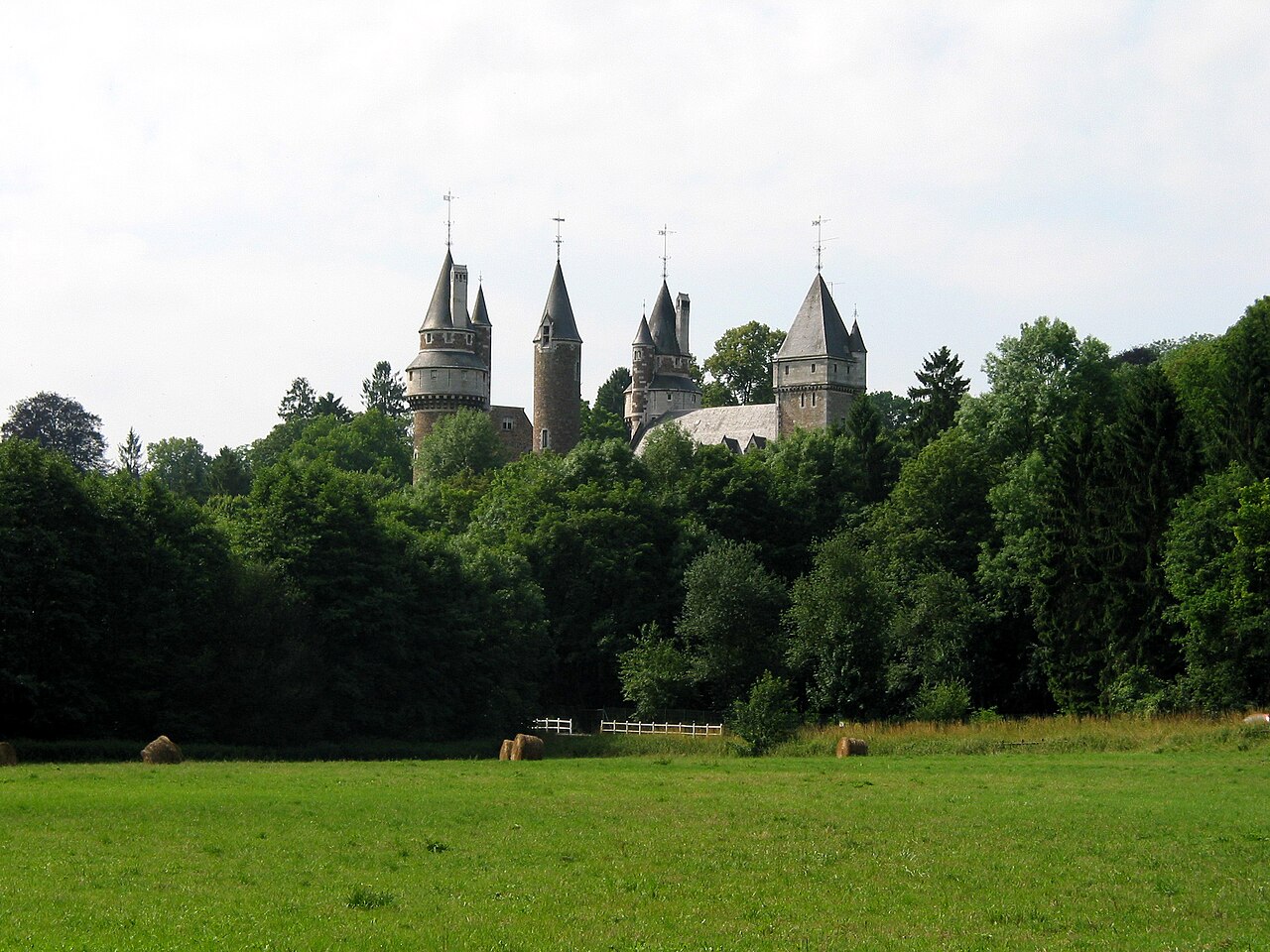
Courrière Castle, known locally as Château de Courrière, is situated in the village of Courrière within the province of Namur in the Wallonia region of Belgium. Despite its name, this site is not a traditional medieval fortress but rather a fortified farm, or château-ferme as it is called in French, reflecting a common architectural typology in rural Belgium where agricultural estates were fortified for protection.
Architectural design and construction
Constructed circa 1622, Courrière Castle was designed as a rectangular building complex incorporating two inner courtyards. The use of sandstone and limestone in its masonry highlights typical regional materials chosen for durability and local availability. The entire structure was encircled by a moat, a defensive water-filled ditch, which was accessed via a drawbridge. This combination of features illustrates the dual purpose of the site: a working farmstead with defensive capabilities against banditry or small-scale military threats common in the early 17th century.
Fortified farmstead characteristics
The concept of the château-ferme is significant in Belgian architectural history, representing a hybrid between agricultural utility and military architecture. Unlike grand castles built primarily for noble residence or military stronghold, fortified farms like Courrière balanced the need for protection with the practical demands of farming. The presence of two courtyards would have facilitated organized agricultural activities, livestock management, and storage, while the defensive walls and moat provided security.
Historical context and usage
Courrière Castle retained its agricultural function well into the 20th century, continuing as a working farm until 1976. This long period of use underscores the site's importance as a rural economic unit rather than a feudal fortress. Over time, as the defensive necessity waned and modern farming methods evolved, the structure gradually fell into disrepair.
20th-century restoration and current use
In 1987, the property was acquired by the Catholic Scouting Federation, marking a new chapter in its history. Beginning in 1992, the Federation undertook a phased restoration project aimed at preserving the architectural integrity of the castle farm. These efforts have successfully stabilized and restored many of the original features, including the moat, drawbridge, and courtyards, allowing the site to serve new cultural and educational purposes.
Today, Courrière Castle functions as a training and cultural center, hosting events and activities that engage the community and visitors. While the exterior and grounds are freely accessible, interior visits are typically limited to guests attending organized events, preserving the site’s heritage while adapting it for modern use.
Architectural significance and heritage value
As a fortified farm, Courrière Castle offers valuable insight into rural defensive architecture of the early modern period in Belgium. Its preservation contributes to understanding how agricultural estates integrated security features without sacrificing functionality. The castle's stone construction, moat, and drawbridge are distinctive elements that illustrate the blend of practicality and protection.
The restoration by the Catholic Scouting Federation has been instrumental in maintaining this heritage site, ensuring that the castle remains a living monument rather than a ruin. The castle farm stands as an example of adaptive reuse, balancing conservation with contemporary community needs.
Frequently asked questions (FAQ)
- How do I get to Courrière Castle?
- Courrière Castle is located in the picturesque village of Courrière, Belgium, easily accessible by car or public transport. If driving, follow the local road signs to reach the castle, and if using public transport, take a train to a nearby station and then a local bus or taxi.
- What is the historical significance of Courrière Castle?
- Courrière Castle dates back to the 12th century and is a remarkable example of medieval architecture in Belgium. It has served various roles throughout history, including as a noble residence and a military fortification, showcasing the region's rich heritage.
- When was Courrière Castle built?
- The construction of Courrière Castle began in the 12th century, with several renovations and expansions occurring over the centuries. Its architecture reflects the evolution of medieval building styles, making it a fascinating site for history enthusiasts.
- Can I take guided tours of Courrière Castle?
- Yes, guided tours are available for visitors who wish to learn more about the castle's history and architecture. These tours provide in-depth insights and are led by knowledgeable guides who can answer your questions during the visit.
- Why is Courrière Castle an important architectural site?
- Courrière Castle is recognized for its unique blend of Gothic and Renaissance architectural styles. Its impressive towers, fortified walls, and beautifully preserved interior make it a significant example of medieval military architecture in Belgium.
- Is it possible to visit Courrière Castle year-round?
- Courrière Castle is open to visitors throughout the year, but it's advisable to check specific opening hours as they may vary by season. Special events and guided tours are often held during the peak tourist season, providing an enhanced experience.
- What are the ticket prices for visiting Courrière Castle?
- Ticket prices for Courrière Castle are reasonably priced, with discounts available for students and seniors. Children under a certain age can often enter for free, making it an affordable family outing.
- What is the best time to visit Courrière Castle?
- The best time to visit Courrière Castle is during the spring and early autumn when the weather is pleasant and the surrounding gardens are in full bloom. Visiting during weekdays may also help avoid larger crowds.
- Are there any nearby attractions to Courrière Castle?
- Yes, several attractions are located near Courrière Castle, including beautiful parks, historical sites, and local museums. Exploring the surrounding area can enhance your visit and provide a deeper understanding of the region's culture and history.
Loading map...
Visitor reviews
No reviews yet. Been here? Write the first review and help other travelers!
Write the first reviewVisited this castle? Share your experience
Your review helps other travelers and adds first-hand knowledge to our encyclopedia.