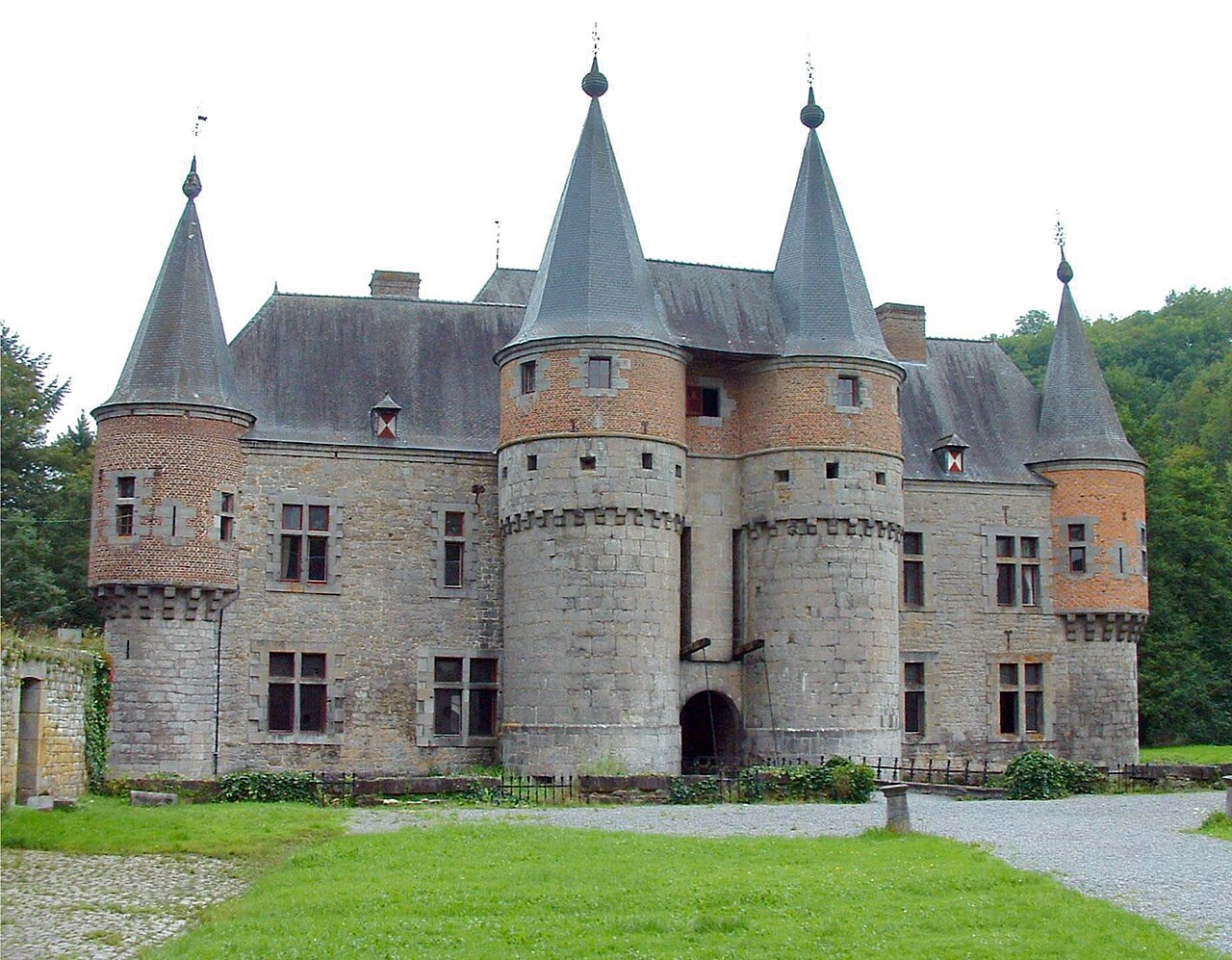
Carondelet Castle
Carondelet Castle is a medieval fortress located in the village of Crupet in the province of Namur, within the Wallonia region of Belgium. This castle is notable for its picturesque setting, standing on a small island surrounded by a moat, which adds to its defensive character and scenic appeal. The castle is connected to its bailey by a charming stone arched bridge, a feature that highlights its strategic design and historical function.
Medieval origins and historical ownership
The origins of Carondelet Castle date back to the 11th or 12th century, placing it firmly in the high medieval period. Initially, the castle belonged to the Crupet family, who maintained ownership until the early 16th century. By 1315, the seigniory associated with the castle was significant enough to hold judicial authority, operating under the jurisdiction of the Prince-Bishopric of Liège. This status underlines the castle's importance in regional governance and law enforcement during the medieval era.
In 1510, ownership transferred to the Carondelet family, whose name became permanently associated with the castle. Their coat of arms remains prominently displayed above the entrance in the gate tower, symbolizing their influence and legacy. Later, in 1667, the castle passed by marriage to the Mérode family, who retained possession until the upheavals of the French Revolution.
Architectural features and transformations
The core of Carondelet Castle is a compact keep constructed from durable limestone. This keep rises three floors high and originally featured defensive elements such as battlements and a wall walk, which allowed defenders to patrol and defend the structure effectively. On the south side, a projecting latrine remains visible, a typical medieval sanitary feature, alongside several narrow loopholes designed for archers.
During the 16th century, the castle underwent significant modifications when it was repurposed as a castle farm. Notable additions from this period include a stair tower at one corner of the keep, an extra floor topped with a new roof, and Renaissance-style windows that introduced a more domestic and stylistic character to the fortress. These changes reflect the evolving function of the castle from purely military to more residential and agricultural uses.
Access to the bailey is through the gate tower, which historically was protected by a drawbridge until the 18th century. This defensive feature was typical of medieval fortifications, providing controlled entry and enhancing security.
Restoration and current status
In 1925, architect Blomme undertook a restoration of Carondelet Castle, preserving its historical fabric and architectural integrity. Today, the castle remains private property, owned by the Limbosch family, and is not open to public access. However, the surrounding landscape offers visitors the opportunity to enjoy a scenic circular walk around the small valley where the castle is situated, allowing appreciation of its setting and exterior views.
Architectural and cultural significance
Carondelet Castle exemplifies the transition from medieval fortress to Renaissance residence and farmstead, showcasing architectural adaptations over several centuries. Its limestone keep with defensive features, complemented by later additions such as the stair tower and Renaissance windows, illustrates the layering of styles and functions. The castle's historical ties to influential families like the Crupet, Carondelet, and Mérode families highlight its role in regional history and governance.
Although access is restricted, the castle's preservation and restoration efforts have maintained its status as a cultural landmark in Wallonia. Its setting on a moat and connection to the bailey via a stone bridge contribute to its picturesque and historically authentic appearance.
Frequently asked questions (FAQ)
- What is the historical significance of Carondelet Castle?
- Carondelet Castle, built in the 19th century, is a remarkable example of neoclassical architecture in Belgium. It served as a residence for the noble Carondelet family and is deeply intertwined with the region's history, reflecting the social and political changes of its time.
- When was Carondelet Castle built?
- Carondelet Castle was constructed between 1865 and 1870. The castle's design showcases the opulence of the era and has been meticulously preserved to highlight its historical value.
- What are the opening hours for Carondelet Castle?
- Carondelet Castle is open to visitors from Tuesday to Sunday, from 10:00 AM to 5:00 PM. It is advisable to check the official website for any seasonal variations or special holiday hours.
- Can I visit Carondelet Castle year-round?
- Yes, visitors can explore Carondelet Castle throughout the year, although certain areas may be restricted during winter months for maintenance. It's best to plan your visit during spring or summer for a more enjoyable experience.
- Is it possible to take guided tours of Carondelet Castle?
- Yes, guided tours are available, providing guests with in-depth knowledge about the castle's history and architecture. Tours are often conducted in multiple languages and should be booked in advance to ensure availability.
- What are the ticket prices for visiting Carondelet Castle?
- Tickets for Carondelet Castle are reasonably priced, with discounts available for students and seniors. Children under a certain age may enter free of charge, making it a great family-friendly destination.
- What is the best time to visit Carondelet Castle?
- The best time to visit Carondelet Castle is during the spring and summer months when the gardens are in full bloom. Additionally, the pleasant weather enhances the overall experience of exploring the castle and its surroundings.
- Are there any nearby attractions to visit while at Carondelet Castle?
- Yes, visitors to Carondelet Castle can explore the charming village of Crupet, known for its picturesque streets and historical sites. Nearby attractions include the stunning countryside and other historical landmarks that add to the rich cultural experience of the region.
- How do I get to Carondelet Castle?
- Carondelet Castle is accessible by car, with parking available nearby. Public transportation options are also available, including local buses that connect to major cities in Belgium.
Information
Address
Rue Basse, Crupet, Belgium
Loading map...
Visitor reviews
No reviews yet. Been here? Write the first review and help other travelers!
Write the first reviewVisited this castle? Share your experience
Your review helps other travelers and adds first-hand knowledge to our encyclopedia.