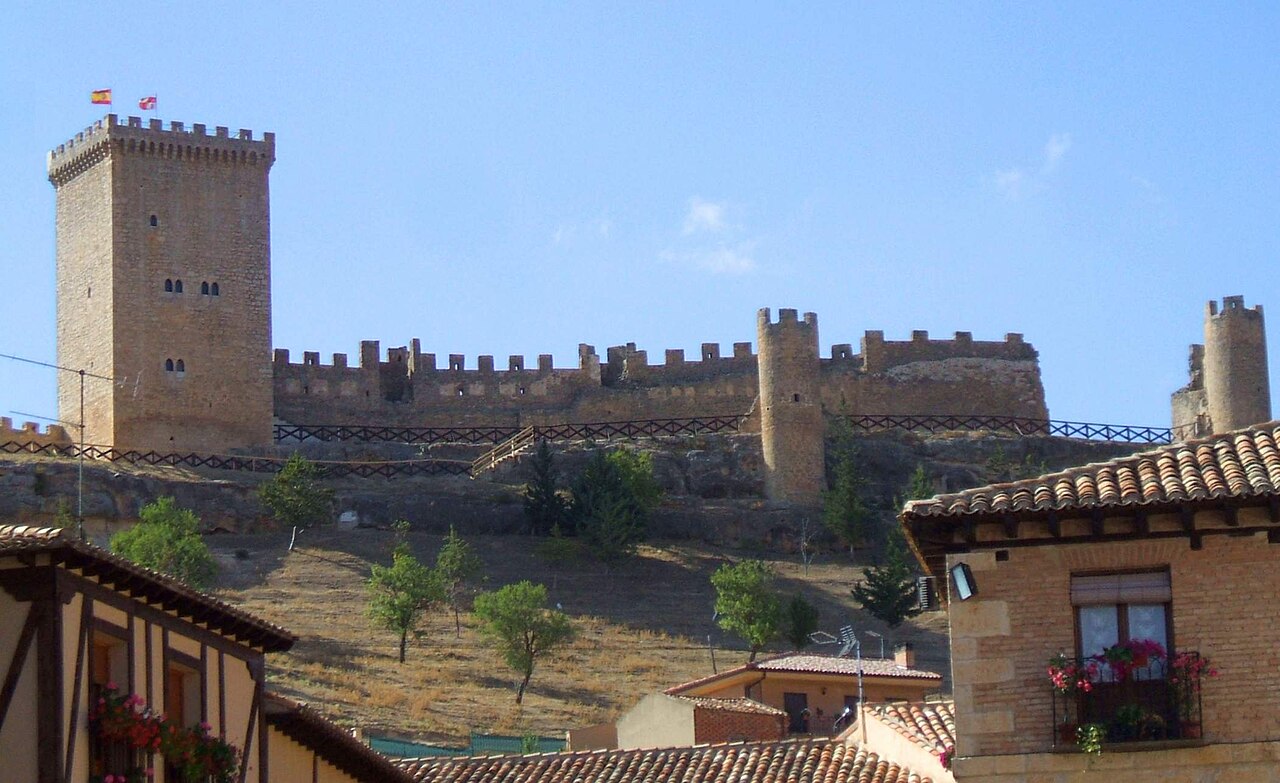
Coruña del Conde Castle
Coruña del Conde castle stands as a significant hill castle in the province of Burgos, Spain, embodying centuries of military and cultural history. Located on a strategic hill overlooking the village of Coruña del Conde, this fortress traces its origins to the 10th century, a period marked by the Kingdom of León's efforts to repopulate and secure the Douro valley under King García I of León. The castle's location was chosen for its commanding views over the Arandilla river valley and proximity to important ancient routes, including remnants of Roman roads and bridges that connected to the nearby Roman city of Clunia.
Historical background and strategic significance
The castle's foundation was part of a broader early medieval military initiative to fortify the southern frontier of the Kingdom of León against Muslim incursions. Its position allowed control over key communication and trade routes, making it a vital defensive outpost. During the late 10th century, the fortress fell under the control of the Muslim leader Almanzor, known for his extensive military campaigns across the Iberian Peninsula. Almanzor enhanced the castle's defenses, including the construction of the main tower with a distinctive arched doorway and a section of wall featuring a caliphal-style arch, reflecting the Islamic architectural influences of the period.
Muslim occupation and architectural contributions
Under Almanzor's command, the castle served as a base for Muslim forces, facilitating raids into Christian territories. The architectural elements introduced during this time not only reinforced the fortress's military capabilities but also incorporated decorative features typical of Caliphate-era fortifications. Although many of these details have not survived intact, historical records and remaining structures indicate the castle's dual role as a military stronghold and a symbol of Muslim power in the region.
Christian reconquest and medieval transformations
Following the Reconquista, the castle was reclaimed by Christian forces and adapted to meet evolving defensive needs. Modifications included strengthening walls and towers to withstand advances in siege warfare. The castle also became a focal point for local governance and noble authority during the Middle Ages. The nearby population shifted from the declining Roman city of Clunia to the safer environs of the castle, establishing the village of Coruña del Conde. This community thrived through agriculture and livestock, while the castle served as a refuge and symbol of feudal power.
Noble families and political significance
The region saw contestation among noble houses, notably involving figures such as Juan Martínez de Leiva and Lorenzo Suárez de Mendoza. The latter was granted the title of count by King Enrique IV, underscoring the castle's role in regional politics and aristocratic influence. Over time, the fortress's military importance waned as the Christian kingdoms expanded southward, leading to its gradual abandonment.
Architectural features and current remains
The castle occupies an elongated hilltop with natural defensive advantages, incorporating the terrain into its design. Beneath the visible ruins lie traces of earlier fortifications, indicating continuous military use over several centuries. The defensive walls once enclosed the entire hilltop, though today only fragments remain. These walls were exceptionally thick in places, reaching up to 22 meters, and were supported by trenches carved into the hillside to enhance stability.
Towers and defensive structures
The castle's curtain walls were reinforced with towers of varying shapes and heights, including both square and round bases. These towers provided overlapping fields of fire and strengthened vulnerable sections of the perimeter. The main entrance, located on the northern side, served as the primary access point and was likely heavily fortified.
Adaptations and community use
Within the castle's courtyard, a section of the wall has been repurposed by local residents as a fronton court, a traditional Spanish ball game area, demonstrating the site's ongoing social significance. Despite centuries of decay and stone removal for local building projects, the castle remains a prominent historical landmark.
Preservation and cultural heritage
Efforts to preserve the castle have been undertaken by local authorities, although limited resources have constrained comprehensive restoration. The site offers valuable insights into early medieval military architecture, the Islamic influence on Spanish fortifications, and the sociopolitical dynamics of medieval Castile. Visitors can explore the ruins to appreciate the castle's strategic location and layered history.
Frequently asked questions (FAQ)
- What is the historical significance of Coruña del Conde Castle?
- Coruña del Conde Castle, dating back to the 15th century, played a crucial role in the defense against invasions during the medieval period. It showcases a blend of Gothic and Renaissance architectural styles, reflecting the turbulent history of the region and its strategic importance.
- When was Coruña del Conde Castle built?
- The construction of Coruña del Conde Castle began in the late 15th century, around 1470, under the orders of the noble family of the area. It has since undergone various restorations, preserving its historical essence while adapting to modern times.
- What are the opening hours for Coruña del Conde Castle?
- Coruña del Conde Castle is open to visitors from 10 AM to 6 PM during the peak tourist season from April to October. In the off-peak months, the hours may vary, so it's advisable to check ahead before planning your visit.
- Can I take guided tours of Coruña del Conde Castle?
- Yes, guided tours are available for visitors to explore the rich history and architecture of Coruña del Conde Castle. These tours provide in-depth insights and are usually conducted by knowledgeable guides who can answer questions and share fascinating stories about the castle.
- Is Coruña del Conde Castle accessible for visitors with mobility challenges?
- While Coruña del Conde Castle features some uneven surfaces and stairs, efforts have been made to improve accessibility for all visitors. It's recommended to contact the castle management in advance to discuss specific needs and available accommodations.
- What is the best time to visit Coruña del Conde Castle?
- The best time to visit Coruña del Conde Castle is during the spring and early autumn months, when the weather is mild and conducive to exploring the surrounding grounds. Additionally, these seasons often feature fewer crowds compared to the peak summer months.
- Are there any nearby attractions to visit along with Coruña del Conde Castle?
- Yes, nearby attractions include the charming village of Coruña del Conde, known for its picturesque landscapes and local culture, as well as other historical sites such as the Roman ruins in the vicinity. These can enhance your visit and provide a deeper understanding of the region's history.
- What are the ticket prices for visiting Coruña del Conde Castle?
- Ticket prices for Coruña del Conde Castle are reasonably priced, generally ranging from €5 for adults and reduced rates for children and seniors. Special discounts may apply for groups or during certain events, so it's wise to check the official website for the latest pricing information.
Information
Loading map...
Visitor reviews
No reviews yet. Been here? Write the first review and help other travelers!
Write the first reviewVisited this castle? Share your experience
Your review helps other travelers and adds first-hand knowledge to our encyclopedia.