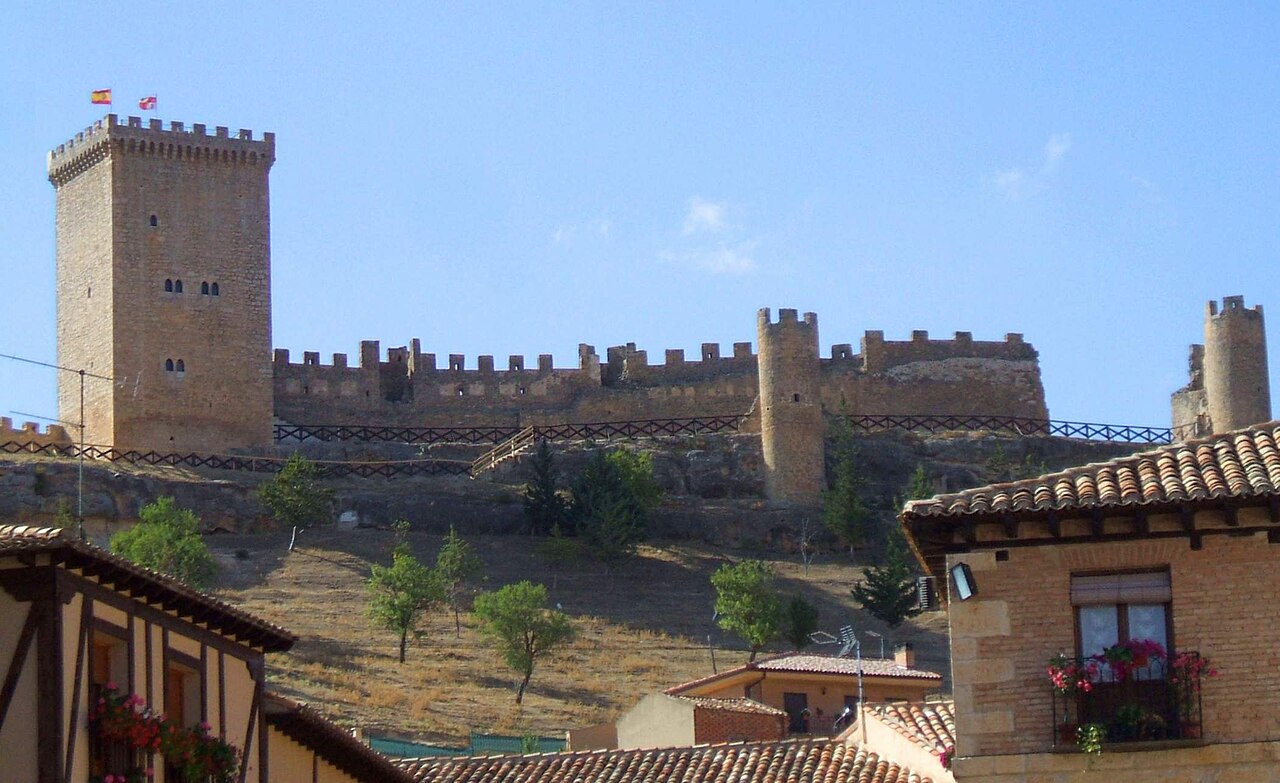
Castillejo de Robledo Castle

Castillejo de Robledo castle: medieval fortress in Castillejo de Robledo, Spain
Castillejo de Robledo, Spain
High Medieval (11th–13th c.)
Ruins

Castillejo de Robledo castle stands as a significant medieval fortress located in the town of Castillejo de Robledo, Spain. Its origins trace back to the 12th century, when it was constructed atop an earlier Moorish fortification. This strategic location in the region reflects the turbulent history of the Iberian Peninsula during the High Medieval period, marked by the Reconquista and shifting control between Christian and Muslim powers.

Historical background and ownership

The castle and its surrounding lands were originally under the control of the Order of Malta, a military and religious order known for their role in the Crusades and defense of Christian territories. This ownership lasted until the order was suppressed by Pope Clement V in 1311. Following the suppression, the estate was transferred to the Knights Hospitaller, another prominent military order with a long-standing presence in the region.

Eventually, the castle and its lands passed into the hands of the local residents of Castillejo de Robledo, marking a shift from military to civilian control. This transition reflects broader changes in the political and social landscape of Spain during the late medieval period.

Architectural features and construction

The castle is built on the remains of a Moorish fortification, evident in the surviving sections of the original walls. These walls are notably thicker than the later constructions, indicating their defensive purpose in an earlier era. The use of thick walls was typical of Moorish military architecture, designed to withstand sieges and attacks.

While much of the castle's structure has undergone changes over the centuries, the remnants provide valuable insight into medieval fortification techniques. The castle likely featured typical defensive elements such as battlements, towers, and a fortified gate, although specific details have been lost or obscured by time.

Wall construction and defensive design

The visible remains of the original wall demonstrate a robust construction method, using large stones and mortar to create a formidable barrier. The greater thickness of these walls compared to later additions suggests that the earliest builders prioritized defense against siege engines and direct assault.

The castle's location on elevated ground would have enhanced its defensive capabilities, allowing defenders to monitor and control the surrounding territory effectively.

The castle's role in regional history

Throughout its history, Castillejo de Robledo castle served as a military stronghold and a symbol of territorial control. Its association with the Order of Malta and the Knights Hospitaller underscores its importance in the religious and military conflicts of medieval Spain.

The castle's position in the province of Soria placed it within a contested frontier zone during the Reconquista, the centuries-long series of campaigns by Christian kingdoms to reclaim territory from Muslim rule. The fortification would have played a role in securing the area and protecting local inhabitants.

Current condition and preservation

Today, the castle is classified as ruins, with only partial remains of the original walls and fortifications visible. These ruins offer a tangible connection to the medieval past and serve as an important cultural and historical site for the town of Castillejo de Robledo.

Efforts to preserve the site focus on maintaining the structural integrity of the surviving walls and promoting awareness of the castle's historical significance.

Frequently asked questions (FAQ)

How do I get to Castillejo de Robledo Castle?
Castillejo de Robledo Castle is located in the picturesque village of Castillejo de Robledo, Spain. Visitors can reach the castle by car, with ample parking available nearby. Public transport options may be limited, so it's advisable to check local bus schedules if traveling without a vehicle.
What is the historical significance of Castillejo de Robledo Castle?
Castillejo de Robledo Castle dates back to the medieval period and played a crucial role in the defense against invasions in the region. Its strategic location provided a vantage point for monitoring enemy movements. Today, it stands as a testament to the architectural styles and military history of the time.
When was Castillejo de Robledo Castle built?
The construction of Castillejo de Robledo Castle began in the 13th century, during a time when many fortifications were built across Spain. Throughout the centuries, it underwent several modifications to adapt to changing military needs. The castle's enduring structure showcases the resilience of medieval architecture.
Can I take guided tours of Castillejo de Robledo Castle?
Yes, guided tours of Castillejo de Robledo Castle are available for visitors who wish to learn more about its history and architecture. Knowledgeable guides provide insights into the castle's significance and the stories behind its walls. It's recommended to book tours in advance, especially during peak tourist seasons.
Why is Castillejo de Robledo Castle a popular destination for tourists?
Castillejo de Robledo Castle attracts visitors for its stunning views and rich historical backdrop. The castle's well-preserved architecture and scenic surroundings offer excellent photo opportunities. Additionally, it serves as a peaceful retreat for those interested in exploring Spain's medieval heritage.
Is it possible to visit Castillejo de Robledo Castle year-round?
Yes, Castillejo de Robledo Castle is open to visitors throughout the year, although hours may vary depending on the season. It's advisable to check the official website or contact local tourist information for the most current opening hours. Visiting during spring and fall can provide a more pleasant experience with milder weather.
What are the ticket prices for visiting Castillejo de Robledo Castle?
Ticket prices for Castillejo de Robledo Castle are generally affordable, making it accessible to a wide range of visitors. Discounts may be available for children, students, and seniors. It's best to check the latest pricing information online or at the ticket office upon arrival.
What are some nearby attractions to explore after visiting the castle?
After touring Castillejo de Robledo Castle, visitors can explore the charming village of Castillejo de Robledo, with its quaint streets and local eateries. Additionally, the surrounding countryside offers beautiful hiking trails and natural scenery. Nearby historical sites and other castles provide further opportunities for exploration.
What are the best times to visit Castillejo de Robledo Castle?
The best times to visit Castillejo de Robledo Castle are during the spring and fall months when the weather is mild and comfortable for outdoor exploration. Summer can be quite warm, while winter may bring colder temperatures. Visiting during weekdays may also help avoid larger crowds.

Information

Hill Castle

Loading map...

Visitor reviews

No reviews yet. Been here? Write the first review and help other travelers!

Write the first review

Visited this castle? Share your experience

Your review helps other travelers and adds first-hand knowledge to our encyclopedia.

Write a review

(5/5)

0/2000 characters

Your review will be visible after admin approval

Nearby castles

9.7 km

Castillo de Langa de Duero

Spain, Spain

The Castillo de Langa de Duero is a striking example of a medieval hill castle located in the town of Langa de Duero, Spain. Perched strategically on a hill overlooking the Duero river valley, this fortress exemplifies the military architecture of the 15th century in the Castilian region. Though the site itself reveals traces of earlier Celtic, Visigothic, and Christian settlements dating back to the 10th century, the castle as it stands was primarily constructed during the late medieval period to serve as a defensive stronghold controlling key access points in the area. The castle's most prominent surviving feature is the imposing square tower, locally known as El Cubo. This robust tower measures approximately twelve meters on each side and rises to about twenty meters in height, with walls nearly two meters thick. These dimensions reflect the fortress's defensive purpose, designed to withstand sieges and provide a commanding vantage point over the surrounding landscape. The tower's entrance is elevated above ground level, a typical medieval defensive design to prevent easy access by attackers. Historical significance and ownership During the 15th century, the Castillo de Langa de Duero played a notable role in the regional power dynamics of Castile. In 1441, ownership passed to Don Álvaro de Luna, a prominent nobleman who served as the constable of Castile and wielded significant political influence. Historical records from around 1445 indicate that the castle's tower was used as a prison, including the detention of the brother of the Admiral of Castile under Don Álvaro's orders. This highlights the castle's function not only as a military fortress but also as a center of authority and control. The surrounding area during this period was home to a diverse population, including a Jewish community (aljama hebrea). This multicultural presence reflects the complex social fabric of late medieval Castile, where different religious and ethnic groups coexisted, often under the protection or control of local lords. Architectural features and defensive elements The castle's architecture is characteristic of late medieval military construction in Castile. The surviving tower features multiple defensive elements that illustrate the strategic thinking of the period. The tower's interior is divided into four levels: a ground floor and three upper floors, ending with a rooftop terrace. The terrace retains remnants of battlements and elongated arrow slits, allowing defenders to observe and repel attackers while remaining protected. One of the tower's notable features is the vestiges of a machicolation—an opening in the parapet enabling defenders to drop objects or pour boiling substances onto enemies at the base of the walls. This architectural element was common in fortifications designed to repel close assaults. Adjacent to the tower lies a trapezoidal cistern, or aljibe, carved directly into the rock. This cistern was essential for storing water, particularly during sieges when external supplies were cut off. The presence of this cistern underscores the castle's preparedness for prolonged defense. Remnants of additional fortifications surround the tower, suggesting that the castle once included a more extensive defensive enclosure protecting vital access points such as a nearby bridge. Archaeological evidence also points to now-blocked underground passages, which likely served as quarters for soldiers, stables for horses, or storage rooms such as granaries, highlighting the castle's multifunctional military role. Later history and economic context By the 18th century, the military importance of the Castillo de Langa de Duero had diminished, reflecting broader changes in warfare and political structures. However, the surrounding territory remained economically significant. The Count of Miranda, who owned a nearby flour mill on the Valdanzo river, imposed a toll known as a Portazgo on residents of Langa for crossing goods over the Duero river. This toll system indicates the continued strategic and economic importance of this border region, serving as a hub for trade and local administration. Conservation and modern use In recent decades, efforts have been made to conserve and repurpose the Castillo de Langa de Duero. The castle has been transformed into a center dedicated to educating the public about the network of watchtowers and fortifications that historically guarded the Duero frontier. This educational role honors the castle's enduring legacy as part of the region's defensive infrastructure. Conservation programs have restored the tower's façade and improved visitor access by constructing a secure walkway from the town. Inside the tower, modern stairs and floors have been sensitively added to facilitate visitor mobility while respecting the historic fabric. Ornamental lighting highlights the fortress's silhouette after dark, enhancing its visual prominence in the landscape. Protective glass barriers near the battlements allow visitors to safely enjoy panoramic views across the Duero valley. From the rooftop terrace, clear sightlines extend to the distant fortress of Gormaz, another significant medieval stronghold in the region, emphasizing the strategic positioning of Castillo de Langa de Duero within the broader defensive network. Architectural style and classification The castle is classified as a hill castle, typical of medieval fortifications built on elevated terrain to maximize defensive advantage and surveillance capabilities. Its architectural style is predominantly late medieval military, with features designed for defense and control rather than residential comfort. The surviving tower exemplifies the utilitarian approach of Castilian military architecture in the 15th century, focusing on robust construction and practical defensive elements like machicolations, arrow slits, and elevated entrances. While the castle itself remains partially preserved, it stands as a significant cultural and historical monument, providing insight into the military, social, and economic history of the Duero valley region. Its preservation and adaptive reuse as an educational site ensure that this heritage continues to be appreciated by visitors and scholars alike.

Details
14.8 km
Peñaranda de Duero Castle — Spain castle

Peñaranda de Duero Castle

Peñaranda de Duero, Spain

Peñaranda de Duero castle stands prominently on the rocky outcrop known as Peña de Aranda, overlooking the village of Peñaranda de Duero in the historic region of Castile and León, Spain. This late medieval hill castle is a remarkable example of Spanish military architecture, combining strategic location, robust construction, and stylistic elements characteristic of the 15th century. Its origins trace back to the early phases of the Reconquista, with initial fortifications likely established during the 10th or 11th century, making it a key defensive stronghold on the frontier between the Christian Kingdom of Castile and the Moorish state of Al Andalus. The castle’s commanding position between a steep mountain and a river mirrors other significant fortresses in the region, such as Peñafiel and Gormaz, and reflects a strategic choice to maximize natural defenses. The elongated and irregular plan of the fortress adapts perfectly to the contours of the crag, occupying roughly the western half of the hill. The main entrance is located on the eastern side, separated from the rest of the complex by a deep pit carved into the rock, historically crossed by a drawbridge, which added an additional layer of defense. Historical significance and early origins The earliest defensive works at Peñaranda likely coincided with the repopulation efforts during the early Reconquista period. The castle initially functioned as a frontier fortress, guarding the borderlands between Christian and Muslim territories. Its strategic importance was underscored by its role in the fortified line that sought to contain Moorish advances into northern Spain. The site’s natural topography, with its steep slopes and proximity to water, made it an ideal location for sustained defense. The 15th century brought significant transformations under the direction of the Counts of Miranda del Castañar, who undertook extensive renovations that shaped much of the castle’s current form. These works introduced distinctive Gothic architectural features and reinforced the fortress’s military capabilities. The castle’s preservation owes much to the quality of construction during this period, which allowed it to survive centuries of neglect and changing ownership. Architectural features and layout The keep (donjon) The centerpiece of Peñaranda de Duero castle is its central keep, or donjon, a robust tower dating from the late 15th century. Rising four stories high, the keep is constructed predominantly of masonry, with finely cut ashlar stone used at the corners, doorways, and battlements. The walls are largely blind, with only a few strategically placed mullioned windows that provide light and observation points. The keep’s ground floor is windowless, emphasizing its defensive purpose as a secure refuge during sieges. Access to the keep today is gained via a modern metal staircase leading to a pointed arch entrance on the first floor’s eastern side. The tower is crowned with battlements and a crenellated parapet, features that enhance its defensive profile while also adding to its aesthetic appeal. The slender yet sturdy proportions of the keep make it one of the most balanced and graceful towers in the province of Burgos. Fortification walls and towers The castle’s walls are constructed from solid ashlar stone, providing formidable protection. Along the northwestern side, cylindrical towers built of limestone rise to reinforce the curtain walls, each topped with crenellated battlements. These towers flank the main entrance, which is marked by an ogival arch — a pointed Gothic arch — that once led over a moat spanned by a drawbridge. Originally, the castle was part of a larger defensive system that included a fortified wall encircling the town. Today, only a fragment of this wall remains, known as "Las Monjas," a crenellated archway that stands as a testament to the castle’s former extent and the town’s medieval fortifications. Later history and preservation By the 17th century, the castle had fallen out of use as a residence and military stronghold. The Count of Miranda shifted his focus to a nearby palace within the town, using it as a weapons store instead. Despite this decline, the castle’s imposing structure and quality masonry allowed it to endure through the centuries with remarkable integrity. In 1931, Peñaranda de Duero castle was officially declared a Historic-Artistic Monument, recognizing its cultural and historical significance. Further heritage protections were enacted in the mid-20th century, ensuring the castle’s preservation as an important monument within the province of Burgos. Visitor experience and cultural importance Today, Peñaranda de Duero castle is a prominent tourist attraction and a symbol of the region’s medieval heritage. Visitors can explore the castle’s well-preserved structures, including the imposing keep, battlements, and towers, which offer insight into the defensive strategies and architectural styles of late medieval Spain. The castle’s location provides stunning views of the surrounding landscape, enhancing its appeal as a cultural landmark. The castle also serves as a valuable educational resource, illustrating the evolution of military architecture from the early Reconquista period through the late Middle Ages. Its combination of natural defenses and man-made fortifications exemplifies the strategic ingenuity of medieval castle builders in Castile and León.

Late Medieval (14th–15th c.)
Details
21.7 km

Torregalindo Castle Ruins

Torregalindo, Spain

Torregalindo Castle stands as a historical relic from the 11th century, located in the region of Castile, Spain. It was first mentioned during the period when the Kingdom of Castile was actively expanding and repopulating the territory. The castle's ruins are situated on a strategic elevation above the village of Torregalindo, offering commanding views of the surrounding landscape. Historical context and significance During the High Medieval period, the Kingdom of Castile was consolidating its power and securing its borders amid the Reconquista, the effort to reclaim Iberian territories from Muslim rule. Castles like Torregalindo were essential for military defense and territorial control. The castle likely served as a watchtower and stronghold to protect local inhabitants and oversee key routes through the region. While detailed historical records about Torregalindo Castle are limited, its mention in 11th-century documents confirms its role in the early medieval fortification network of Castile. The castle's presence reflects the strategic importance of the area during a time of frequent conflict and shifting control. Architectural features and layout Though now in ruins, the remains of Torregalindo Castle suggest a typical high medieval fortress design adapted to the local terrain. The elevated site would have been fortified with defensive walls and possibly a keep or tower serving as the last line of defense. The castle's construction likely utilized local stone, with thick walls designed to withstand sieges. Given the era and location, the castle probably included a courtyard, battlements for archers, and limited residential quarters for the garrison. The ruins today may include remnants of curtain walls and foundational structures, providing insight into medieval military architecture in Castile. Current condition and preservation Torregalindo Castle is currently classified as ruins. The site remains an important cultural and historical landmark, although much of the original structure has deteriorated over the centuries. The ruins are accessible above the village, attracting visitors interested in medieval history and archaeology. Preservation efforts are limited, but the site contributes to the understanding of medieval fortifications in the Castilian region. Its elevated position continues to offer panoramic views, connecting visitors with the landscape that shaped its strategic value. Visiting Torregalindo castle ruins Visitors to the Torregalindo Castle ruins can explore the remains that evoke the castle's military past. The site provides a tangible link to the High Medieval period and the early history of Castile. While facilities are minimal, the castle's location offers a peaceful setting for historical exploration and photography. Access to the ruins is typically on foot from the village below. Visitors should be prepared for uneven terrain and take care when navigating the remains. The site is best visited during daylight hours when natural light highlights the texture of the stone ruins and the surrounding countryside.

High Medieval (11th–13th c.)
Details