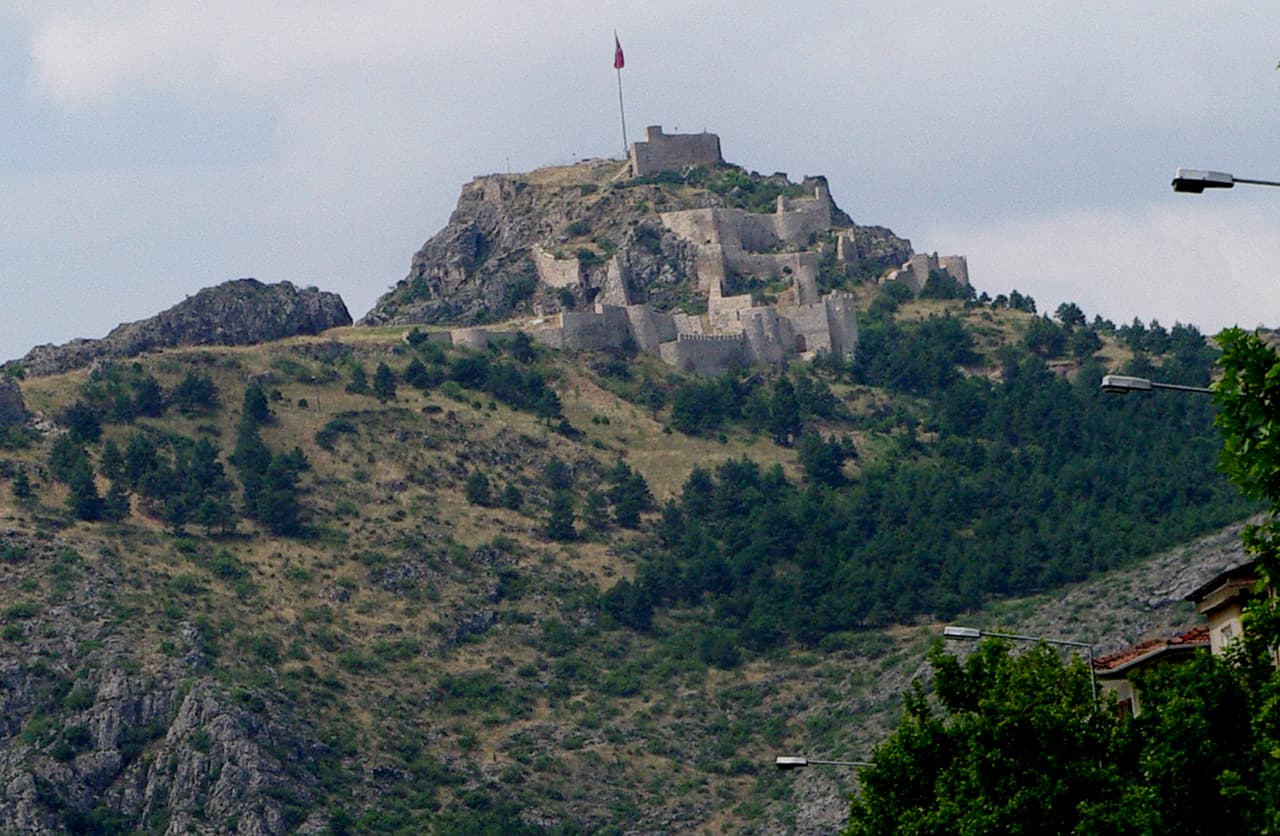
Amasya Castle
Amasya Castle, also known as Harşena Castle, is a commanding hill castle located in the city of Amasya in northern Turkey. Perched atop the steep limestone cliffs of Mount Harşena, the fortress overlooks the Yeşilırmak River (historically known as the Iris), offering strategic views that have made it a significant military site for millennia. The castle’s origins trace back to antiquity, with archaeological evidence indicating the site was in use as early as the Hittite period. The earliest surviving structures date from the Kingdom of Pontus (281 BC–62 AD), marking the castle as a key stronghold in the region's complex history.
Ancient origins and early history
The site of Amasya Castle was initially utilized by the Hittites, one of Anatolia's earliest civilizations, though no substantial Hittite structures remain. The most significant early construction occurred during the Kingdom of Pontus, when the fortress served as a royal residence and military bastion. The kingdom’s rulers carved monumental rock tombs into the sheer cliffs beneath the castle, which remain a prominent feature today. These tombs, dating from the 3rd century BC, are a testament to the castle’s importance as a seat of power.
During the Roman-Pontic Wars, the castle suffered extensive damage as control of the region shifted between the Romans and the Pontic kings. Despite this, the fortress was repeatedly rebuilt and fortified, underscoring its enduring strategic value.
Medieval transformations and turkish rule
By the 11th century, Amasya Castle was a Byzantine stronghold until it was conquered by the Danishmends in 1075. The Danishmends, a Turkmen dynasty, undertook significant restoration and reinforcement efforts, adapting the fortress to the military needs of the period. The castle later came under the control of the Seljuks and ultimately the Ottoman Empire by the late 14th century.
During the early 15th century, the castle played a crucial role in Ottoman history when Prince Mehmed I sought refuge within its walls during the invasion of Timur’s forces. This event highlights the castle’s continued military and political relevance during times of upheaval.
Ottoman period and decline
Under Ottoman rule, the castle was maintained and used as a military fortress until the 18th century. However, advancements in warfare and changing military strategies gradually diminished the castle’s defensive importance, leading to its abandonment. Remnants of Ottoman architecture, including a mosque and the ruins of the Kızlar Sarayı (Maidens’ Palace), indicate the castle’s multifunctional role beyond purely military purposes.
Architectural features and fortifications
Amasya Castle’s fortifications are ingeniously integrated with the natural topography of Mount Harşena. The defensive system extends in eight tiers down the hillside, combining man-made walls with the steep cliffs to create a formidable barrier. The upper sections of the fortress are constructed from finely cut ashlar stone blocks, providing strength and durability, while the lower walls use rubble masonry, a technique involving rough stones set in mortar.
The castle is accessed through four main gates: Helkıs, Saray, Maydonos, and Meydan. These gateways controlled entry and exit, serving as choke points for defense. Within the walls, a network of dungeons, rock-cut cisterns, and wells supported the castle’s inhabitants, especially during sieges.
The cisterns and water management
One of the most remarkable features is the Cilanbolu cistern, an extensive underground water reservoir accessed by a steep tunnel stairway with approximately 150 steps descending about 186 meters. The cistern itself stretches roughly 300 meters, carved directly into the rock to store water vital for sustaining the fortress during prolonged sieges.
Additional water management structures include enclosed wells and smaller cisterns accessed via steep stair tunnels that descend the hillside, showcasing sophisticated hydraulic engineering adapted to the castle’s mountainous setting.
Rock-cut tombs of the pontic kings
Below the castle walls on sheer limestone cliffs are the famous rock-cut tombs of the Pontic kings. These 18 tombs, carved approximately 20 to 25 meters above ground level, date from the 3rd century BC and are among the most significant archaeological features in the region. The tombs are a striking visual reminder of the castle’s ancient royal heritage and remain a major attraction for visitors.
Cultural significance and modern tourism
Today, Amasya Castle is a well-preserved late medieval fortress that stands as a symbol of the city’s rich history. The castle’s integration with the surrounding old Ottoman neighborhood, including traditional houses, hamams (bathhouses), and mosques along the Yeşilırmak River, creates a unique cultural landscape that attracts tourists and historians alike.
Visitors can explore the castle ruins, the Pontic rock tombs, and the historic urban fabric of Amasya, gaining insight into the region’s diverse past from ancient times through the Ottoman era. The castle is accessible for a fee and offers a fascinating glimpse into Anatolia’s layered history.
Visitor information and recommendations
Access to Amasya Castle involves climbing steep paths and stairways, so visitors should be prepared for a moderately challenging ascent. The best times to visit are during spring and autumn when the weather is mild. Guided tours are available, providing detailed historical context and architectural insights.
The surrounding city of Amasya offers additional attractions, including museums, traditional Turkish houses, and scenic views of the Yeşilırmak River, making a visit to the castle part of a broader cultural experience.
Frequently asked questions (FAQ)
- How do I get to Amasya Castle?
- Amasya Castle is located on Mount Harşena above the city of Amasya. Visitors can reach the castle by following the Kale Yolu road, which leads up the hill. The ascent involves walking up steep paths and stairs, so comfortable footwear is recommended.
- What is the historical significance of Amasya Castle?
- Amasya Castle has a rich history dating back to the Kingdom of Pontus and was used by various empires including the Romans, Byzantines, Seljuks, and Ottomans. It served as a royal fortress, military stronghold, and refuge for Ottoman Prince Mehmed I during Timur's invasion.
- When is the best time to visit Amasya Castle?
- The best time to visit Amasya Castle is during spring and autumn when the weather is mild and pleasant. Summers can be hot, and winters cold, which may make the climb less comfortable.
- Can I explore the rock-cut tombs of the Pontic kings?
- Yes, the rock-cut tombs of the Pontic kings are located on the cliffs below the castle walls and can be viewed from designated areas. However, direct access to the tombs is restricted to preserve their condition.
- Is there an entrance fee to visit Amasya Castle?
- Yes, there is a small entrance fee to visit Amasya Castle. The fee helps with the maintenance and preservation of the site. Ticket prices may vary, so it is advisable to check locally before visiting.
Photo gallery

Information
Sources & official resources
Verify the information above using these authoritative references.
Loading map...
Visitor reviews
No reviews yet. Been here? Write the first review and help other travelers!
Write the first reviewVisited this castle? Share your experience
Your review helps other travelers and adds first-hand knowledge to our encyclopedia.


