Coria
Coria was a significant Roman fort and settlement located approximately 2.5 miles (4.0 km) south of Hadrian's Wall in the Roman province of Britannia. This site played a crucial role in the Roman military and administrative network during the Roman occupation of Britain. It was strategically positioned at the junction of two major Roman routes: the north–south Dere Street and the east–west Stanegate road. The Stanegate was the first Roman frontier line before the construction of Hadrian's Wall and connected Coria with Luguvalium (modern-day Carlisle).
Strategic location and historical context
The placement of Coria near the River Tyne allowed the Romans to control important river crossings and facilitate movement of troops and supplies. The fort's proximity to Hadrian's Wall made it a key military installation during the Roman efforts to secure the northern frontier of their empire. The Stanegate road, running east–west between Coria and Luguvalium, was an essential military and trade route before Hadrian's Wall was established, highlighting Coria's early importance in regional defense and administration.
Architectural features and layout
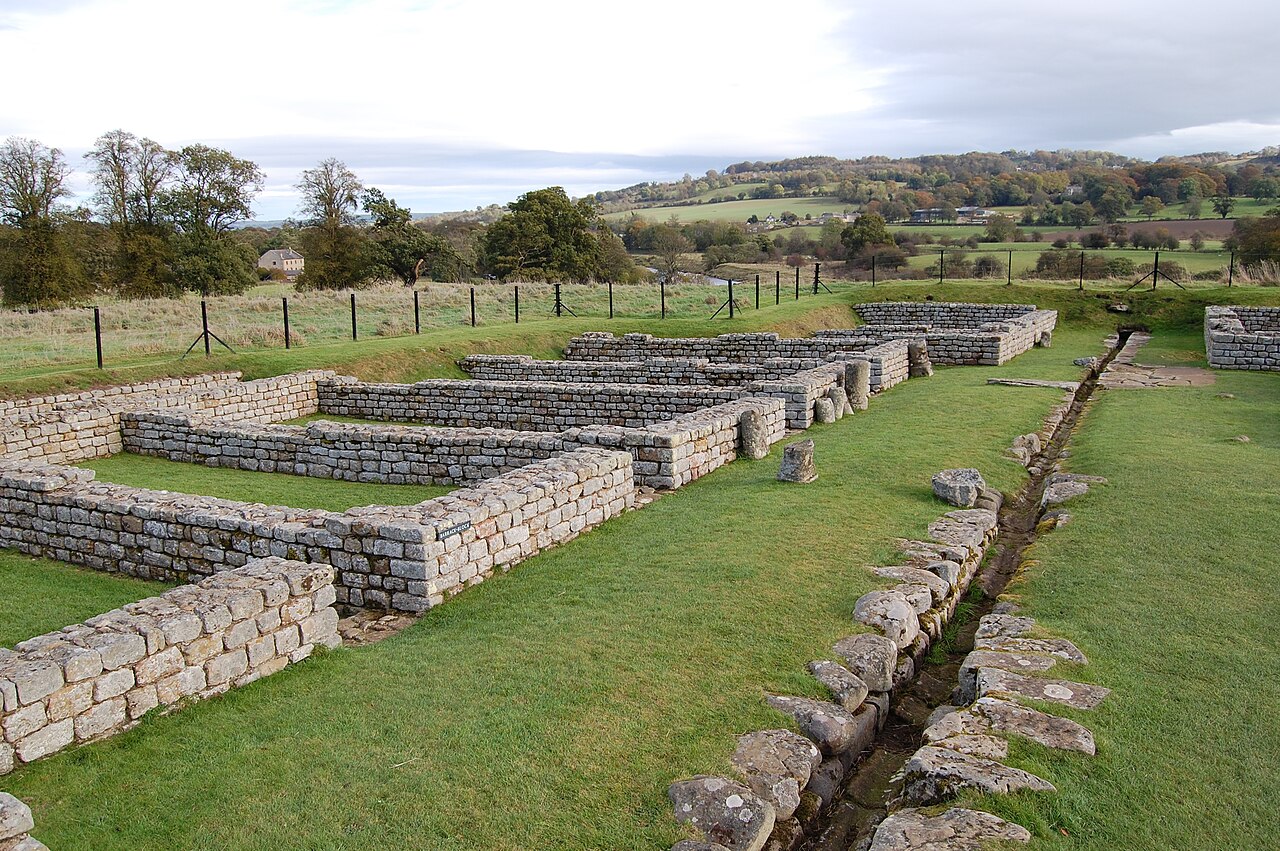
The site of Coria consists of the remains of a hill castle-type Roman fort, characterized by defensive earthworks and stone structures typical of Roman military engineering. The fort included fortified walls, gates, and internal buildings such as barracks, granaries, and administrative offices. The layout was designed to accommodate a garrison of Roman soldiers and support the logistical needs of the frontier.
Fortifications and defenses
The fort's walls were constructed using local stone and featured defensive towers and gates strategically placed to control access. The fortifications were designed to withstand attacks and to serve as a base for Roman patrols along the frontier. The earthworks and ditches surrounding the fort enhanced its defensive capabilities.
Internal structures
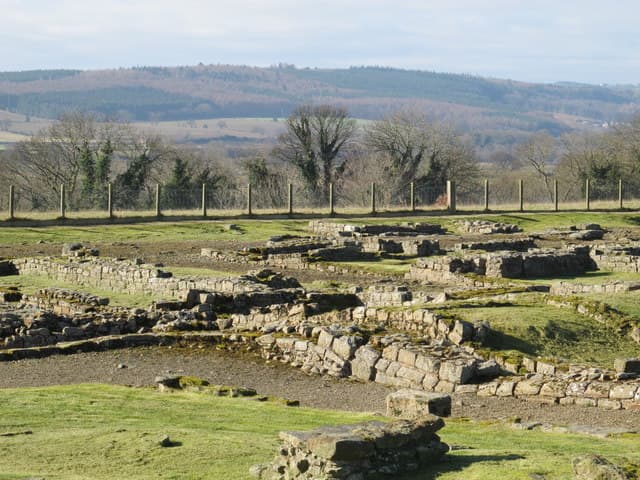
Within the fort, excavations have revealed remains of barracks where soldiers were housed, granaries for storing food supplies, and workshops for equipment maintenance. The presence of a principia (headquarters building) indicates the administrative importance of Coria within the Roman military system.
Archaeological significance and visitor experience
Today, the Corbridge Roman Site is located in the village of Corbridge in Northumberland, England. It is managed by English Heritage and is partially excavated, allowing visitors to explore the remains of this important Roman fort and settlement. The site includes a museum that displays artifacts recovered from the excavations, providing insights into the daily life of Roman soldiers and civilians who lived there.
Preservation and public access
The site is partially preserved with visible remains of walls, foundations, and earthworks. English Heritage has made efforts to protect and interpret the site for educational and cultural purposes. Visitors can walk along the remains of the fort's walls, view the layout of the settlement, and learn about Roman military strategy and frontier life through informative displays and guided tours.
Significance in Roman Britain
Coria represents a vital link in the chain of Roman forts that secured the northern frontier of Roman Britain. Its location at the crossroads of major Roman roads and near Hadrian's Wall underscores its role in military logistics and regional control. The site provides valuable archaeological evidence about Roman military architecture, frontier defense, and the interaction between Roman soldiers and local populations.
Frequently asked questions (FAQ)
- What is the historical significance of Coria?
- Coria was a Roman fort near Hadrian's Wall, strategically located at the junction of major Roman roads, playing a key role in frontier defense and administration.
- Can I visit the Corbridge Roman Site today?
- Yes, the site is managed by English Heritage and is open to the public with partially preserved remains and a museum showcasing Roman artifacts.
- What architectural features can be seen at Coria?
- Visitors can see remnants of fortified walls, gates, barracks, granaries, and other Roman military structures typical of a hill castle fort.
- Where is Coria located?
- Coria is located near the village of Corbridge in Northumberland, England, about 2.5 miles south of Hadrian's Wall.
Photo gallery

Information
Current owner
English Heritage
Loading map...
Visitor reviews
No reviews yet. Been here? Write the first review and help other travelers!
Write the first reviewVisited this castle? Share your experience
Your review helps other travelers and adds first-hand knowledge to our encyclopedia.