Chesters Roman Fort
Chesters Roman Fort, originally known as Cilurnum or Cilurvum, is a significant ancient Roman military site located on Hadrian's Wall near the village of Walwick in Northumberland, England. This fort is one of the most complete and well-preserved examples of a Roman cavalry fort in Britain, reflecting the strategic military presence of the Roman Empire along its northern frontier during the Roman occupation of Britain.
The fort was constructed in the early 2nd century AD, shortly after the completion of Hadrian's Wall around AD 122, serving as a key defensive and administrative post. Cilurnum was strategically positioned to guard the Wall and the nearby River North Tyne, providing a critical base for Roman cavalry units tasked with patrolling and securing the frontier against northern tribes. The fort's location near a river crossing enhanced its tactical importance, facilitating communication and supply routes.
Historical context and significance
Cilurnum is recorded in the Notitia Dignitatum, a late Roman document from the late 4th or early 5th century, which lists the administrative and military units of the Roman Empire. This inclusion confirms the fort's continued use and importance throughout the later Roman period in Britain. The fort housed the ala Petriana, a prestigious cavalry unit, emphasizing its role as a major cavalry base.
Throughout its operational history, Cilurnum was part of the extensive defensive system along Hadrian's Wall, which stretched approximately 73 miles across northern England. The Wall and its associated forts represented the northernmost boundary of the Roman Empire in Britain, designed to control movement, collect customs, and defend against incursions.
Architectural features and layout
The fort is an excellent example of Roman military architecture from the High Medieval period of Roman Britain, though its construction dates back to the early 2nd century AD. It features a rectangular layout typical of Roman forts, with robust stone walls and defensive ditches. The walls are reinforced with bastions or projecting towers that provided overlapping fields of fire, enhancing the fort's defensive capabilities.
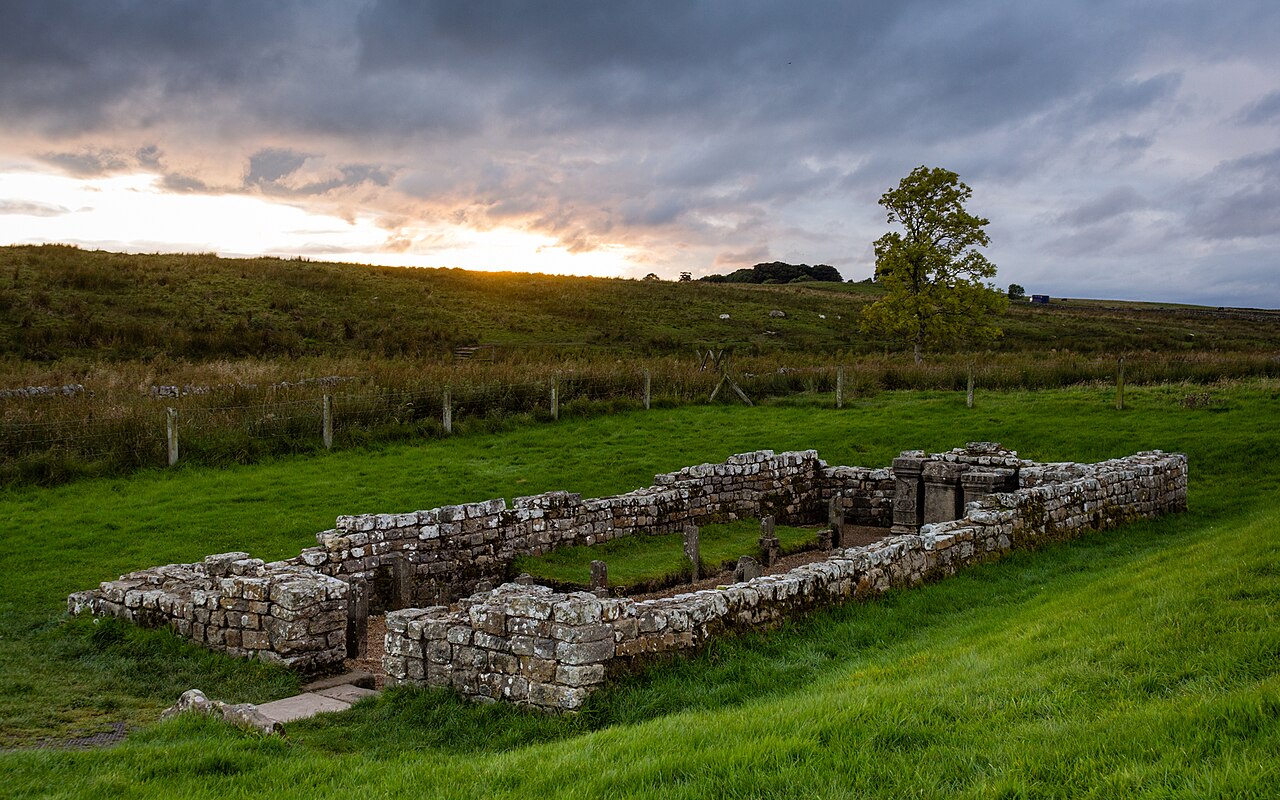
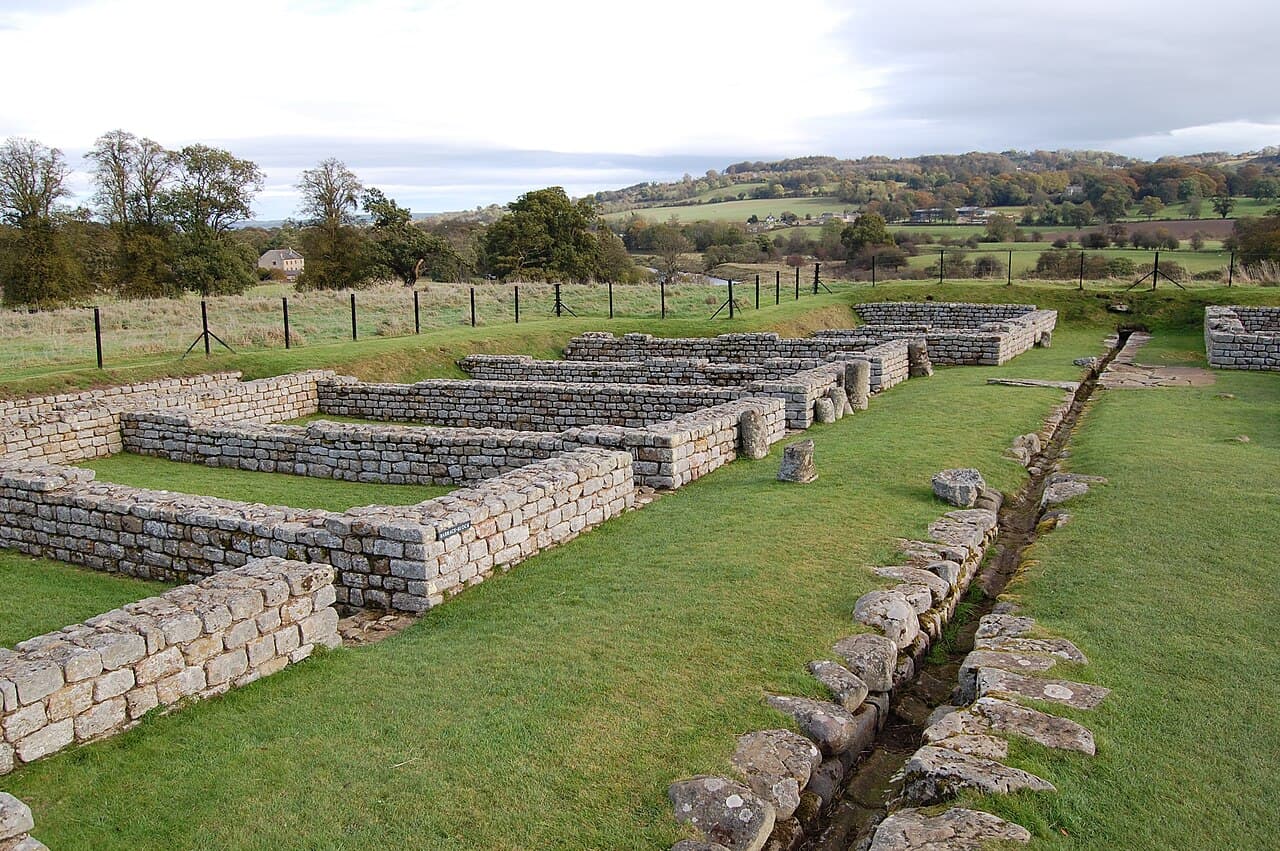
The fort includes well-preserved remains of the principia (headquarters building), barracks, granaries, and stables, reflecting its primary use as a cavalry fort. The stables were extensive, designed to accommodate the horses of the cavalry units stationed there. The fort's gatehouses and defensive walls remain largely intact, providing insight into Roman military engineering.
Surrounding the fort is a defensive ditch and an outer rampart, which added layers of protection. The site also includes remains of a bathhouse, a common feature in Roman forts, which served both hygienic and social functions for the soldiers.
Archaeological discoveries and preservation
Chesters Roman Fort is regarded as the best-preserved Roman cavalry fort in Britain, largely due to the survival of its stone structures and the careful preservation efforts by English Heritage. Excavations have uncovered a wealth of artifacts, including military equipment, pottery, coins, and personal items, which are displayed in the on-site museum.
The museum provides visitors with detailed information about the daily life of Roman soldiers, the fort's construction, and its role in the broader context of Hadrian's Wall. The site is open to the public and offers educational programs and guided tours, enhancing understanding of Roman military history and architecture.
Visiting chesters roman fort today
Today, Chesters Roman Fort is managed by English Heritage and is accessible to visitors interested in Roman history and archaeology. The fort's well-preserved ruins and the museum make it a key destination for those exploring Hadrian's Wall and the Roman frontier in northern England.
Visitors can walk along the surviving walls, explore the remains of the principia and barracks, and view the extensive stable block. The museum houses an impressive collection of artifacts recovered from the site and the surrounding area, providing a comprehensive picture of Roman military life on the edge of the Empire.
Frequently asked questions (FAQ)
- When was Chesters Roman Fort built?
- Chesters Roman Fort was constructed in the early 2nd century AD, shortly after the completion of Hadrian's Wall around AD 122.
- What is the significance of Cilurnum on Hadrian's Wall?
- Cilurnum was a key Roman cavalry fort on Hadrian's Wall, housing the prestigious ala Petriana cavalry unit and playing a crucial role in frontier defense.
- Can I visit Chesters Roman Fort and its museum?
- Yes, Chesters Roman Fort is open to the public and managed by English Heritage. Visitors can explore the fort's ruins and the on-site museum displaying artifacts from the Roman period.
- What architectural features can I see at Chesters Roman Fort?
- Visitors can see well-preserved stone walls, bastions, gatehouses, the principia, barracks, granaries, stables, and a bathhouse, showcasing Roman military architecture.
- Is Chesters Roman Fort the best-preserved Roman fort on Hadrian's Wall?
- Chesters Roman Fort is considered the best-preserved Roman cavalry fort on Hadrian's Wall, notable for its extensive stone remains and stable block.
Photo gallery

Photo by Steven Fruitsmaak•Public domain
Information
Current owner
English Heritage
Loading map...
Visitor reviews
No reviews yet. Been here? Write the first review and help other travelers!
Write the first reviewVisited this castle? Share your experience
Your review helps other travelers and adds first-hand knowledge to our encyclopedia.