Corgarff Castle
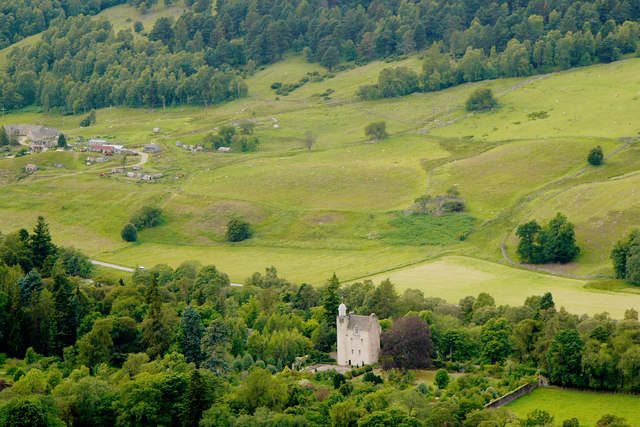
Corgarff Castle is a distinctive 16th-century Scottish tower house located in the remote and rugged landscape of Aberdeenshire, Scotland. Despite its modest appearance compared to grander Scottish castles, Corgarff holds a significant place in Scottish history due to its strategic position and turbulent past. Situated along the historic route between Deeside and Speyside, the castle was originally constructed around 1550 by the Forbes clan, a powerful noble family embroiled in fierce regional conflicts.
The strategic importance and early history of Corgarff Castle
The castle's location was crucial for controlling movement through the Highlands, lying between the River Dee and River Spey. This made it a valuable asset during the frequent clan disputes of the late 16th century. The initial structure was a simple rectangular tower house enclosed by a defensive wall, typical of Scottish fortified homes of the Renaissance period. This design prioritized defense and functionality, with thick stone walls and narrow gun loops for protection.
The early history of Corgarff Castle is marked by violent clan feuds, most notably between the Forbes and Gordon clans. In November 1571, the castle suffered a tragic attack led by Adam Gordon of Auchindoun. During this assault, the castle was set ablaze, resulting in the deaths of Lady Forbes, her children, and many others. This event inspired the ballad "Edom o Gordon," which memorializes the brutal conflict and the castle's dark chapter.
Military role and transformations in the 17th and 18th centuries
Following the clan conflicts, the castle's role evolved with the shifting political landscape of Scotland. By the early 17th century, it had become a refuge for local bandits until expelled by John Erskine, Earl of Mar, in 1626. The castle's strategic importance was reaffirmed during the English Civil War in 1645 when it served as a rallying point for royalist forces under the Marquis of Montrose.
In the late 17th and early 18th centuries, the castle was repeatedly burned during the Jacobite risings, reflecting its contested status. Jacobite forces burned it in 1689 to prevent government use, and it was again a focal point during the 1715 uprising led by John Erskine, 6th Earl of Mar. After the defeat of the Jacobites, the castle was burned once more before returning to Forbes ownership.
During the final Jacobite Rising of 1745-46, Corgarff Castle functioned as a depot for Jacobite weapons. It was captured by government troops shortly before the decisive Battle of Culloden in 1746. Subsequently, the British government converted the castle into a military garrison starting in 1748. The garrison housed 45 to 50 soldiers tasked with maintaining control over the Highlands and suppressing illicit whisky distilling and smuggling.
Architectural modifications for military use
The mid-18th century brought significant changes to the castle's structure to accommodate its new military function. The original vaulted stone ceiling of the main hall was replaced with a wooden intermediate floor, creating additional rooms. The first floor was adapted as the commander's quarters, including a kitchen modified for officer use by 1847. The upper floors provided barracks for soldiers, who often shared beds due to limited space.
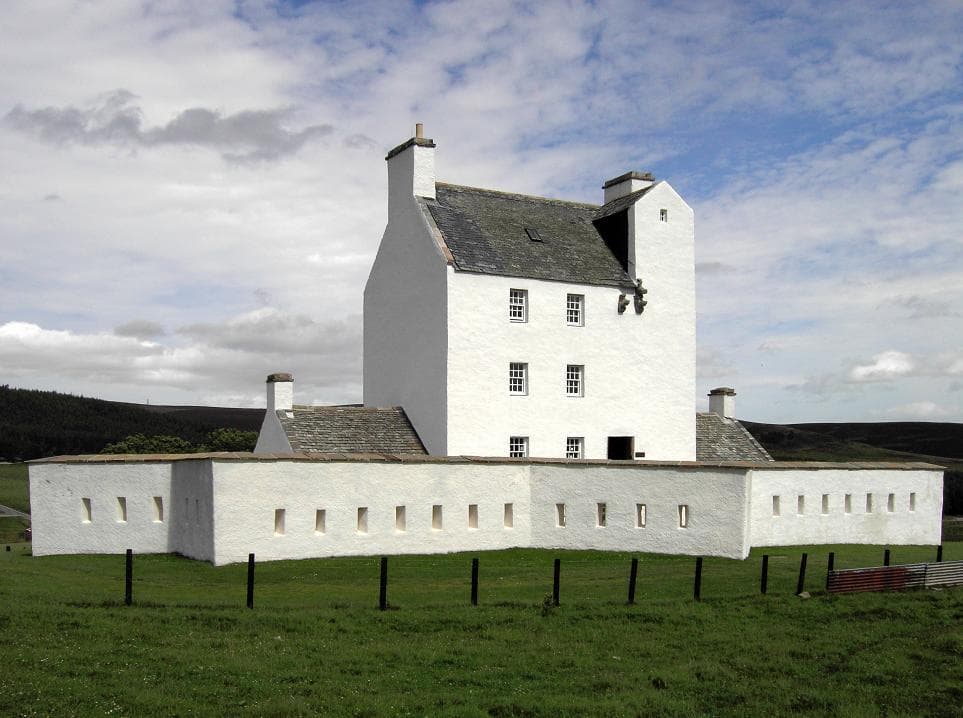
Two single-story pavilions were added around 1748 within the castle courtyard. The western pavilion served as a bakery and brewery before becoming a whisky distillery, while the eastern pavilion functioned as a guardroom and prison, later repurposed as a powder magazine. The original ring wall was replaced by a star-shaped defensive wall with musket loopholes, designed to protect against lightly armed attackers but not artillery.
A well or water cistern dating possibly to the 16th century remains in the courtyard, indicating the importance of a reliable water source during sieges or prolonged occupancy.
Later history and preservation
By the early 19th century, the military significance of Corgarff Castle diminished. The garrison was reduced, and by 1802 the castle was leased as a farm. It briefly operated as a whisky distillery until 1826, when a fire destroyed the facility. The government reclaimed the castle in 1827 to combat illegal whisky production but abandoned it in 1831. The castle then fell into disrepair.
In the early 20th century, the castle saw private occupation, notably by the Ross sisters until 1912. Later in the century, restoration efforts were undertaken to preserve the castle's historical fabric. In 1961, ownership passed to Historic Scotland, which restored Corgarff Castle to reflect its 18th-century military barracks appearance.
Today, Corgarff Castle is well preserved and open to the public. It offers visitors a tangible connection to Scotland's turbulent history, showcasing architectural features such as its stone tower, spiral staircase, machicolation corbels, and the distinctive star-shaped defensive wall. The castle's layered history from a Renaissance tower house to a military garrison encapsulates key aspects of Scottish heritage and architectural evolution.
Frequently asked questions (FAQ)
- How do I get to Corgarff Castle?
- Corgarff Castle is located in Aberdeenshire, Scotland, accessible by road via the A939. The castle is situated in a remote area, so it is recommended to travel by car or local tour services.
- What is the historical significance of Corgarff Castle?
- Corgarff Castle played a key role in Scottish clan conflicts, especially between the Forbes and Gordon clans, and later served as a government military garrison during the Jacobite risings.
- Can I visit the interior of Corgarff Castle?
- Yes, Corgarff Castle is open to the public under the care of Historic Scotland. Visitors can explore the restored barracks, tower house, and courtyard, gaining insight into its military and clan history.
- When is the best time to visit Corgarff Castle?
- The castle is best visited during the warmer months from late spring to early autumn when weather conditions are favorable for exploring the remote site.
- Is there an admission fee to enter Corgarff Castle?
- Admission fees may apply as determined by Historic Scotland. It is advisable to check the official Historic Scotland website for current ticket prices and opening hours.
Photo gallery

Information
Sources & official resources
Verify the information above using these authoritative references.
Loading map...
Visitor reviews
No reviews yet. Been here? Write the first review and help other travelers!
Write the first reviewVisited this castle? Share your experience
Your review helps other travelers and adds first-hand knowledge to our encyclopedia.