Abergeldie Castle — United Kingdom castle

Abergeldie Castle

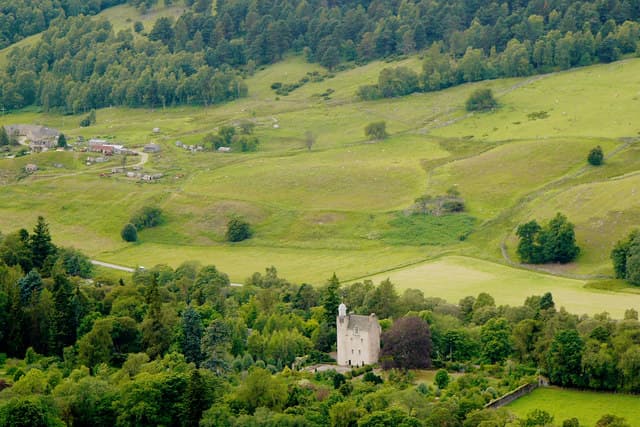
Abergeldie castle in crathie, scotland
Renaissance (15th–17th c.)
Well Preserved

Abergeldie Castle is a notable example of a Renaissance tower house situated in Crathie, Aberdeenshire, Scotland. Dating back to around 1550, it was constructed by Sir Alexander Gordon of Midmar, a scion of the influential Gordon family who acquired the land in 1482. The castle's name originates from the Pictish language, meaning the 'Confluence of Geldie,' reflecting the historical depth of this site, which includes a late Bronze Age standing stone on its grounds, underscoring the area's long human occupation.

Historical background and ownership

The castle holds one of the longest continuous ownership records in Scotland, having been in the hands of the Gordon family for over 600 years. This lineage has played a significant role in the castle's preservation and restoration. During the first Jacobite rising (1689-1690), Abergeldie Castle was besieged by Jacobite forces. The siege was lifted following the Battle of Cromdale in 1690, when General Hugh Mackay led Williamite forces to relieve the castle. Today, it remains the residence of the Baron of Abergeldie, maintaining its status as a private family home.

Architectural features and structure

The castle is an imposing four-floor tower house built in the Renaissance style, characterized by a turreted square block design typical of Scottish tower houses of the period. It features a rectangular plan with a distinctive round stair tower positioned at the south-west corner. Although tradition suggests the castle was once surrounded by a moat, no physical evidence remains today.

In the 18th century, an additional wing was appended to the original 16th-century structure, expanding its footprint. The early 19th century saw further modifications, including the addition of an ogee-roofed belfry atop the stair tower and the installation of a Venetian window on the south façade, blending Renaissance elements with later stylistic influences.

Geographical setting and surroundings

Abergeldie Castle is strategically located on the south bank of the River Dee, at an altitude of approximately 840 feet (260 meters). It lies about five miles west of Ballater and roughly two miles east of Balmoral Castle, the royal residence. The castle's backdrop is dominated by Creag nam Ban, a rounded granite hill rising to about 527 meters (1,729 feet), while across the river stands Geallaig Hill, reaching 743 meters (2,438 feet) and topped with ancient cairns.

Cultural and heritage significance

The castle is protected as a category A listed building, recognizing its architectural and historical importance within Scotland's heritage. Its continuous occupation by the Gordon family and its proximity to Balmoral Castle link it closely to Scottish nobility and royal history. The preservation of its original interior, restored by a descendant of the original builder, offers valuable insight into the living conditions and architectural preferences of the Scottish Renaissance aristocracy.

Visitor information and current status

While Abergeldie Castle remains a private residence and is not generally open to the public, its exterior and surrounding landscape can be appreciated from nearby public areas. The castle's well-preserved structure and scenic setting make it a significant landmark in Aberdeenshire's architectural and historical landscape.

Frequently asked questions (FAQ)

How do I get to Abergeldie Castle?
Abergeldie Castle is located in Crathie, near Ballater in Scotland. The best way to reach it is by car, as public transport options are limited. There is parking available nearby, and the castle is easily accessible from the A93 road.
What is the historical significance of Abergeldie Castle?
Abergeldie Castle dates back to the 17th century and has strong ties to the British royal family, having served as a retreat for Queen Victoria and Prince Albert. The castle's architecture reflects the Scottish baronial style, making it an important example of this historical period. Its rich history adds to the charm of the surrounding area.
When was Abergeldie Castle built?
Construction of Abergeldie Castle began in the early 1620s and was completed shortly thereafter. The castle has undergone various renovations throughout the centuries, which have preserved its historical integrity. Today, it stands as a picturesque landmark in the Scottish Highlands.
Can I visit Abergeldie Castle?
Abergeldie Castle is privately owned and not open to the public for general visits. However, you can view the castle from the outside and enjoy its beautiful surroundings. Guided tours may be available on special occasions or events, so it's best to check in advance.
Why is Abergeldie Castle popular among visitors?
Abergeldie Castle is popular due to its stunning architecture and its historical connection to the British monarchy. Visitors are drawn to the scenic beauty of the surrounding area, including the Cairngorms National Park. The castle also serves as a picturesque backdrop for photography enthusiasts.
Is it possible to take photographs at Abergeldie Castle?
Yes, visitors are welcome to take photographs of Abergeldie Castle from outside the property. The castle's impressive façade against the backdrop of the Scottish Highlands makes for a striking image. Please be respectful of the private property while capturing your memories.
What are the best times to visit Abergeldie Castle?
The best time to visit Abergeldie Castle is during the spring and summer months when the weather is milder and the gardens are in full bloom. Autumn also offers beautiful foliage in the surrounding area. Visiting during these times allows for the best experience of the castle's picturesque setting.
Are there any nearby attractions to Abergeldie Castle?
Yes, nearby attractions include Balmoral Castle, the summer residence of the British royal family, and the stunning landscapes of the Cairngorms National Park. The charming village of Ballater offers shops, cafes, and local history. These sites provide additional opportunities for exploration during your visit.
What are the opening hours for Abergeldie Castle?
Abergeldie Castle is a private residence and does not have regular opening hours for public access. Visitors can enjoy the exterior of the castle at any time, but it’s best to check for any special events or openings that may allow for inside access. Always confirm details before planning your visit.

Photo gallery

Abergeldie Castle
Click to view

Photo by Peter Gordon•CC BY-SA 2.0

1 photo • Click any image to view in full screen

Information

Hill Castle

Current owner

Baron Abergeldie

Loading map...

Visitor reviews

No reviews yet. Been here? Write the first review and help other travelers!

Write the first review

Visited this castle? Share your experience

Your review helps other travelers and adds first-hand knowledge to our encyclopedia.

Write a review

(5/5)

0/2000 characters

Your review will be visible after admin approval

Nearby castles

6.5 km

Knock Castle Ruins

Ballater, United Kingdom

Knock Castle ruins, located near Ballater in Scotland, represent a significant example of a Scottish tower house from the early 17th century. This four-storey stone tower dates from around 1600 and stands as a testament to the turbulent history of the region, marked by clan rivalries and noble family disputes. The castle's external walls remain largely intact, though the roof is missing and the interior is largely ruined. Despite this, important architectural elements such as the vaulted basement kitchen and a spiral turnpike staircase survive, offering insight into the castle's original design and function. Historical context and clan conflicts The site of Knock Castle has a long history, beginning with an earlier timber stronghold known as Old Castle Knock, dating back to the 12th century. This original fortification belonged to the Earls of Mar and was located on a motte, or earthen mound, just west of the current stone tower. The timber castle was destroyed in 1590 during a violent conflict involving the Clan Chattan (Macintosh). Following the Battle of Corrichie in 1562, the lands including Knock Castle were granted to the Gordons of Abergeldie by the 4th Earl of Huntly. The Gordons became embroiled in ongoing feuds with neighboring clans, notably the Forbes and Clan Chattan, which shaped the castle's history. The murder of Henry Gordon, the 2nd Laird of Knock, during a raid in 1592 intensified these hostilities. His brother, Alexander Gordon, succeeded him and is believed to have built or remodeled the stone tower house that stands today. Architectural features of Knock Castle Structure and defensive elements The castle is a rectangular tower house measuring approximately 27 by 22 feet, with walls about four feet thick. Its design reflects typical Scottish tower houses of the Renaissance period, combining residential comfort with defensive capabilities. The tower's roof is absent, but the stone walls remain remarkably well preserved. A notable defensive feature is the presence of pistol shot holes beneath each window—three per window. The central hole is aimed downward and forward, while the two flanking holes angle slightly to each side, allowing defenders to cover a broad area while protected inside the tower. Interior spaces and circulation Inside, the remains of a vaulted basement are visible, which served as the kitchen area. This subterranean space was typical in tower houses for food preparation and storage. The castle also features a spiral turnpike staircase made of stone, which ascends through the floors and is topped by a gabled cap house. This small roofed structure at the stair's summit likely provided shelter and access to the battlements or roof area. Surrounding structures and landscape The castle was originally enclosed by a courtyard wall, the foundations of which are still visible today. The northern entrance to the courtyard was secured by a wooden door reinforced with an iron yett, a form of metal gate designed to resist forced entry. Around the courtyard, ancillary buildings such as a brewery, stables, and a bakehouse would have supported the daily life of the castle's inhabitants. Adjacent to the stone tower lies the motte of the earlier timber castle, which contains archaeological remains including a corn-drying kiln. This feature indicates the agricultural activities associated with the castle estate and highlights the site's long-term occupation. Later history and preservation Knock Castle remained the seat of the Gordon lairds through the late 16th and early 17th centuries, witnessing the violent clan feuds that marked the region. By the late 17th century, the castle was abandoned and gradually fell into ruin. Stones from the castle were repurposed for local buildings, contributing to its dilapidated state. Today, Knock Castle is recognized as a category B listed building and is protected by Historic Environment Scotland. Although roofless and partially ruined, the castle's surviving walls, defensive shot holes, and structural features offer valuable insights into Scottish Renaissance tower house architecture and the turbulent history of the Scottish Highlands. Access and visitor information The castle is located in a rural setting near Ballater and is not directly accessible by vehicle. Visitors must follow a private road off the A851, leading to working farm buildings, then proceed on foot along a faint trail that crosses a river and passes old farm structures. The approach includes passing remains of a blacksmith's forge and navigating through a small wooden gate hidden in vegetation. While the castle is a ruin, it remains an evocative site for those interested in Scottish history, clan heritage, and Renaissance military architecture. Its remote location and rugged surroundings add to the atmosphere and appeal for heritage tourism. Folklore and cultural significance Local tradition associates Knock Castle with tales of haunting spirits, including a Green Lady ghost said to appear with omens of good or bad news. Additionally, folklore speaks of a glaistig, a protective spirit concerned with the wellbeing of livestock, reflecting the castle's connection to rural life and clan culture.

Renaissance (15th–17th c.)
Details
11.6 km

Invercauld Castle

Braemar, United Kingdom

Invercauld Castle stands as a prominent historic country house located in Braemar, Scotland, set within the expansive Cairngorm National Park. The castle's origins trace back to the 16th century when the Farquharson family, who settled in the region during the 14th century, constructed a fortified tower house to establish their presence and defend their lands. This original tower house forms the core of the present building, with a notable vaulted basement dating from this early period, reflecting the defensive architectural style typical of Scottish noble residences of the time. Architectural evolution and style The castle underwent significant transformations beginning in the late 17th century, when the original tower house was extensively remodelled. These changes introduced more comfortable living quarters and updated architectural elements while retaining much of the fortress-like character. Further modifications in the 18th and 19th centuries reflected evolving tastes and the growing importance of Invercauld as a country estate rather than a purely defensive stronghold. The most notable architectural intervention occurred in 1875, when the castle was extensively remodelled by architect John Thomas Wimperis. This renovation embraced the Scots Baronial style, a revivalist architectural movement that drew on medieval Scottish castles and tower houses for inspiration. Characterized by features such as turrets, crow-stepped gables, battlements, and ornamental stonework, the Scots Baronial style imbued Invercauld Castle with a romantic and picturesque appearance that aligned with Victorian tastes for historicism and national identity. Interior and furnishings Inside, Invercauld Castle retains many Victorian furnishings and paintings, offering a glimpse into the lifestyle and aesthetic preferences of the 19th-century Scottish aristocracy. The interiors combine elements of comfort and grandeur, with richly decorated rooms that reflect the castle's evolution from a defensive tower to a stately home. The estate and landscape The castle estate itself covers approximately 520 square kilometers, encompassing a large portion of the surrounding landscape within the national park. It includes a stretch of the River Dee, which adds to the scenic and environmental value of the property. The grounds of Invercauld Castle are recognized in the Inventory of Gardens and Designed Landscapes in Scotland, highlighting the significance of the landscaped parkland and woodland areas. During the tenure of the tenth laird, James Farquharson, significant afforestation efforts were undertaken to plant woodland across the estate. These woodlands were intended to supply timber for the shipyards of nearby Aberdeen, demonstrating the estate's economic as well as aesthetic importance. Historical significance and royal connections Invercauld Castle's location near the royal Highland residence of Balmoral Castle made it a favored retreat for Queen Victoria and her court during the 19th century. The castle's sporting estate, offering hunting and fishing opportunities, attracted members of the British aristocracy and royalty, reinforcing its status as a prestigious Highland estate. Today, Invercauld Castle remains a significant cultural and architectural landmark within Scotland, embodying centuries of history from its medieval origins through its Victorian transformation. Its preserved interiors, extensive estate, and scenic setting continue to draw interest from historians, architects, and visitors intrigued by Scotland's noble heritage and castle architecture.

Renaissance (15th–17th c.)
Details
13.8 km
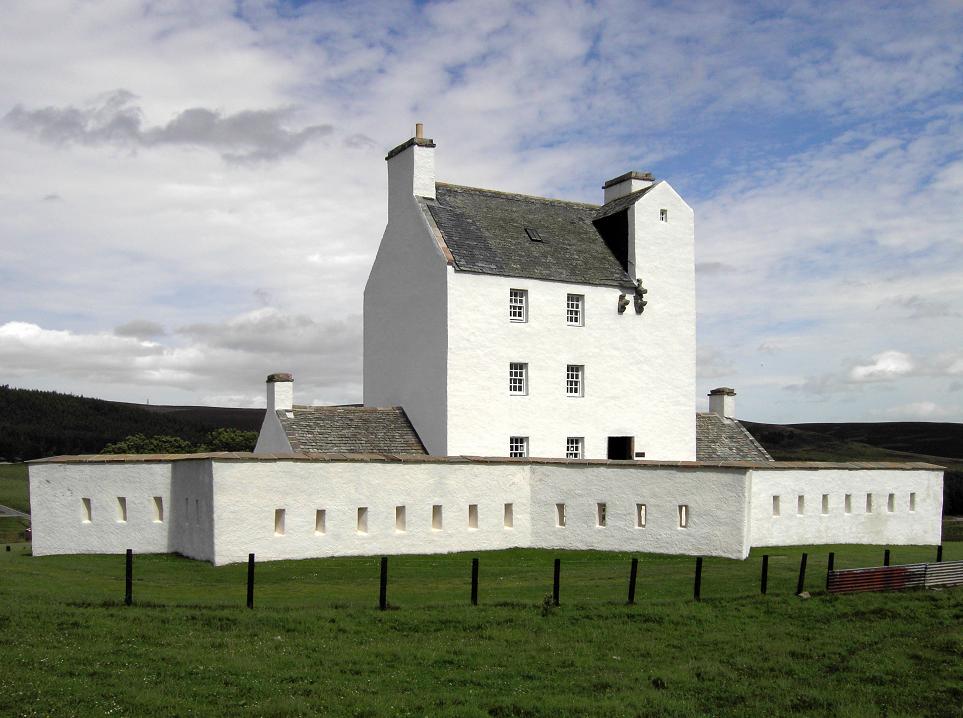
Corgarff Castle — United Kingdom castle

Corgarff Castle

Corgarff, United Kingdom

Corgarff Castle is a distinctive 16th-century Scottish tower house located in the remote and rugged landscape of Aberdeenshire, Scotland. Despite its modest appearance compared to grander Scottish castles, Corgarff holds a significant place in Scottish history due to its strategic position and turbulent past. Situated along the historic route between Deeside and Speyside, the castle was originally constructed around 1550 by the Forbes clan, a powerful noble family embroiled in fierce regional conflicts. The strategic importance and early history of Corgarff Castle The castle's location was crucial for controlling movement through the Highlands, lying between the River Dee and River Spey. This made it a valuable asset during the frequent clan disputes of the late 16th century. The initial structure was a simple rectangular tower house enclosed by a defensive wall, typical of Scottish fortified homes of the Renaissance period. This design prioritized defense and functionality, with thick stone walls and narrow gun loops for protection. The early history of Corgarff Castle is marked by violent clan feuds, most notably between the Forbes and Gordon clans. In November 1571, the castle suffered a tragic attack led by Adam Gordon of Auchindoun. During this assault, the castle was set ablaze, resulting in the deaths of Lady Forbes, her children, and many others. This event inspired the ballad "Edom o Gordon," which memorializes the brutal conflict and the castle's dark chapter. Military role and transformations in the 17th and 18th centuries Following the clan conflicts, the castle's role evolved with the shifting political landscape of Scotland. By the early 17th century, it had become a refuge for local bandits until expelled by John Erskine, Earl of Mar, in 1626. The castle's strategic importance was reaffirmed during the English Civil War in 1645 when it served as a rallying point for royalist forces under the Marquis of Montrose. In the late 17th and early 18th centuries, the castle was repeatedly burned during the Jacobite risings, reflecting its contested status. Jacobite forces burned it in 1689 to prevent government use, and it was again a focal point during the 1715 uprising led by John Erskine, 6th Earl of Mar. After the defeat of the Jacobites, the castle was burned once more before returning to Forbes ownership. During the final Jacobite Rising of 1745-46, Corgarff Castle functioned as a depot for Jacobite weapons. It was captured by government troops shortly before the decisive Battle of Culloden in 1746. Subsequently, the British government converted the castle into a military garrison starting in 1748. The garrison housed 45 to 50 soldiers tasked with maintaining control over the Highlands and suppressing illicit whisky distilling and smuggling. Architectural modifications for military use The mid-18th century brought significant changes to the castle's structure to accommodate its new military function. The original vaulted stone ceiling of the main hall was replaced with a wooden intermediate floor, creating additional rooms. The first floor was adapted as the commander's quarters, including a kitchen modified for officer use by 1847. The upper floors provided barracks for soldiers, who often shared beds due to limited space. Two single-story pavilions were added around 1748 within the castle courtyard. The western pavilion served as a bakery and brewery before becoming a whisky distillery, while the eastern pavilion functioned as a guardroom and prison, later repurposed as a powder magazine. The original ring wall was replaced by a star-shaped defensive wall with musket loopholes, designed to protect against lightly armed attackers but not artillery. A well or water cistern dating possibly to the 16th century remains in the courtyard, indicating the importance of a reliable water source during sieges or prolonged occupancy. Later history and preservation By the early 19th century, the military significance of Corgarff Castle diminished. The garrison was reduced, and by 1802 the castle was leased as a farm. It briefly operated as a whisky distillery until 1826, when a fire destroyed the facility. The government reclaimed the castle in 1827 to combat illegal whisky production but abandoned it in 1831. The castle then fell into disrepair. In the early 20th century, the castle saw private occupation, notably by the Ross sisters until 1912. Later in the century, restoration efforts were undertaken to preserve the castle's historical fabric. In 1961, ownership passed to Historic Scotland, which restored Corgarff Castle to reflect its 18th-century military barracks appearance. Today, Corgarff Castle is well preserved and open to the public. It offers visitors a tangible connection to Scotland's turbulent history, showcasing architectural features such as its stone tower, spiral staircase, machicolation corbels, and the distinctive star-shaped defensive wall. The castle's layered history from a Renaissance tower house to a military garrison encapsulates key aspects of Scottish heritage and architectural evolution.

Renaissance (15th–17th c.)
Details