Corby Castle
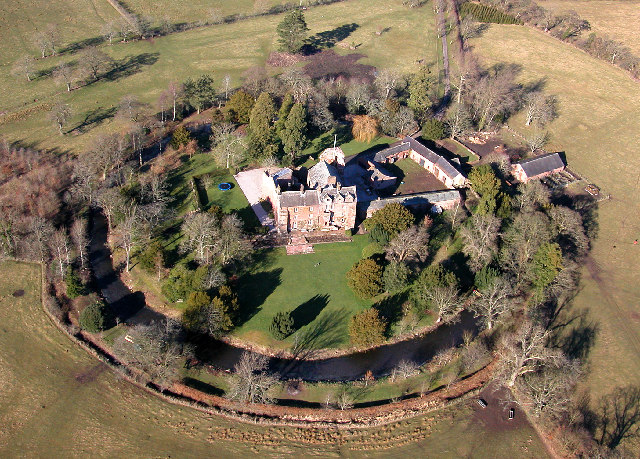
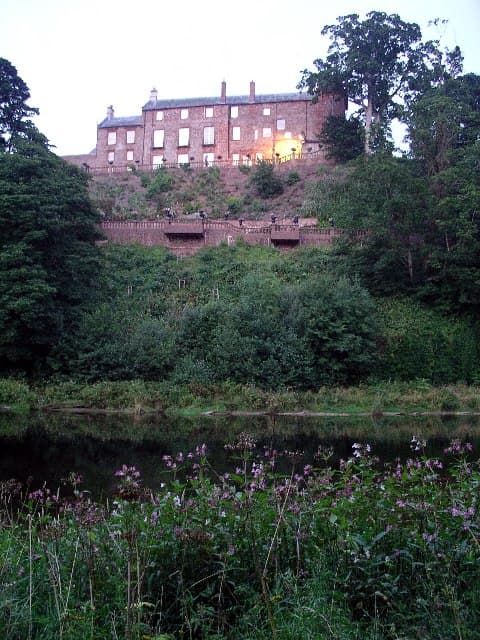
Corby Castle is a Grade I listed building located on the southern edge of the village of Great Corby in northern Cumbria, England. This historic hill castle dates back to the 13th century and serves as the ancestral home of a cadet branch of the prominent Howard family, a lineage with significant influence in British aristocracy.
Architectural origins and medieval significance
Originally constructed in the high medieval period, Corby Castle was built as a fortified residence typical of the era's defensive needs. The castle's location on a hill provided strategic advantages, allowing surveillance over the surrounding landscape and protection against potential invaders. Its initial design likely included strong stone curtain walls, a keep, and defensive battlements characteristic of 13th-century fortifications.
Over the centuries, the castle's architecture evolved, reflecting changes in military technology and domestic needs. While the original medieval structures formed the core, later additions introduced elements of comfort and style, transitioning the castle from a purely defensive fortress to a stately family home.
The howard family and corby castle's lineage
The Howard family is one of England's most notable noble families, with extensive ties to the monarchy and significant roles in English history. Corby Castle became associated with a cadet branch of this family, who maintained the estate as their ancestral seat. Their stewardship ensured the castle's preservation and adaptation through various historical periods.
The family's influence extended beyond the castle walls, impacting local governance and regional affairs in Cumbria. Corby Castle thus not only served as a residence but also as a symbol of aristocratic power and heritage in northern England.
Architectural features and later modifications
While the castle retains its medieval origins, it has undergone significant remodeling and restoration, particularly during the 18th and 19th centuries. These changes introduced elements of Georgian architecture and later styles, blending the fortress's original defensive character with elegant residential features.
Key architectural elements include the robust stone walls, a prominent gatehouse, and well-preserved towers that punctuate the castle's silhouette. The interior spaces have been adapted over time to include refined living quarters, grand halls, and landscaped gardens, reflecting the tastes and requirements of successive generations.
Historical context and regional importance
Situated in northern Cumbria, Corby Castle occupies a region rich in medieval history and border conflicts. The castle's strategic hilltop position was crucial during periods of Anglo-Scottish tensions, serving both defensive and administrative functions.
Its endurance through centuries of political and social change illustrates the resilience of such estates in England. Corby Castle stands as a testament to the layered history of northern England's aristocracy and the architectural evolution from medieval fortress to stately home.
Current status and heritage conservation
Today, Corby Castle remains a well-preserved example of a high medieval hill castle adapted for modern residential use. Its designation as a Grade I listed building highlights its exceptional architectural and historic interest, ensuring legal protections and conservation efforts.
The castle continues to be privately owned, with stewardship focused on maintaining its historical integrity while accommodating contemporary needs. Visitors and scholars regard Corby Castle as an important cultural landmark in Cumbria, offering insights into England's feudal past and aristocratic heritage.
Visiting corby castle and surrounding attractions
While primarily a private residence, Corby Castle occasionally participates in heritage open days and special events, allowing limited public access. The surrounding village of Great Corby and the wider Cumbria region offer numerous attractions, including historic sites, scenic countryside, and cultural experiences.
Visitors interested in medieval architecture and English history find Corby Castle a noteworthy destination, particularly for its blend of medieval fortification and later residential elegance.
Architectural highlights
- Stone curtain walls providing medieval defensive strength
- Gatehouse serving as a fortified entrance
- Towers enhancing surveillance and defense
- Georgian remodeling adding residential refinement
- Landscaped gardens complementing the castle's stately appearance
Historical timeline
- 13th century: Original construction as a fortified hill castle
- Medieval period: Role in regional defense and aristocratic residence
- 18th-19th centuries: Architectural remodeling and residential adaptation
- Modern era: Preservation as a Grade I listed building and private estate
Frequently asked questions (FAQ)
- How do I visit Corby Castle?
- Corby Castle is primarily a private residence but may open to the public during heritage open days or special events. Visitors should check local listings or the castle's official announcements for access opportunities.
- What is the historical significance of Corby Castle?
- Corby Castle is a 13th-century hill castle associated with the Howard family, playing a role in regional defense and aristocratic heritage in northern Cumbria.
- What architectural styles are visible at Corby Castle?
- The castle features medieval defensive architecture from the 13th century, with later Georgian remodeling that introduced elegant residential elements.
- Is Corby Castle accessible to the public year-round?
- No, Corby Castle is not open to the public year-round as it remains a private residence. Access is typically limited to special occasions.
- Where is Corby Castle located?
- Corby Castle is located on the southern edge of the village of Great Corby in northern Cumbria, England.
Photo gallery

Information
Current owner
Private owner
Loading map...
Visitor reviews
No reviews yet. Been here? Write the first review and help other travelers!
Write the first reviewVisited this castle? Share your experience
Your review helps other travelers and adds first-hand knowledge to our encyclopedia.