Compton Castle
Compton Castle is a remarkable fortified manor house located in the village of Compton, near Torquay in Devon, England. This historic estate, originally known as Compton Pole, has a rich architectural and familial history spanning several centuries. It exemplifies the evolution of medieval domestic architecture into a defensible residence, blending comfort with military features. The castle's enduring association with the Gilbert family and its connection to significant figures of the Tudor period add to its cultural importance.
Early history and origins
The manor at Compton was first known as Compton Pole during the reign of Henry II in the 12th century. It served as the seat of Sir Maurice de la Pole, whose family name was originally linked to the estate. The earliest surviving house on the site dates to the mid-14th century and was a typical undefended medieval manor. Its layout centered around a great hall, flanked by private chambers and service rooms, reflecting the domestic priorities of the period rather than fortification.
Transformation in the 16th century
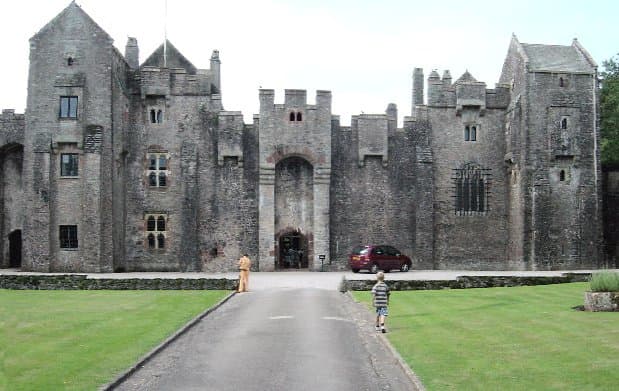
In the early 1500s, around 1520, the manor underwent a significant transformation under the ownership of John Gilbert. The manor was remodelled to include a fortress-like façade, turning it into a castellated house with defensive features. This included the construction of two portcullises, arrow slits, and curtain walls with vertical slits for defensive measures such as dropping stones or boiling oil. These additions reflected the turbulent times and the need for security, while still serving as a family residence.
Architectural features
The castle's layout revolves around the great hall, which was the central living and social space. By the 18th century, the hall had lost its roof and was in ruins until restoration efforts in the 20th century. Inside the hall today, visitors can see a model of the ship Squirrel, commemorating Sir Humphrey Gilbert, a notable explorer and member of the Gilbert family.
The solar, a private chamber added with a 15th-century staircase, provided a secluded retreat for the lord of the manor. Service rooms supported the household's daily functions and were integrated into the original manor design.
The kitchen was built as a separate structure to minimize fire risk to the main house. A stone staircase beside the kitchen hearth leads to a tower room, believed to have served as a guard post, illustrating the blend of domestic and defensive architecture.
The Gilbert family and historical significance
The Gilbert family owned Compton Castle for several centuries, beginning with John Gilbert's renovations. Among the most famous family members was Sir Humphrey Gilbert (1539–1583), a pioneering English explorer and half-brother to Sir Walter Raleigh. Sir Humphrey is known for his expeditions to Newfoundland and his role in early English colonial efforts.
The estate remained with the Gilberts until it was sold in 1785. The castle then fell into disrepair, with key areas like the great hall becoming ruins. In 1931, a descendant of the Gilbert family repurchased the property and initiated restoration work, particularly on the great hall during the 1950s.
Modern preservation and cultural role
In 1951, Compton Castle was entrusted to the National Trust under the condition that the Gilbert family continue to live on and manage the estate. This arrangement has helped preserve the castle's historic character and maintain its connection to the family.
The castle's well-preserved defensive features, combined with its domestic architecture, offer valuable insights into the transition from medieval manor houses to fortified residences. Its Grade I listing recognizes its exceptional architectural and historic significance.
Compton Castle also gained wider public attention as a filming location for the 1995 film adaptation of Jane Austen's Sense and Sensibility, highlighting its atmospheric and authentic historical setting.
Surrounding grounds and gardens
The castle is surrounded by small formal gardens enclosed by a stone curtain wall. These gardens enhance the aesthetic appeal of the manor and contribute to its defensive perimeter. The integration of garden spaces reflects Renaissance influences on English country houses, combining practicality with beauty.
Architectural classification and style
Compton Castle is classified as a hill castle due to its elevated position, which provided natural defensive advantages. Its architectural style is primarily Renaissance, evident in the 16th-century additions that introduced fortified elements to the previously undefended medieval manor. The castle's mixture of domestic comfort and military readiness typifies the fortified manor houses of this period in England.
Frequently asked questions (FAQ)
- How do I visit Compton Castle?
- Compton Castle is open to visitors through the National Trust. It is advisable to check the official National Trust website for current opening hours and ticket prices before planning your visit.
- What is the historical significance of Compton Castle?
- Compton Castle is notable for its transformation from a medieval manor to a fortified Renaissance residence and its association with the Gilbert family, including explorer Sir Humphrey Gilbert.
- Can I see the great hall and its features?
- Yes, the great hall has been restored and contains a model of the ship Squirrel, commemorating Sir Humphrey Gilbert's maritime ventures. Visitors can explore this central part of the castle.
- Is Compton Castle wheelchair accessible?
- Due to the historic nature of Compton Castle, some areas may have limited wheelchair access. Visitors with mobility concerns should contact the National Trust for specific accessibility information.
- When is the best time to visit Compton Castle?
- The castle and its gardens are best visited during the spring and summer months when the weather is favorable, and the gardens are in full bloom.
Photo gallery

Information
Sources & official resources
Verify the information above using these authoritative references.
Loading map...
Visitor reviews
No reviews yet. Been here? Write the first review and help other travelers!
Write the first reviewVisited this castle? Share your experience
Your review helps other travelers and adds first-hand knowledge to our encyclopedia.