Colditz Castle
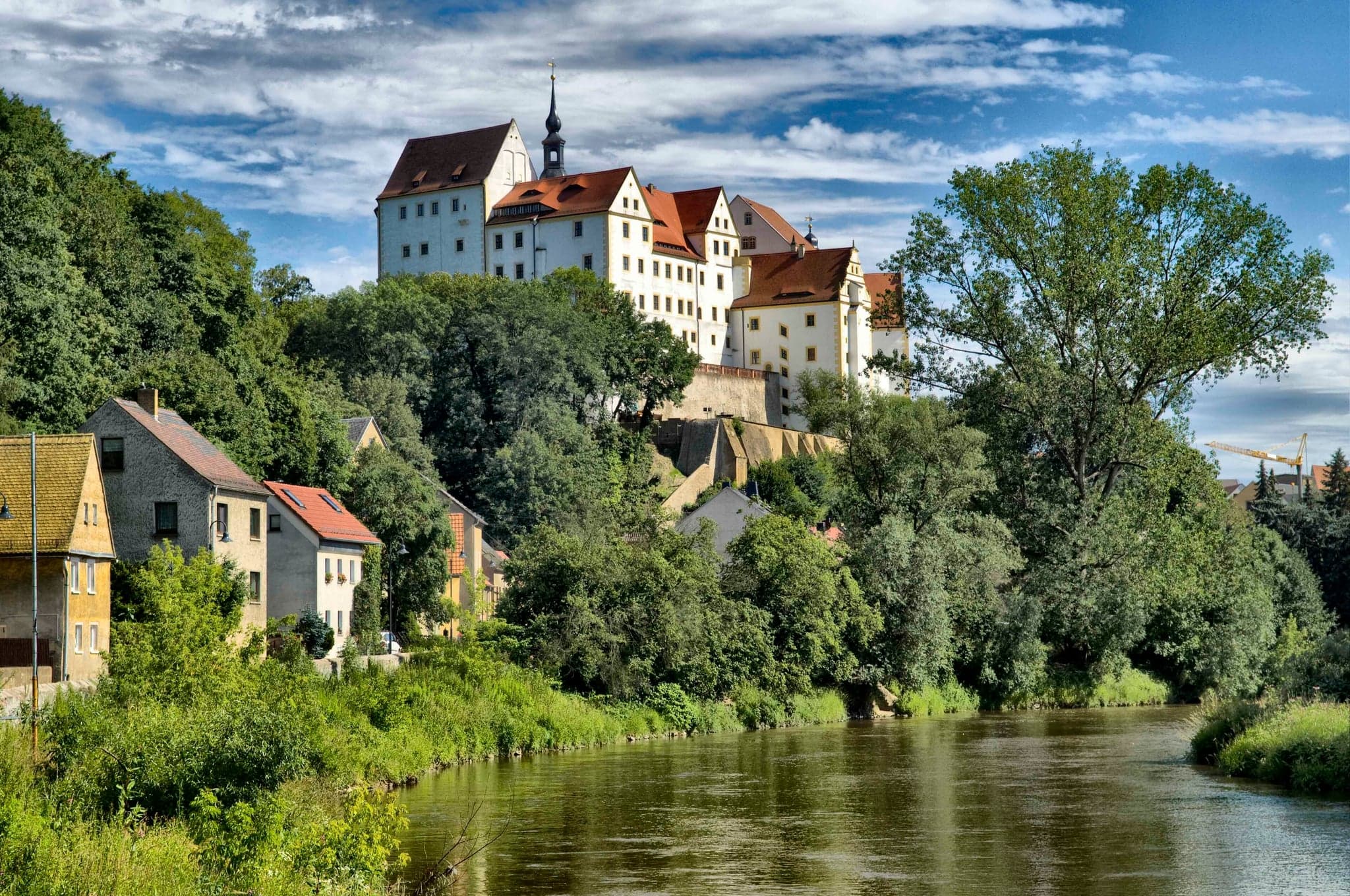
Colditz Castle, located in the town of Colditz in northeastern Saxony, Germany, is a Renaissance castle renowned worldwide for its role as Oflag IV-C, a high-security prisoner-of-war camp during World War II. Perched on a 46-meter-high hill overlooking the Zwickauer Mulde River, the castle's imposing position on a sheer cliff made it a formidable fortress believed to be escape-proof. Its 7-foot-thick walls and natural defenses did not deter the ingenuity of Allied officers, who orchestrated numerous daring escape attempts, cementing Colditz's place in military and cultural history.
The castle's origins date back to the 12th century during the High Medieval period, with initial construction commissioned under the auspices of German King Henry IV and later expanded by Emperor Frederick Barbarossa in the 12th century. Over the centuries, Colditz Castle evolved architecturally and functionally, reflecting the changing political and military landscape of the region. It served as a lookout post for the Holy Roman Emperors and was central to the Reich territories of the Pleissenland. The castle's strategic importance was underscored by its role as a royal residence for the electors of Saxony during the 15th and 16th centuries.
Architectural evolution and renaissance transformation
Originally constructed as a medieval hill castle, Colditz underwent significant renovations and expansions that transformed it into a Renaissance-style fortress. After suffering destruction during the Hussite Wars in 1430, the castle was rebuilt and expanded under Prince Ernest and later Elector Augustus of Saxony between 1577 and 1591. This period saw the integration of Renaissance architectural elements alongside remaining Gothic features, resulting in a complex with multiple courtyards, thick defensive walls, and residential wings.
In the late 17th century, King Augustus the Strong of Poland further expanded the castle, adding a second courtyard and increasing the total number of rooms to approximately 700. The castle's architecture reflects a blend of styles, including Gothic remnants, Renaissance detailing, and later neo-classical modifications, particularly evident in the 19th-century reconstruction of the church space.
Historical significance before world war ii
Throughout its history, Colditz Castle served various roles beyond a noble residence. In the 19th century, it functioned as a workhouse for the poor and ill under Frederick Augustus III, Elector of Saxony, before becoming a mental hospital for the incurably insane from 1829 until 1924. The castle's use as a hospital included the construction of a new building in the Gothic Revival style in 1864.
With the rise of the Nazi regime in 1933, Colditz was repurposed as a political prison for communists, homosexuals, Jews, and other groups targeted by the regime. From 1939 onward, it was converted into a prisoner-of-war camp, marking the beginning of its most internationally recognized chapter.
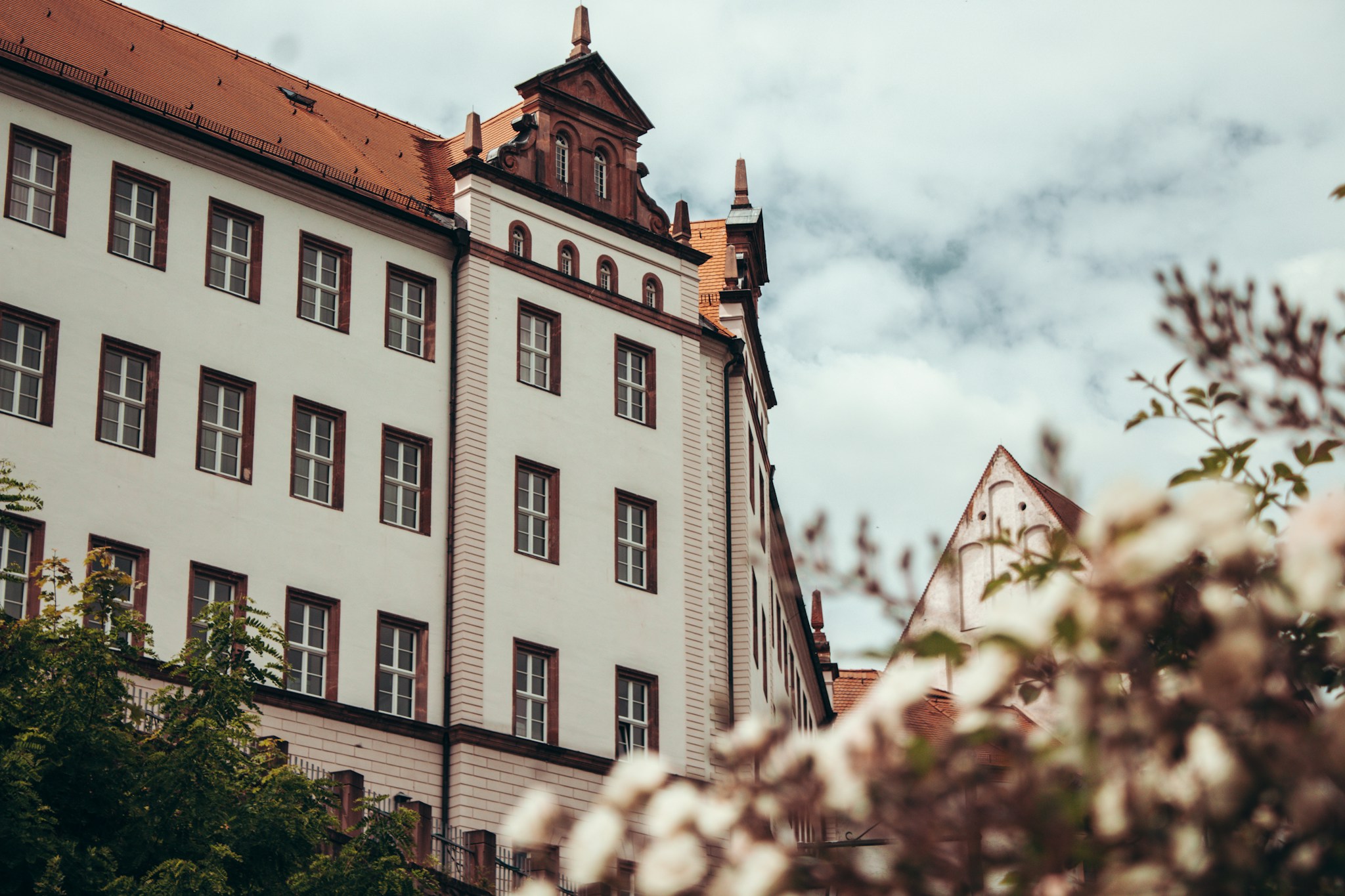
Photo by Dana Ward
Colditz castle during world war ii: oflag iv-c
During World War II, Colditz Castle was designated Oflag IV-C, a high-security camp for Allied officers deemed high escape risks or particularly dangerous by the German military. The first prisoners were Polish officers captured in 1939, followed by British, Commonwealth, Dutch, French, Belgian, Yugoslav, Czechoslovak, and from 1944, American officers.
The castle's location deep within Nazi-controlled territory, approximately 400 miles from the nearest border, combined with its natural and man-made defenses, made it an ideal site for detaining officers who had previously escaped from other camps. The camp housed notable prisoners known as Prominente, including relatives of British royalty and military leaders, who were held as hostages or bargaining chips.
Despite the stringent security measures, prisoners organized themselves into escape committees and undertook over 300 escape attempts, with more than 30 successful. Their methods ranged from tunneling through thick walls and disguises to constructing a two-person glider in the castle attic. The ingenuity and daring of these escape efforts have become legendary, highlighting the resilience and creativity of the prisoners.
Escape tunnels and the colditz glider
One of the most remarkable feats was the construction of the "French tunnel," dug by French officers over eight months and equipped with electric lighting. Although discovered before completion, parts of this tunnel remain visible today. The glider, built from scavenged materials such as bed slats, telephone wires, and mattress canvas, was never used but stands as a testament to the prisoners' determination and engineering skill.
Life inside the camp
Prisoners at Colditz enjoyed relative freedoms compared to other camps, including correspondence, receipt of Red Cross parcels, and participation in cultural, educational, and sporting activities. The castle contained a library stocked with books from various sources, and prisoners organized theatrical performances, music ensembles, and sports such as football, cricket, and boxing.
Workshops within the castle allowed prisoners to produce false identity documents and civilian clothing, aiding escape attempts. Hidden radios were assembled from smuggled parts, enabling prisoners to receive news from the outside world, although one was discovered during the war and another remained hidden until 1992.
Post-war history and preservation efforts
After liberation by American forces in April 1945, Colditz Castle was used by East German authorities as a prison, psychiatric hospital, old people's home, and storage facility. The castle's condition deteriorated until veterans and preservationists formed associations to protect its history.
Significant restoration began in 2006, uncovering many artifacts and restoring key features such as the escape tunnel and glider replicas. Today, Colditz Castle functions as a museum and cultural site, offering guided tours that highlight its architectural heritage and complex wartime history. Its story continues to inspire books, films, documentaries, and games, preserving the legacy of resilience and ingenuity that defines this remarkable fortress.
Architectural features and layout
The castle's complex includes multiple courtyards, defensive walls approximately two meters thick, and numerous rooms spread across several wings. The steep cliff on which it stands provides a natural defense, with a sheer drop of roughly 75 meters to the river below.
The inner courtyard and adjacent park served as exercise and recreation areas for prisoners during the war. The attic and basement spaces were adapted for prisoner accommodations and secret activities, including escape tunnel construction and the glider assembly.
Modern preservation has maintained the castle's Renaissance character while showcasing its layered history through museum exhibits and guided tours that explore both architectural and wartime elements.
Frequently asked questions (FAQ)
- How do I get to Colditz Castle?
- Colditz Castle is located in the town of Colditz, Germany, approximately 40 kilometers from Leipzig. You can reach it by car via the A14 motorway, or by taking a train to Colditz station, which is a short walk from the castle.
- What is the historical significance of Colditz Castle?
- Colditz Castle is known for its role during World War II as a high-security prisoner-of-war camp. It has a rich history that dates back to the 11th century and has served various purposes throughout the ages, including as a royal residence and military fortress.
- When was Colditz Castle built?
- Colditz Castle was initially constructed in the early 11th century, with significant renovations and expansions occurring over the centuries. The castle's current structure reflects various architectural styles, including Gothic and Renaissance influences.
- Can I take guided tours of Colditz Castle?
- Yes, guided tours of Colditz Castle are available and provide in-depth insights into its history and architecture. These tours are typically conducted in English and German, allowing visitors to explore key areas of the castle while learning about its fascinating past.
- Why is Colditz Castle a popular tourist attraction?
- Colditz Castle attracts visitors due to its dramatic history and impressive architecture. The castle's intriguing stories of escape attempts by prisoners during World War II, combined with its picturesque setting, make it a captivating destination for history enthusiasts.
- Is it possible to visit Colditz Castle year-round?
- Yes, Colditz Castle is open to visitors throughout the year, but the opening hours may vary by season. It's advisable to check the official website for the latest information on visiting hours, especially during holidays or special events.
- What are the ticket prices for Colditz Castle?
- Ticket prices for Colditz Castle vary based on the type of tour you choose, with discounts available for students and families. Generally, adult tickets are around €8, while children under 12 often enter for free or at a reduced rate.
- What is the best time to visit Colditz Castle?
- The best time to visit Colditz Castle is during the spring and early autumn months when the weather is mild, and the surrounding scenery is beautiful. During these seasons, you can enjoy the outdoor areas and gardens of the castle as well.
- Are there any nearby attractions to Colditz Castle?
- Yes, nearby attractions include the picturesque town of Colditz itself, which offers charming streets and local shops. Additionally, the scenic Zschopau Valley and the nearby towns of Grimma and Rochlitz provide further exploration opportunities for visitors.
Photo gallery


Information
Website
Visit websiteSources & official resources
Verify the information above using these authoritative references.
Loading map...
Visitor reviews
No reviews yet. Been here? Write the first review and help other travelers!
Write the first reviewVisited this castle? Share your experience
Your review helps other travelers and adds first-hand knowledge to our encyclopedia.