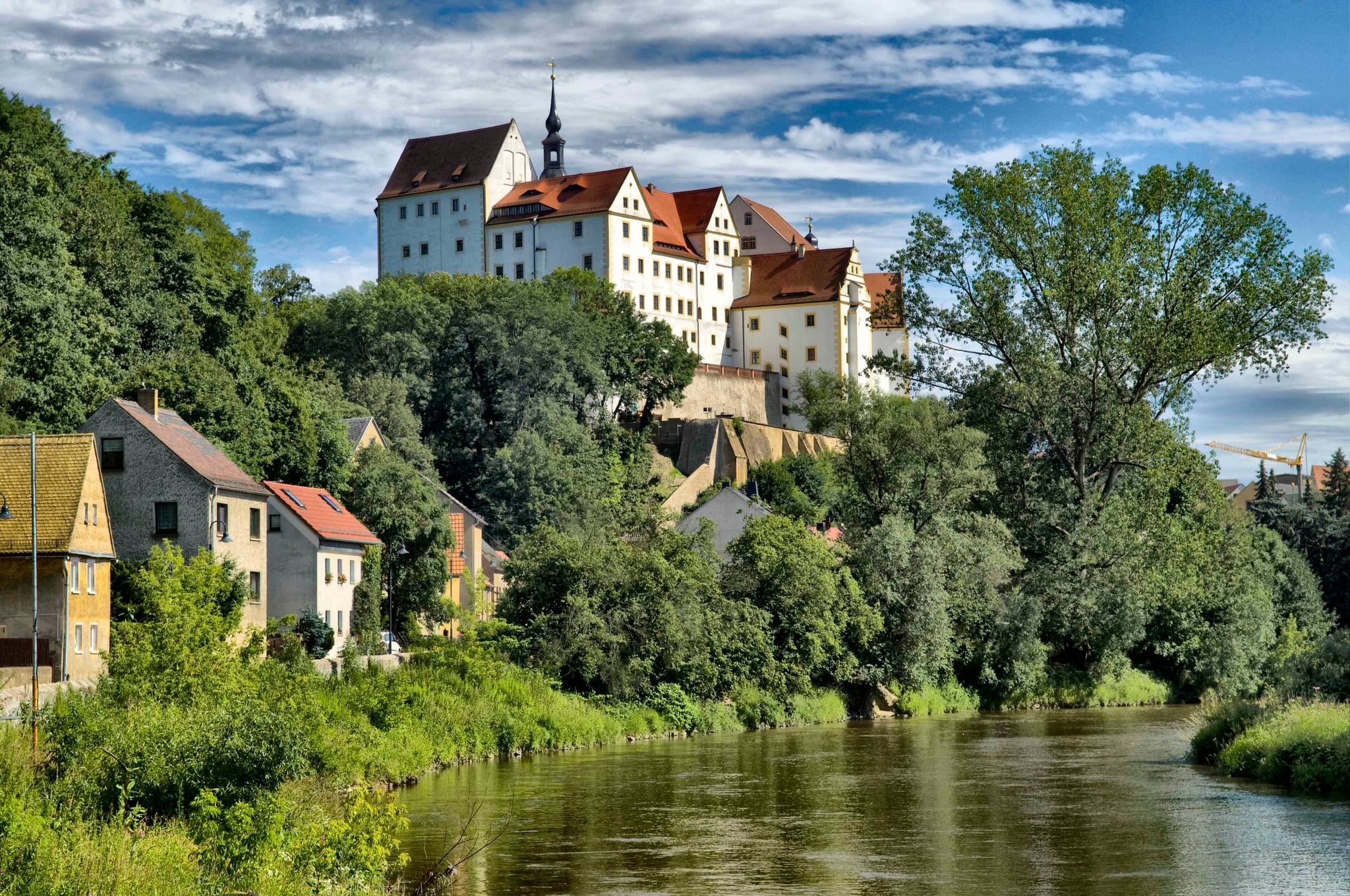
Grimma Castle
Grimma Castle, located in the town of Grimma in Saxony, Germany, is a notable example of a high medieval fortress with origins tracing back to the 13th century. The castle's history is closely tied to the development of the surrounding town and the broader region of Saxony, reflecting the architectural and political changes over several centuries.
Early foundations and architectural origins
The earliest documented mention of Grimma Castle dates to 1218, specifically referencing the castle chapel, which is the oldest surviving part of the complex. This chapel provides valuable insight into the early medieval ecclesiastical architecture within the fortress. The castle was originally constructed as a strategic stronghold during the high medieval period, serving both defensive and administrative functions for the ruling powers in the region.
The basic structure of Grimma Castle has largely been preserved, although significant alterations have occurred over time. The original tower, a key defensive feature, was demolished in the 18th century, marking a shift in the castle's military relevance and architectural form. Additionally, the eastern palace section of the castle has undergone multiple renovations, reflecting changing tastes and functional needs across centuries.
Architectural features and layout
Grimma Castle exhibits characteristics typical of hill castles built in the high medieval era. The complex originally included fortified walls, a chapel, residential quarters, and a tower, which would have provided a commanding view of the surrounding landscape for defensive purposes. The castle's layout reflects the dual role of fortification and noble residence common to castles of this period.
The remaining chapel stands as a prominent feature, showcasing medieval stonework and architectural details that have survived through centuries of change. The castle's walls and foundations retain much of their original form, although later modifications have altered some sections, particularly in the eastern wing.
Historical significance and later modifications
Throughout its history, Grimma Castle has witnessed various phases of occupation and use. Its strategic location in Saxony made it an important site during regional conflicts and power struggles in the high and late medieval periods. The demolition of the tower in the 18th century corresponds with a period when many castles lost their military function and were adapted for residential or administrative use.
The eastern palace's multiple alterations demonstrate changing architectural styles and the evolving needs of its occupants. These renovations often incorporated elements from later periods, blending medieval foundations with newer stylistic influences.
Current condition and cultural heritage
Today, Grimma Castle is recognized for its partially preserved medieval architecture. While some original features have been lost or modified, the castle remains an important cultural landmark in Grimma. Its chapel and surviving structures offer valuable insights into the medieval fortifications and noble residences of Saxony.
The castle's preservation allows visitors and scholars to explore the architectural evolution from the 13th century onward, highlighting the blend of military and residential functions that defined many European castles of the era.
Visiting grimma castle
Grimma Castle can be visited by those interested in medieval architecture and Saxon history. While the castle is not as extensively restored as some other sites, its historical significance and surviving structures make it a worthwhile destination. Visitors can explore the chapel and castle grounds, appreciating the layers of history embedded in the stone walls and foundations.
The castle's location in the town of Grimma also provides access to other local attractions and the scenic beauty of the Saxony region.
Frequently asked questions (FAQ)
- When was Grimma Castle originally built?
- Grimma Castle was founded in the 13th century, with the chapel first mentioned in 1218.
- What remains of Grimma Castle today?
- The chapel is the oldest surviving part, and much of the basic medieval structure remains, though the tower was demolished in the 18th century.
- Can visitors tour Grimma Castle?
- Yes, visitors can explore the chapel and castle grounds, though the site is only partially preserved and not fully restored.
- What architectural style is Grimma Castle?
- Grimma Castle features elements typical of high medieval hill castles, with stonework and fortifications characteristic of the 13th century.
Information
Loading map...
Visitor reviews
No reviews yet. Been here? Write the first review and help other travelers!
Write the first reviewVisited this castle? Share your experience
Your review helps other travelers and adds first-hand knowledge to our encyclopedia.