Clitheroe Castle
Clitheroe Castle, located in the market town of Clitheroe, Lancashire, is a prominent example of a medieval motte and bailey castle with a unique geological foundation. Unlike most motte and bailey castles built on artificial mounds, Clitheroe Castle's motte is formed from a rare natural feature known as a Waulsortian mud mound. This geological formation dates back to the Carboniferous period and was created by sediment deposition and biological activity around ancient reef structures. This natural elevation provided a strategic advantage for the castle's defensive position.
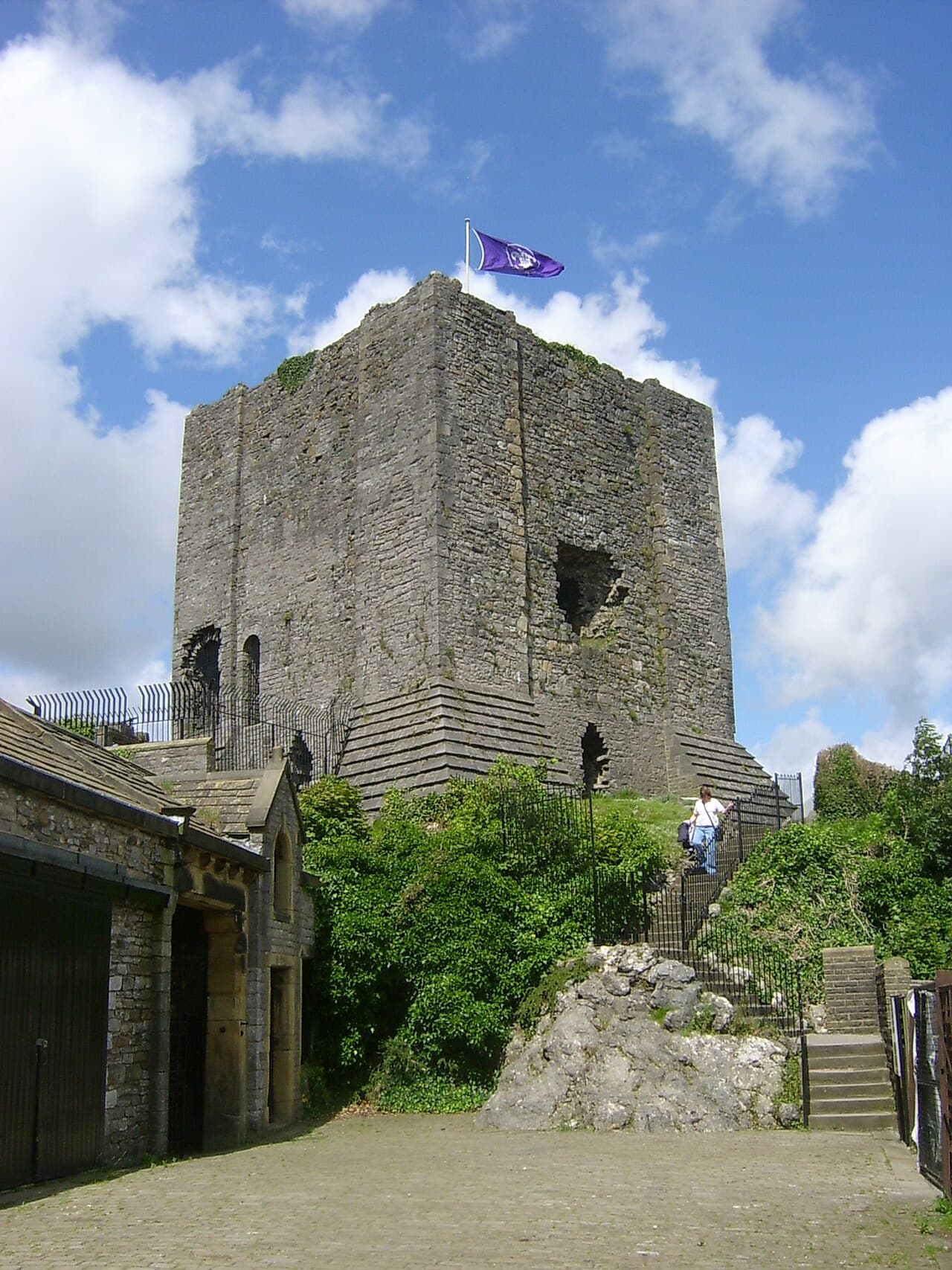
The castle was originally constructed in the 12th century, during the High Medieval period, and served as a key fortification in the region. It was designed as an enclosure castle, a type where the curtain wall was the primary defensive element, enclosing the inner buildings and courtyard. While much of the original curtain wall has been lost over the centuries, the stone keep remains remarkably intact. This keep is notable for being the second smallest stone keep in England, yet it stands well-preserved thanks to extensive restoration work carried out in 1848.
Architectural features and defensive design
The castle's layout reflects typical motte and bailey characteristics but with its rare natural motte, Clitheroe stands out among English castles. The keep sits atop the motte, offering commanding views of the surrounding landscape and serving as the last line of defense. The original curtain wall would have encircled the bailey, providing a fortified enclosure for domestic buildings and troops.
Although the majority of the curtain wall has been lost, archaeological remains and historical records indicate it was a formidable stone structure. The castle also featured a gatehouse and possibly a moat or ditch system to enhance its defenses. The keep itself is a compact rectangular tower with thick stone walls, narrow windows, and battlements suitable for archers.
Restoration and preservation efforts
The 1848 restoration was crucial in preserving the castle's keep, reinforcing its walls and repairing structural damage. This Victorian-era work helped maintain the castle's silhouette and prevented further decay. Today, the keep is considered well preserved and is one of the best surviving examples of a small stone keep from the 12th century.
Historical context and significance
Clitheroe Castle was built during a period of Norman consolidation in England, serving both military and administrative functions. It was strategically important for controlling the surrounding territory and overseeing trade routes in Lancashire. Over time, the castle's military role diminished, and it became more of a local administrative center.
The castle's history is closely tied to the development of Clitheroe town itself, which grew around the fortress. The castle grounds now house the Clitheroe Castle Museum, which presents the local history and heritage, including exhibits on the castle's construction, the geology of the motte, and the broader history of Lancashire.
Visitor experience and surrounding landscape
Visitors to Clitheroe Castle can explore the keep and enjoy panoramic views of the Lancashire countryside, including the iconic Pendle Hill to the east. The elevated position of the castle offers a unique vantage point over the Ribble Valley and surrounding areas.
The castle grounds and museum provide educational opportunities and insights into medieval life, architecture, and geology. The site is accessible to the public and serves as a cultural landmark celebrating the region's rich history.
Access and amenities
The castle is located within the town of Clitheroe, making it easily accessible by road and public transport. The museum offers visitor facilities including guided tours, informational displays, and seasonal events that highlight the castle's heritage.
Geological uniqueness of the motte
One of the most remarkable features of Clitheroe Castle is its motte, which is not an artificial mound but a rare natural geological formation known as a Waulsortian mud mound. This type of mound is formed from carbonate mud deposits and fossilized reef structures dating back approximately 350 million years to the Carboniferous period.
This natural motte provided a ready-made elevated platform for the castle's construction, reducing the labor and time required to build an artificial mound. It also contributes to the castle's distinctiveness among English motte and bailey castles, where natural mounds are uncommon.
Frequently asked questions (FAQ)
- How do I get to Clitheroe Castle?
- Clitheroe Castle is easily accessible by car and public transport. If you're driving, there are nearby parking facilities, and the castle is well-signposted. For public transport, Clitheroe Railway Station is just a short walk away, making it convenient for visitors.
- What is the historical significance of Clitheroe Castle?
- Clitheroe Castle dates back to the 12th century and played a crucial role in the defense of the region during the medieval period. It is one of the oldest stone castles in England and has significant historical connections to the Norman conquest and subsequent conflicts. The castle's rich history makes it a fascinating site for visitors interested in British heritage.
- When was Clitheroe Castle built?
- Clitheroe Castle was originally built in 1100, making it over 900 years old. The castle has undergone various modifications and restorations over the centuries, reflecting the architectural styles of different periods. Its longevity and structural integrity make it an important example of medieval military architecture.
- Can I visit Clitheroe Castle year-round?
- Yes, Clitheroe Castle is open to visitors year-round, although opening hours may vary by season. It’s advisable to check the official website or contact the castle directly for the most accurate and up-to-date information regarding visiting hours. Special events may also affect access, so planning ahead is recommended.
- Why is Clitheroe Castle considered architecturally significant?
- Clitheroe Castle is noted for its impressive keep and unique architectural features, which reflect the defensive needs of its time. The structure showcases Norman design elements and has been adapted over the years, illustrating the evolution of castle architecture in England. Its well-preserved state allows visitors to appreciate its historical and architectural value.
- Is it possible to access all areas of Clitheroe Castle?
- While much of Clitheroe Castle is accessible to visitors, certain areas may have restrictions for safety reasons. The main keep and surrounding grounds are open for exploration, offering stunning views of the town and countryside. However, it's best to check in advance to know which areas are accessible during your visit.
- What are the ticket prices for Clitheroe Castle?
- Ticket prices for Clitheroe Castle are generally quite reasonable, with discounts available for children, students, and seniors. Entry fees contribute to the maintenance and preservation of the castle. For the most accurate pricing and any special offers, please check the official website before your visit.
- What is the best time to visit Clitheroe Castle?
- The best time to visit Clitheroe Castle is during the spring and summer months when the weather is generally milder and the gardens are in full bloom. These seasons also coincide with various events and activities hosted at the castle. However, autumn can offer beautiful scenery and fewer crowds, making it another excellent time to explore.
- Are there any nearby attractions to visit along with Clitheroe Castle?
- Yes, there are several attractions near Clitheroe Castle, including the Clitheroe Museum and the picturesque Forest of Bowland, an Area of Outstanding Natural Beauty. Visitors can also enjoy local shops, cafes, and walking trails in the area. A visit to these nearby sites can enhance your experience and provide a fuller understanding of the region's history and natural beauty.
Photo gallery

Photo by Lux01 at English Wikipedia•Public domain
Information
Loading map...
Visitor reviews
No reviews yet. Been here? Write the first review and help other travelers!
Write the first reviewVisited this castle? Share your experience
Your review helps other travelers and adds first-hand knowledge to our encyclopedia.