Liverpool Castle
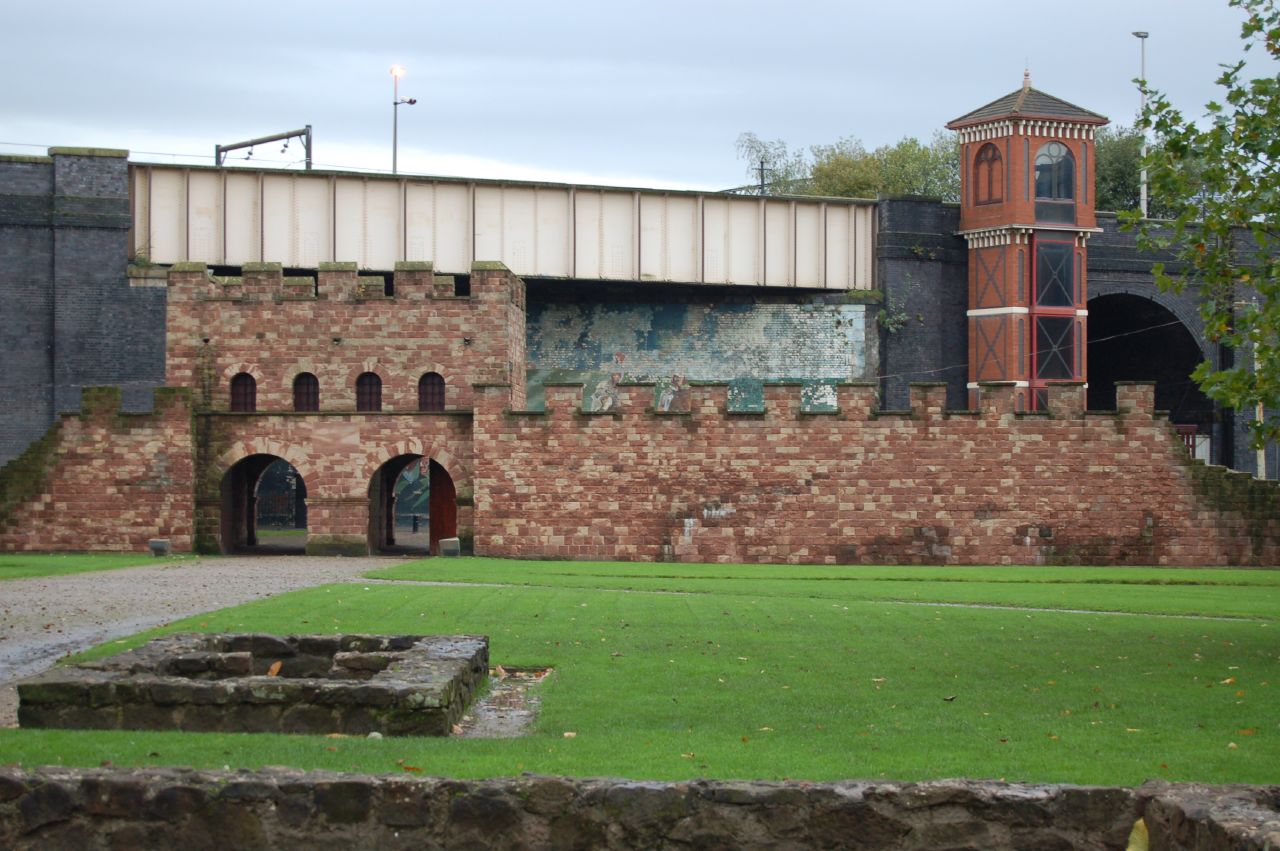
Liverpool Castle folly in Lever Park, Rivington, is a unique architectural feature inspired by the original medieval Liverpool Castle that once stood near Liverpool's waterfront. This structure is not a genuine medieval castle but a carefully crafted scaled replica built in the early 20th century as a folly, commissioned by the industrialist and philanthropist William Lever, also known as Lord Leverhulme. Located between the Lower Rivington Reservoir and Rivington Pike hill in Lancashire, the folly adds historical ambiance and picturesque charm to the landscape of Lever Park, which Lord Leverhulme donated to the city of Bolton in 1902.
Historical background of Liverpool Castle
The original medieval Liverpool Castle was constructed in the 13th century near the waterfront of Liverpool, approximately 36 kilometers southwest of Rivington. It served as a significant defensive fortification during the medieval period, playing a role in the region's military and political history. However, this castle was demolished in the 1720s, and no substantial remains survive today. The absence of the original structure left a historical void that Lord Leverhulme sought to symbolically fill with his folly.
The creation of the Liverpool Castle folly
Between 1912 and 1925, Lord Leverhulme commissioned the construction of the Liverpool Castle folly within Lever Park. The project aimed to evoke the romanticized image of a medieval castle ruin, blending historical inspiration with early 20th-century landscaping and leisure design. The folly was intended to appear as a ruin, and its construction involved relatively few workers, which meant that the building was never fully completed. This incomplete state contributes to its charm as a picturesque ruin rather than a functional fortress.
Architectural features and design
The folly incorporates typical medieval castle elements such as stone walls, turrets, and battlements, designed to mimic the appearance of a genuine castle ruin. Its scale is smaller than the original Liverpool Castle, emphasizing its role as a decorative and recreational feature rather than a defensive stronghold. The use of local stone and traditional masonry techniques reflects Lord Leverhulme's interest in heritage and craftsmanship.
Lever Park and Lord Leverhulme's vision
Lever Park itself is a significant public space that combines natural beauty with historical and architectural interest. Lord Leverhulme's donation of the park to the city of Bolton was part of his broader philanthropic efforts to provide recreational areas for the public. The inclusion of the Liverpool Castle folly within the park enhances its cultural value, offering visitors a tangible link to the region's medieval past, albeit through a 20th-century interpretation.
Other structures commissioned by Lord Leverhulme
In addition to the Liverpool Castle folly, Lord Leverhulme commissioned several other notable structures within Lever Park, including ornamental gardens, terraces, and other follies. These constructions collectively create a landscape that blends natural and built environments, reflecting early 20th-century tastes for romantic and historicist garden design.
Current status and visitor experience
Today, the Liverpool Castle folly stands as a partially preserved and intentionally incomplete structure that attracts visitors interested in history, architecture, and landscape design. It offers picturesque views of the surrounding Rivington Pike and reservoirs, making it a popular spot for walkers and photographers. While not a functional castle, its evocative design and historical associations provide educational and cultural value.
Visiting information
Lever Park, including the Liverpool Castle folly, is open to the public year-round, with no entrance fee. Visitors can explore the park's extensive walking trails, gardens, and viewpoints. The folly itself is accessible on foot and provides an atmospheric setting for picnics, photography, and historical appreciation.
Architectural and cultural significance
The Liverpool Castle folly exemplifies early 20th-century romantic historicism in landscape architecture, where follies were used to evoke nostalgia and create focal points within designed parks. It reflects Lord Leverhulme's interest in heritage preservation and public philanthropy. Although it is not a medieval structure, the folly serves as a cultural landmark linking the industrial age with medieval history, enriching the heritage of Lancashire and the wider region.
Frequently asked questions (FAQ)
- How do I get to Liverpool Castle folly in Lever Park?
- Liverpool Castle folly is located in Lever Park, Rivington, Lancashire. It is accessible by car and public transport to Bolton, followed by local transport or walking routes to the park.
- What is the historical significance of Liverpool Castle folly?
- The folly is a 20th-century scaled replica inspired by the original medieval Liverpool Castle, symbolizing the region's medieval heritage and Lord Leverhulme's philanthropic vision.
- When was Liverpool Castle folly built?
- Construction of the Liverpool Castle folly began in 1912 and continued until 1925, commissioned by Lord Leverhulme.
- Can I visit Liverpool Castle folly year-round?
- Yes, Lever Park and the Liverpool Castle folly are open to the public year-round with no entrance fee, offering scenic walking trails and picnic areas.
- Is Liverpool Castle folly a real medieval castle?
- No, it is a 20th-century folly designed to resemble a medieval castle ruin, not a genuine medieval fortress.
Information
Current owner
Municipality
Loading map...
Visitor reviews
No reviews yet. Been here? Write the first review and help other travelers!
Write the first reviewVisited this castle? Share your experience
Your review helps other travelers and adds first-hand knowledge to our encyclopedia.