Clare Castle
Clare Castle stands as a remarkable example of a medieval motte and bailey fortress located in the market town of Clare in Suffolk, England. Its origins date back to the aftermath of the Norman conquest of England in 1066, when the Norman lord Richard Fitz Gilbert—later known as Richard de Clare—was granted lands by William the Conqueror. The castle was strategically positioned between the River Stour and the Chilton Stream, utilizing natural water defenses to enhance its fortifications.
Initially constructed as a motte and bailey castle with two baileys instead of the more common single bailey, Clare Castle evolved significantly over the centuries. The earliest records mentioning the castle date from 1090, highlighting its importance as the administrative center, or caput, of the feudal barony of Clare. This status underscored its role in controlling the surrounding lands and managing local governance.
Architectural evolution and medieval enhancements
During the 13th century, Clare Castle underwent major architectural transformations that reflected the broader trends in castle construction during the high medieval period. A notable addition was the construction of a polygonal stone shell keep atop the motte. This keep featured walls approximately 1.8 meters thick, supported by fourteen triangular buttresses, designed to provide both a strong defensive position and a commanding view of the surrounding countryside.
The castle's inner defenses were strengthened with high stone curtain walls made of flint and rubble, reaching heights between 6 and 9 meters. These walls enclosed the inner bailey and were complemented by deep ditches and steep wooden palisades around the outer baileys. The inner and outer baileys were connected by a causeway or possibly a drawbridge, enhancing the castle's layered defensive system.
Towers and gates
In the mid-14th century, under the ownership of Elizabeth de Clare, one of the wealthiest women in England, the castle was further enhanced with the addition of four stone towers at the entrance to the inner bailey and keep: the Auditorstower, Maidenstower, Constabletower, and Oxfordtower. These towers formed a formidable gateway complex that controlled access to the castle and reflected the castle’s dual role as a military fortress and noble residence.
The life and legacy of elizabeth de clare
Elizabeth de Clare inherited Clare Castle in 1322 and transformed it into a luxurious noble residence. Her tenure marked a period of great prosperity and refinement for the castle, which supported a lavish lifestyle. The castle housed a large household with dozens of knights, squires, and skilled staff including falconers, tailors, chaplains, and goldsmiths.
Elizabeth invested in the castle’s comfort and aesthetics, commissioning a private chamber completed between 1346 and 1347 and developing extensive water gardens with geometric layouts and possible fountains. These gardens were rare for English castles of the period and reflected influences from contemporary monastic garden designs. The estate also featured vineyards, orchards, and three medieval deer parks, including the notable Great Park at Hundon, which supported hunting and food supply.
The castle’s annual income exceeded £3,500, a substantial sum at the time, much of which was spent on elaborate foods such as swans, salmon, and imported wines. Large-scale baking and brewing operations were maintained on the premises, underscoring the castle’s self-sufficiency and status as a center of noble life and hospitality.
Historical transitions and decline
Following Elizabeth de Clare’s death in 1360, Clare Castle passed by marriage to the Mortimers of Wigmore and later to Richard of York in 1425. Through his son, King Edward IV, the castle reverted to the Crown. Although the castle was recorded as well maintained in the early 15th century, it gradually fell into disrepair during the later medieval period.
By the 16th century, much of Clare Castle was in ruins, with only one tower remaining in use as a local prison. The castle changed hands several times, including a grant by King Edward VI to Sir John Checke, before reverting to Mary I and eventually being acquired by Sir Gervase Elwes in the 17th century. The Elwes family retained ownership until the 19th century.
Significant destruction occurred after 1720 when the surviving east and south sides of the inner bailey walls were demolished. The most dramatic alteration came in 1867 with the construction of a railway line and station that cut through the inner bailey, destroying much of the medieval structure. The railway operated until 1967, after which the castle grounds were converted into a public town park.
Remains and conservation efforts
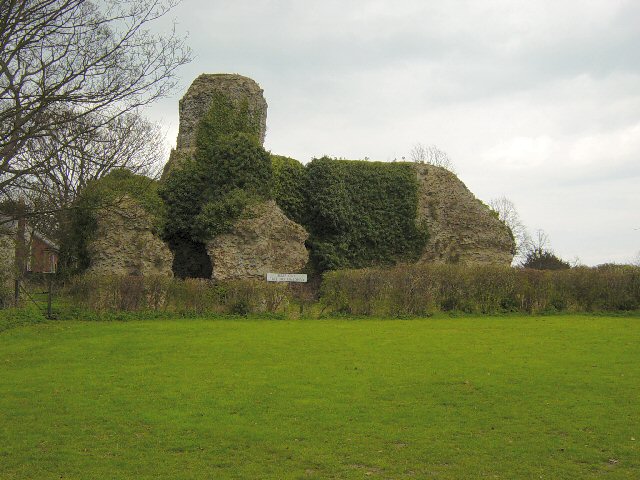
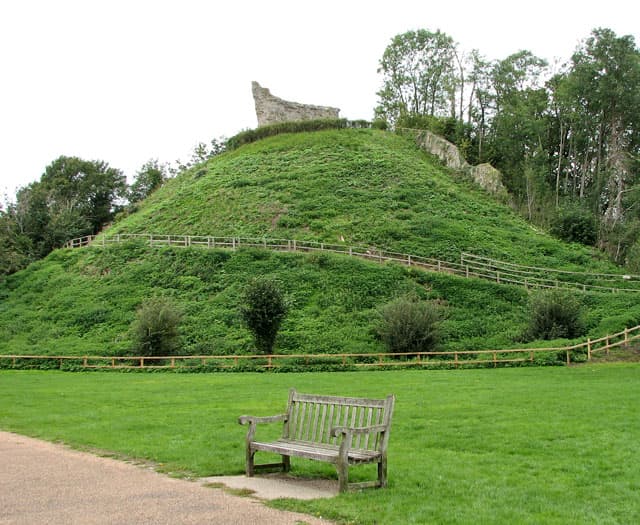
Today, Clare Castle’s remains include the large stone walls of the 13th-century polygonal keep atop the motte, stretches of the inner bailey stone curtain walls, and earthworks marking the outer baileys. The motte itself is an impressive earth mound approximately 260 meters in diameter at its base and rising 30 meters high, with a flat summit about 19 meters wide.
The surviving curtain walls, constructed of flint and rubble, provide valuable insights into medieval defensive architecture. The four entrance towers, although mostly ruined, mark the castle’s once formidable gate complex. The water gardens and deer parks have left archaeological traces that highlight the castle’s role as a self-sustaining estate with both military and residential functions.
Modern conservation efforts, including work undertaken in 2014, have focused on stabilizing the keep walls, re-plastering and re-roofing battlements, and preserving the historic landscape. Visitors today can explore the castle grounds freely as a public park, enjoying panoramic views from the motte’s summit and walking along pathways that trace the medieval fortifications.
While Clare Castle may not rank among England’s most visually spectacular castles, its rich history, architectural evolution, and connection to prominent medieval figures make it a significant heritage site. It offers a unique window into Norman military architecture, noble life in the Middle Ages, and the challenges of preserving historic sites in modern times.
Frequently asked questions (FAQ)
- What is the historical significance of Clare Castle?
- Clare Castle, located in the picturesque village of Clare, has a rich history dating back to the 13th century. It was originally built as a defensive structure and later became a royal residence, playing a crucial role in the medieval history of the region.
- When was Clare Castle built?
- Construction of Clare Castle began in 1217, and it was completed in the early 13th century. The castle has undergone various renovations and restorations over the centuries, making it a fascinating example of medieval architecture.
- Is it possible to visit Clare Castle?
- Yes, Clare Castle is open to visitors throughout the year. Guests can explore the grounds, enjoy guided tours, and learn about the castle's history through informative displays.
- What are the opening hours for Clare Castle?
- Clare Castle generally opens at 10 AM and closes at 5 PM, but hours may vary depending on the season. It’s recommended to check the official website for the most current opening hours before your visit.
- Can I find nearby attractions when visiting Clare Castle?
- Absolutely! Clare Castle is located near several charming attractions, including the historic village of Clare itself, with its shops and tea rooms. Additionally, the stunning countryside offers beautiful walking trails and scenic views.
- What are the ticket prices for visiting Clare Castle?
- Tickets for Clare Castle are reasonably priced, with discounts available for children, students, and seniors. Family passes are also offered, making it an affordable outing for everyone.
- How do I ensure accessibility at Clare Castle?
- Clare Castle is committed to making the site accessible for all visitors. There are designated pathways and facilities available; however, it's advisable to check in advance for specific accessibility options and any potential limitations.
- When is the best time to visit Clare Castle?
- The best time to visit Clare Castle is during the spring and summer months when the weather is pleasant, and the surrounding gardens are in full bloom. Additionally, various events and festivals are often held during this time, enhancing the visitor experience.
Photo gallery

Information
Website
Visit websiteSources & official resources
Verify the information above using these authoritative references.
Loading map...
Visitor reviews
No reviews yet. Been here? Write the first review and help other travelers!
Write the first reviewVisited this castle? Share your experience
Your review helps other travelers and adds first-hand knowledge to our encyclopedia.